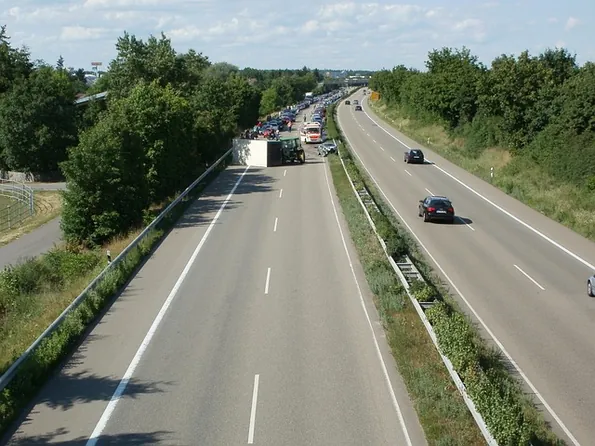
Car accidents in California happen without warning and leave victims facing injuries, medical bills, lost income, and insurance companies whose interests are directly opposed to theirs. From the moment a carrier receives notice of a claim, their adjusters begin building a defense. A California car accident lawyer who matches that preparation from day one — preserving evidence, documenting the medical timeline, and building a damages proof that accounts for both present and future losses — produces outcomes that reactive, under-prepared claims never achieve.
California roads generate more vehicle collisions than any other state in the country. The Central Valley’s agricultural freight corridors, Los Angeles basin freeway systems, Bay Area interchange networks, and thousands of miles of high-speed rural highway create a persistent pattern of serious collision cases involving distracted drivers, fatigued commercial operators, and inadequately maintained road infrastructure. The liability analysis, evidence requirements, and insurance defense tactics are consistent across the state — but the specific evidence available and the local court dynamics vary significantly by region.
California Car Accident Law — The Framework Every Victim Needs to Understand
California personal injury law governs every car accident claim in the state regardless of where the crash occurred. Understanding the framework before speaking with an insurance carrier — or before accepting any settlement offer — is the foundation of protecting your recovery.
Negligence is the standard. To recover damages, an injured person must establish that the at-fault driver owed a duty of care, breached that duty through negligent conduct, caused the collision as a direct result of that breach, and that the collision produced documented damages. Every element requires evidence — and the strength of that evidence determines whether a claim recovers full value or gets discounted at every stage of the process.
California follows pure comparative fault. Under California Civil Code section 1714, even a driver who is partially at fault can still recover — but their recovery is reduced proportionally. A claimant found 30 percent at fault recovers 70 percent of total proven damages. Insurance carriers exploit comparative fault aggressively, using every gap in the evidence record to inflate the injured party’s fault percentage and reduce payout exposure.
The statute of limitations is two years. Most California car accident claims must be filed within two years of the date of the collision under California Code of Civil Procedure section 335.1. However, if a government entity was involved — a city vehicle, a dangerous public road, or a malfunctioning traffic signal — a formal government claim must be filed within six months under Government Code section 835. Missing either deadline permanently bars recovery.
Minimum insurance requirements are inadequate for serious injuries. California requires drivers to carry a minimum of $30,000 per person / $60,000 per accident in liability coverage under California Vehicle Code section 16056. These minimums are frequently exhausted in any collision involving hospitalization. Reviewing all available coverage sources — including your own uninsured and underinsured motorist coverage — is a critical early step in every serious car accident claim.
Common Causes of Car Accidents in California
Understanding the cause mechanism is the foundation of the liability case because each cause requires different evidence and supports different legal theories. California’s Statewide Integrated Traffic Records System (SWITRS) maintained by the California Highway Patrol documents the leading causes of serious injury collisions statewide.
- Distracted driving — phone use, infotainment system interaction, and other distraction remains the leading contributing factor in California collisions. Cell phone records, vehicle infotainment data, and eyewitness testimony establish distraction in the evidence record.
- Impaired driving — alcohol and drug impairment generates criminal prosecution alongside the civil personal injury claim. DUI conviction creates collateral estoppel on negligence in the civil case and supports punitive damages claims.
- Speeding and aggressive driving — excessive speed reduces reaction time and dramatically increases impact force. Speed is established through event data recorder pre-impact data, skid mark analysis, and accident reconstruction.
- Failure to yield and red light violations — intersection collisions from signal and stop sign violations are among the most common T-bone mechanisms producing serious lateral impact injuries.
- Fatigued driving — drowsy driving produces impairment equivalent to alcohol intoxication. Federal hours-of-service regulations apply to commercial drivers. Cell phone and location data can establish fatigue patterns in standard vehicle cases.
- Unsafe lane changes and merging — multi-lane highway collisions from blind spot failures and aggressive merging are especially prevalent on California’s high-volume freeway corridors.
- Road hazards and defective infrastructure — pothole damage, unmarked lane shifts, inadequate signage, and defective traffic signal timing can establish public entity liability alongside driver negligence.
- Vehicle defects — brake failure, tire blowouts, steering defects, and airbag non-deployment create products liability claims against manufacturers in addition to standard negligence claims.
Evidence That Must Be Preserved Immediately After a California Car Accident
The evidence preservation window after a serious collision is narrow and closes automatically. Surveillance footage from business cameras overwrites on 24-to-72-hour cycles. Event data recorder information is overwritten when the vehicle is repaired. Witnesses disperse and memories fade. The actions taken in the hours immediately following a collision determine what evidence is available to build the claim.
- Scene photographs — all vehicle positions before they are moved, road conditions, skid marks, traffic controls, weather conditions, and visible injuries
- Witness contact information — names and phone numbers of everyone who saw the collision before they leave the scene
- California Highway Patrol or police report — request the report number at the scene and obtain the full report as soon as it is available
- Event data recorder (black box) data — pre-impact speed, braking, and throttle data stored in the vehicle’s EDR must be preserved before the vehicle is repaired or returned to the at-fault driver
- Dashcam and surveillance footage — your own dashcam footage and any business surveillance cameras covering the scene
- Medical records from initial treatment — emergency department records, imaging studies, and treating physician notes from the day of the collision establish the causal chain between the crash and the injuries
What not to do: Do not give a recorded statement to the adverse carrier before consulting an attorney. You are not legally required to do so, and recorded statements are structured to elicit admissions that reduce your recovery. Do not accept any settlement offer before your treatment is complete and the full scope of your injuries is understood.
Injuries in California Car Accident Cases
The injury profile in a car accident case directly determines the damages calculation and the expert witnesses required to establish it. California carriers evaluate claims differently based on injury type, and building a claim that recovers full value requires medical documentation that specifically addresses the functional limitations each injury produces.
- Traumatic brain injury — from mild concussion through severe TBI, brain injuries require neurological evaluation, neuropsychological testing, and in serious cases life care planning for long-term cognitive and functional consequences
- Spinal cord injury — cervical and thoracic spinal injuries from high-force impacts produce permanent neurological impairment requiring lifetime medical management. See our Spinal Cord Injury Lawyer page for the catastrophic injury framework.
- Soft tissue injuries — cervical and lumbar strain are the most common car accident injuries and the most aggressively disputed by carriers. Consistent medical documentation, diagnostic imaging, and specialist referral when indicated are essential to countering soft tissue minimization tactics.
- Fractures — extremity, rib, pelvic, and facial fractures from impact forces require surgical intervention in many cases and generate both current treatment costs and future complication risks that must be documented.
- Internal injuries — abdominal organ trauma from blunt force and seatbelt loading can be life-threatening emergencies that are not immediately apparent at the scene.
- Psychological injuries — post-traumatic stress disorder, anxiety, and depression following serious collisions are compensable non-economic damages that require psychological evaluation and treatment documentation.
How Insurance Companies Handle California Car Accident Claims
Every major auto insurance carrier operating in California uses a systematic approach to minimizing payouts on personal injury claims. Understanding their playbook is the prerequisite to building a claim that recovers full value.
Early recorded statements are taken within days of the collision, before the full extent of injuries is known, specifically to elicit statements that can be used to limit recovery. Fast settlement pressure is applied before treatment is complete and before the injured person understands the long-term consequences of their injuries. Medical timeline attacks exploit any gap in treatment or delayed care to argue the injury was not serious or was not caused by the collision. Comparative fault inflation uses every ambiguity in the evidence record to push the victim’s fault percentage higher. Independent medical examinations — which are neither independent nor primarily medical in purpose — are used to generate reports that minimize injury severity and dispute future care needs. Pre-existing condition arguments attribute current symptoms to history rather than the collision, particularly in cases involving any prior back, neck, or joint treatment.
Each of these tactics requires a specific evidentiary response that must be built from the day the case begins — not assembled reactively after the carrier has already established its position.
Compensation Available in California Car Accident Cases
California law recognizes the full range of economic and non-economic damages in personal injury cases. A complete damages analysis in a serious car accident case includes:
- Past medical expenses — all treatment costs from the date of the collision through the date of settlement or trial, supported by itemized billing records
- Future medical expenses — projected costs of ongoing treatment, surgery, rehabilitation, and long-term care required because of the collision injuries
- Lost wages — income lost during recovery, documented by employment records and pay stubs
- Diminished future earning capacity — when injuries are permanent or career-limiting, the present value of the lost income stream requires forensic economic expert testimony
- Physical pain and suffering — compensation for the physical pain experienced during the injury and recovery period
- Emotional distress — documented psychological consequences including PTSD, anxiety, and depression
- Loss of enjoyment of life — permanent impairment of activities, hobbies, and relationships the victim previously enjoyed
- Property damage — vehicle repair or replacement costs and related out-of-pocket expenses
- Punitive damages — available in cases involving DUI, extreme recklessness, or intentional conduct under California Civil Code section 3294
Uninsured and Underinsured Motorist Claims in California
California has one of the highest rates of uninsured drivers in the country. The California Department of Insurance estimates that approximately 17 percent of California drivers carry no insurance. When the at-fault driver is uninsured or carries insufficient limits to cover the full value of a serious injury claim, your own automobile insurance policy’s uninsured motorist (UM) and underinsured motorist (UIM) coverage becomes the primary recovery source.
UM/UIM claims are made against your own insurer but are defended with the same adversarial approach as claims against the at-fault driver’s carrier. Your own insurer has the same financial incentive to minimize the claim as the adverse carrier, and UM/UIM claims require the same rigorous damages documentation to recover full value. Reviewing all available coverage sources — including any umbrella policies — from the outset of the case is a critical step that many unrepresented claimants miss entirely.
What We Bring to Your Case
Disciplined preparation. Direct access. No fee unless we win.
When California Car Accident Cases Go to Litigation
When a carrier refuses to pay fair value, the case must be prepared for the appropriate California Superior Court in the county where the collision occurred or where the defendant resides. Cases built thoroughly from the outset — with preserved evidence, complete medical records, expert witnesses identified, and a damages calculation supported by economic analysis — consistently produce stronger negotiating positions than those assembled under deadline pressure. Carriers price their settlement offers based on their assessment of litigation risk. A well-prepared car accident claim filed with credible litigation intent creates real risk that moves their number.
For commercial truck collisions involving FMCSA regulations and multi-defendant carrier liability, see our Truck Accident Lawyer page. For motorcycle collision claims, see our Motorcycle Accident Lawyer page. For the full California personal injury framework, see our Personal Injury Lawyer page.
Why Car Accident Victims Choose Dhanjan Injury Lawyers
Trial-ready preparation from day one. Every car accident case is built as if it will go before a jury. That standard produces real leverage at the negotiating table before trial ever becomes necessary.
Evidence preservation from the first call. The actions taken in the hours after a collision determine what evidence exists to build the claim. We move immediately on evidence that closes automatically.
Direct attorney access throughout your case. You work directly with your California car accident lawyer from the first consultation through final resolution — not a case manager for substantive communications about your claim.
No fee unless we recover for you. We handle car accident cases on a contingency fee basis. No upfront costs, no attorney fees unless we win.
Central Valley focus with statewide knowledge. We know California car accident law, the insurance defense tactics deployed in this region, and the courts where these cases are tried. That knowledge produces more effective preparation and more credible litigation presence.
Speak with an Attorney and understand your next steps
Need a California Car Accident Lawyer?
California Car Accident Frequently Asked Questions
How long do I have to file a car accident claim in California?
Most California car accident personal injury claims must be filed within two years of the date of the collision under Code of Civil Procedure section 335.1. Property damage claims have a three-year statute of limitations. If a government entity was involved — a city vehicle, a dangerous public road, or a malfunctioning traffic signal — a formal government claim must be filed within six months under Government Code section 835. Missing either deadline permanently bars recovery. Contact an attorney immediately if any public entity may have contributed to your collision.
What if the other driver was uninsured?
Your own automobile insurance policy’s uninsured motorist (UM) coverage is the primary recovery source when the at-fault driver carries no insurance. UM coverage on your own policy pays your damages up to your policy limit regardless of the at-fault driver’s insurance status. California has one of the highest uninsured driver rates in the country — approximately 17 percent — which makes reviewing your own UM/UIM coverage limits a critical early step after any serious collision.
What if I was partially at fault for the accident?
California’s pure comparative fault system reduces your recovery proportionally to your share of fault — it does not eliminate it. A claimant found 30 percent at fault still recovers 70 percent of total proven damages. Insurance carriers inflate victim fault percentages as standard practice, using every gap in the evidence record to push your percentage higher. Objective evidence — scene photographs, witness statements, event data recorder data, and accident reconstruction — prevents unfair fault allocation from reducing your recovery.
Should I give a recorded statement to the insurance company?
No. You are not legally required to provide a recorded statement to an adverse carrier. Recorded statements are taken within days of the collision, before the full extent of your injuries is known, and are structured to elicit statements that limit your recovery. Decline all recorded statement requests from the adverse carrier and consult with an attorney before any substantive communication with any insurance company following a serious collision.
How long does a California car accident case take?
Timeline depends on injury severity and treatment duration, whether liability is disputed, insurance carrier cooperation, and whether litigation is required. Cases involving soft tissue injuries with clear liability may resolve in 6 to 12 months. Cases involving serious injuries, disputed liability, or uncooperative carriers routinely take 12 to 24 months. Cases requiring litigation take longer. Settling before treatment is complete and the full prognosis is understood is the single most common mistake that permanently reduces recovery in car accident cases.
What damages can I recover after a car accident in California?
Recoverable damages include all past and future medical expenses causally connected to the collision, lost wages during recovery, diminished future earning capacity when injuries are permanent, vehicle repair or replacement costs, physical pain and suffering, emotional distress, and loss of enjoyment of life. In cases involving DUI or extreme recklessness, punitive damages may also be available. Future medical expenses and lost earning capacity in serious injury cases require expert testimony to establish with the specificity required for trial or mediation.
What should I do immediately after a car accident in California?
Call 911 and request law enforcement and medical response if anyone is injured. Photograph all vehicle positions, road conditions, skid marks, traffic controls, and visible injuries before vehicles are moved. Obtain witness names and contact information before they leave. Do not admit fault or apologize at the scene. Request the responding officer’s badge number and the report number. Seek medical evaluation the same day even if you feel you were not seriously injured — many serious injuries including TBI and internal trauma are not immediately symptomatic. Contact an attorney before speaking with any insurance carrier.
Do I need a lawyer for a car accident claim in California?
You are not required to retain an attorney, but serious injury claims are substantially more complex than they appear. Insurance carriers have experienced adjusters and defense counsel working against your claim from the moment of notice. Studies consistently show that represented claimants recover substantially more than unrepresented claimants even after attorney fees — and the contingency fee structure means there is no financial barrier to getting that representation. For minor property damage claims without injury, self-representation is reasonable. For any claim involving significant injury, medical treatment, or lost income, attorney representation produces better outcomes.
What if the at-fault driver’s insurance is not enough to cover my injuries?
California’s minimum liability limits of $30,000 per person are frequently exhausted in any collision involving hospitalization. When the at-fault driver’s limits are insufficient, your own underinsured motorist (UIM) coverage pays the difference between their limits and the full documented value of your claim up to your UIM policy limit. In cases involving commercial vehicles, employer liability, or defective vehicle components, additional defendants may carry separate and substantially higher coverage. Identifying all available coverage sources from the outset is a critical step that unrepresented claimants routinely miss.