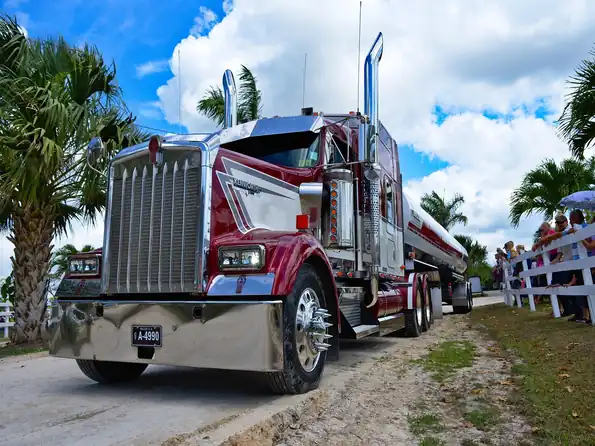
Commercial truck accident claims in California are structurally different from standard vehicle collision cases in every dimension that determines outcome — the regulatory framework, the evidence sources, the defendant structure, the insurance minimums, and the tactics deployed by carrier defense teams from the moment of the crash. A California truck accident lawyer who understands FMCSA regulations, ELD data preservation, black box extraction, and multi-defendant liability frameworks builds a materially stronger case than one approaching a commercial vehicle collision as an oversized car accident. The evidence that separates full recovery from a discounted settlement exists in the truck’s electronic systems, the carrier’s compliance records, and the driver’s duty logs — and most of it has a destruction deadline measured in days, not months.
California’s Central Valley is one of the highest-volume commercial freight corridors in the United States. Highway 99, Interstate 5, and the State Route 46 and 41 connectors carry continuous heavy truck traffic linking Southern California ports to Northern California distribution centers and agricultural shipping hubs. The collision patterns on these corridors — rear-end impacts at highway speed, jackknife events on grades and curves, wide-turn strikes in urban freight zones, and fatigue-related lane departures on overnight runs — are well-documented and produce the most catastrophic injury profiles of any vehicle collision type.
- Federal Regulations That Govern California Truck Accident Cases
- Common Types of California Truck Accident Cases
- Evidence That Must Be Preserved Immediately After a California Truck Accident
- Multi-Defendant Liability in California Truck Accident Cases
- Insurance Coverage in California Truck Accident Cases
- Injuries in California Truck Accident Cases
- Why California Truck Accident Cases Require Immediate Action
- California Truck Accident Frequently Asked Questions

Your Attorney — Sarwinder Dhanjan
Sarwinder Dhanjan is the founding attorney of Dhanjan Injury Lawyer. He handles every case personally — you work directly with him from the first call through final resolution. Attorney Dhanjan is admitted to the State Bar of California and is active in Fresno County Superior Court.
Trusted Representation
Boutique Representation - Powerful Outcomes
Federal Regulations That Govern California Truck Accident Cases
Interstate commercial trucking in California is governed by the Federal Motor Carrier Safety Administration regulations incorporated into California law through the California Vehicle Code. FMCSA violations — of hours-of-service limits, vehicle inspection requirements, weight and load restrictions, driver qualification standards, and drug and alcohol testing protocols — are directly relevant to liability and frequently establish negligence per se when a violation caused or contributed to the collision.
Hours-of-service violations are among the most common regulatory breaches in serious truck accident cases. Under FMCSA regulations, property-carrying drivers are limited to 11 hours of driving following 10 consecutive hours off duty, with a 14-hour on-duty window and a mandatory 30-minute rest break after 8 cumulative hours of driving. Carriers under delivery deadline pressure routinely push drivers past these limits. ELD data, which records driving time automatically, either confirms the violation or — when tampered with — creates its own evidentiary problem for the carrier.
Pre-trip inspection failures are documented in the driver’s daily vehicle inspection report, which drivers are federally required to complete before each trip. Brake defects, tire failures, and lighting violations that appear in the post-crash inspection but were not noted in the pre-trip report establish either that the driver failed to inspect as required or that the carrier failed to address known defects — both of which support liability.
Driver qualification failures — hiring a driver with a disqualifying medical condition, a history of moving violations, or an expired commercial license — create direct employer liability for the carrier independent of the driver’s conduct in the specific collision.
California’s meal and rest break requirements under California Labor Code section 512 apply to intrastate drivers and impose additional rest requirements beyond the federal FMCSA minimums. Intrastate carriers who fail to provide required breaks face both regulatory and civil liability for fatigue-related collisions.
Common Types of California Truck Accident Cases
- Rear-end collisions at highway speed — a fully loaded semi-truck traveling at 65 mph requires nearly 600 feet to stop. Distracted driving, following too closely, and inadequate speed reduction in construction zones and traffic slowdowns on Highway 99 and I-5 produce rear-end impacts with catastrophic force profiles.
- Jackknife accidents — sudden braking or evasive steering causes the trailer to swing outward relative to the cab, frequently sweeping across multiple lanes. Jackknife events occur most commonly on grades, in wet conditions, and when the driver brakes abruptly with an improperly loaded or unbalanced trailer.
- Wide-turn strikes — commercial trucks making right turns must swing left before turning, creating a gap between the truck and the curb that draws in cyclists, motorcyclists, and passenger vehicles that are then struck as the truck completes the turn. Wide-turn collisions in urban freight zones and at highway off-ramps are a consistent source of serious injuries.
- Underride collisions — a passenger vehicle slides under the rear or side of a truck trailer, frequently causing catastrophic head and neck injuries. Federal underride guard requirements exist specifically to prevent this collision type, and underride guard failures create product liability claims against the trailer manufacturer alongside driver and carrier negligence claims.
- Unsecured cargo and load shifts — improperly secured cargo that falls from a truck or causes the trailer to tip creates liability for the driver, the carrier, and potentially the loading company or shipper depending on who was responsible for the load. California Vehicle Code sections governing load securement apply alongside FMCSA cargo securement regulations.
- Tire blowouts — commercial tire failures at highway speed produce sudden loss of vehicle control. When a blowout results from inadequate maintenance, improper inflation, overloading beyond rated capacity, or use of retreaded tires in violation of carrier policy, the carrier and potentially the tire manufacturer face liability.
- Fatigue-related lane departures — overnight freight runs on I-5 and Highway 99 produce consistent fatigue-related lane departure events. ELD data, forward-facing camera footage, and the absence of pre-impact braking in the black box record establish drowsy driving even when the driver denies fatigue.
Evidence That Must Be Preserved Immediately After a California Truck Accident
The most important evidence in commercial truck accident cases exists in electronic systems and carrier records that are subject to automatic destruction on timelines far shorter than the two-year statute of limitations. A legal hold demand served on the carrier within 24 to 48 hours of the crash is the single most critical early action in any serious truck accident case.
- Electronic Logging Device data — ELD records document the driver’s hours of service, driving time, and rest periods automatically and cannot be falsified without leaving detectable markers. ELD data is typically retained for six months under FMCSA regulations and must be preserved immediately through a formal legal hold demand.
- Event Data Recorder (black box) data — the truck’s ECM records pre-crash speed, braking application, throttle position, cruise control status, and engine RPM in the seconds before impact. This data establishes whether the driver was speeding, whether brakes were applied before impact, and how long the driver had to react. Black box data overwrites on a rolling cycle and can be lost in days without preservation action.
- Onboard camera footage — forward-facing and driver-facing cameras are increasingly standard in commercial fleets. Forward footage documents the collision event; driver-facing footage documents distraction, cell phone use, and fatigue signs including microsleep and eye closure. This footage overwrites on 24-to-72-hour cycles.
- Driver qualification file — the carrier’s complete file on the driver including license history, medical certificates, drug and alcohol testing records, prior violation history, and training records. This file establishes whether the carrier conducted required pre-employment screening and whether the driver was qualified to operate the vehicle.
- Vehicle maintenance and inspection records — the truck’s complete maintenance history, brake inspection records, tire records, and the driver’s daily vehicle inspection reports. These records establish whether defects that contributed to the collision were known to the carrier before the crash.
- Hours-of-service logs and dispatch records — paper logs if maintained alongside ELD records, dispatch communications, delivery schedules, and GPS route data establish the driver’s actual activities and whether delivery deadline pressure contributed to hours-of-service violations.
- Weigh station and inspection records — California Highway Patrol Commercial Vehicle Enforcement records of prior inspections, violations, and out-of-service orders for the specific truck and trailer involved in the collision.
Multi-Defendant Liability in California Truck Accident Cases
One of the most significant differences between truck accident cases and standard vehicle collision claims is the number of potentially liable parties. Identifying all defendants from the outset — and preserving evidence against each — is essential to accessing the full available recovery.
The truck driver is directly liable for negligent operation — speeding, distracted driving, hours-of-service violations, and failure to maintain safe following distance. The trucking company faces vicarious liability for the driver’s conduct under respondeat superior and direct liability for negligent hiring, training, supervision, and vehicle maintenance. The distinction between employee drivers and independent contractors matters — carriers frequently misclassify drivers as independent contractors to limit respondeat superior exposure, a classification that California courts examine closely under the ABC test established by Assembly Bill 5.
The cargo loader or shipper may be liable when improper loading caused a load shift, rollover, or cargo spill that contributed to the collision. The vehicle or parts manufacturer faces strict products liability when a component defect — brake failure, tire defect, underride guard failure, or steering system failure — contributed to the crash. The truck owner may be separate from the carrier when equipment is leased, creating additional layers of liability through negligent entrustment claims. The maintenance contractor carries liability when outsourced maintenance failures contributed to a mechanical cause of the collision.
Insurance Coverage in California Truck Accident Cases
Federal FMCSA regulations require minimum liability insurance for interstate commercial carriers of $750,000 for general freight, $1,000,000 for carriers of certain hazardous materials, and $5,000,000 for carriers of the most hazardous cargo categories. These minimums substantially exceed the $30,000 per person / $60,000 per accident California minimum for passenger vehicle coverage and reflect the catastrophic injury potential of commercial vehicle collisions.
In practice, major commercial carriers maintain coverage well above FMCSA minimums, and many operate with $1,000,000 to $10,000,000 or higher umbrella policies. The availability of substantial coverage does not simplify the claims process — it increases the resources the carrier and its insurer deploy to defend the claim. Major trucking insurers employ specialized truck accident defense teams, accident reconstruction firms, and medical experts whose sole focus is minimizing payout on commercial vehicle claims. The preparation required to recover full value against these resources must match their level from the outset of the case.
What We Bring to Your Case
Disciplined preparation. Direct access. No fee unless we win.
Injuries in California Truck Accident Cases
The physics of commercial vehicle collisions produce an injury profile that is consistently more severe than passenger vehicle crashes. A fully loaded semi-truck weighs up to 80,000 pounds under federal weight limits — approximately 20 to 25 times the weight of a standard passenger vehicle. The energy transfer in a high-speed truck collision is proportional to that mass differential, and the injuries sustained by passenger vehicle occupants reflect it.
Traumatic brain injury from high-force impacts produces a spectrum from concussion-level symptoms through severe cognitive impairment requiring permanent care. TBI in truck accident cases frequently involves coup-contrecoup brain injury from rapid deceleration that is not always visible on initial imaging and requires neurological specialist evaluation to fully characterize. Spinal cord injury producing partial or complete paralysis is among the most catastrophic outcomes of serious truck collisions. These cases require ASIA classification, life care planning, and lifetime medical cost projection by qualified experts — see our Spinal Cord Injury Lawyer page for the full framework. Crush injuries and traumatic amputations occur in underride collisions and high-force impacts where the structural integrity of the passenger compartment is compromised. Internal organ injuries from seat belt loading and steering wheel impact in high-force deceleration require immediate surgical evaluation and produce long-term complications that must be fully documented before any settlement is considered. Burn injuries occur when fuel system rupture and ignition follow a severe collision — see our Burn Injury Lawyer page. Fatal truck accident claims are handled under California’s wrongful death framework — see our Wrongful Death Lawyer page.
Why California Truck Accident Cases Require Immediate Action
Evidence destruction timelines are measured in hours and days, not months. ELD data, black box records, and onboard camera footage all overwrite automatically. The carrier’s legal team begins evidence management from the moment of the crash notification. Without an immediate legal hold demand served by an attorney, critical electronic evidence disappears before the injured party is out of the hospital.
Carrier investigators arrive at the scene before you do. Major trucking companies maintain relationships with specialized accident investigation firms that respond to serious crashes within hours. Their purpose is to document the scene in a way that supports the carrier’s defense position. Independent accident reconstruction retained by the plaintiff’s attorney provides the counterweight — but only if retained early enough to examine the scene before it is altered or cleaned.
Multi-defendant cases require coordinated early strategy. Identifying all potentially liable parties, serving preservation demands on each, and coordinating discovery across multiple defendants requires case strategy that cannot be assembled effectively weeks or months after the crash.
Direct attorney access throughout your case. You work directly with your California truck accident lawyer from the first consultation through final resolution — not a case manager for substantive communications about your claim.
No fee unless we recover for you. We handle truck accident cases on a contingency fee basis. No upfront costs, no attorney fees unless we win.
Speak with an Attorney and understand your next steps
Need a California Truck Accident Lawyer?
California Truck Accident Frequently Asked Questions
How is a truck accident case different from a car accident case?
Commercial truck accident cases differ from standard vehicle collision claims in the regulatory framework that applies, the number of potentially liable defendants, the insurance coverage available, the evidence sources that exist, and the resources the defense deploys. FMCSA regulations impose specific duties on drivers and carriers that do not apply to passenger vehicles. Multiple defendants — the driver, the carrier, the cargo loader, the vehicle manufacturer — may each carry independent liability. Insurance minimums for interstate carriers start at $750,000 and frequently reach $1,000,000 or more. And the electronic evidence — ELD data, black box records, camera footage — must be preserved within days of the crash or it is gone.
What is an ELD and why does it matter in my truck accident case?
An Electronic Logging Device is a federally mandated device that automatically records a commercial driver’s hours of service, driving time, and rest periods. It replaced paper log books specifically because paper logs were routinely falsified. ELD data establishes whether the driver was operating within federal hours-of-service limits at the time of the crash, and whether the carrier was aware of any violations. ELD data is typically retained for six months under FMCSA regulations and must be preserved through an immediate legal hold demand. It is frequently the most powerful single piece of evidence in a fatigue-related truck accident case.
Who can be sued after a truck accident in California?
Potentially liable parties in a California truck accident case include the truck driver for negligent operation, the trucking company for respondeat superior liability and direct liability for negligent hiring and maintenance, the cargo loader or shipper when improper loading contributed to the crash, the vehicle or parts manufacturer when a component defect was a cause, the truck owner when separate from the carrier under a lease arrangement, and the maintenance contractor when outsourced repairs failed. Identifying all defendants from the outset is critical — some defendants become inaccessible or their evidence disappears if claims are not asserted promptly.
How long do I have to file a truck accident claim in California?
Most California truck accident personal injury claims must be filed within two years of the date of the collision under Code of Civil Procedure section 335.1. However, the practical deadline for evidence preservation is measured in days — ELD data, black box records, and camera footage overwrite on rolling cycles, and the carrier’s investigative team begins evidence management immediately. The statute of limitations deadline does not protect you from evidence loss that occurs in the first 24 to 72 hours after the crash. Contact a truck accident attorney immediately after any serious commercial vehicle collision.
What if the truck driver was an independent contractor?
Carriers frequently classify drivers as independent contractors specifically to limit respondeat superior liability. California courts apply the ABC test established by Assembly Bill 5 to determine whether a worker is truly an independent contractor or a misclassified employee. Under the ABC test, the carrier bears the burden of proving the driver operates independently. Many owner-operators who carry the carrier’s placards, follow the carrier’s routes, and operate under the carrier’s authority are classified as employees for liability purposes despite independent contractor designations in their agreements. This analysis requires early investigation into the driver-carrier relationship before the carrier can restructure that relationship post-crash.
What is the minimum insurance requirement for commercial trucks in California?
Federal FMCSA regulations require minimum liability insurance of $750,000 for interstate carriers of general freight, $1,000,000 for carriers of certain hazardous materials, and $5,000,000 for carriers of the most hazardous cargo. These minimums are substantially higher than California’s $30,000 per person minimum for passenger vehicles and reflect the catastrophic injury potential of commercial vehicle collisions. Major carriers typically maintain coverage well above these minimums, often with umbrella policies of $1,000,000 to $10,000,000 or higher.
What if the truck that hit me was overloaded or had an unsecured load?
Overloading and cargo securement violations create liability for the driver, the carrier, and potentially the loading company or shipper. California Vehicle Code sections governing load securement apply alongside FMCSA cargo securement regulations. Overloading beyond federal weight limits affects braking distance and vehicle stability and is documented in weigh station records and post-crash inspection reports. Cargo spill cases involving third parties — drivers who swerve to avoid fallen cargo or strike debris in the roadway — create specific liability frameworks that extend beyond the standard driver-carrier defendant structure.
What damages can I recover after a truck accident in California?
Recoverable damages in a California truck accident case include all past and future medical expenses causally connected to the collision, lost wages during recovery, diminished future earning capacity when injuries are permanent or career-limiting, physical pain and suffering, emotional distress, and loss of enjoyment of life. In cases involving FMCSA violations, willful hours-of-service falsification, or extreme recklessness, punitive damages may be available under California Civil Code section 3294. Future medical and economic damages in catastrophic injury cases require life care planning and forensic economic analysis by qualified experts to establish with the specificity required for trial.