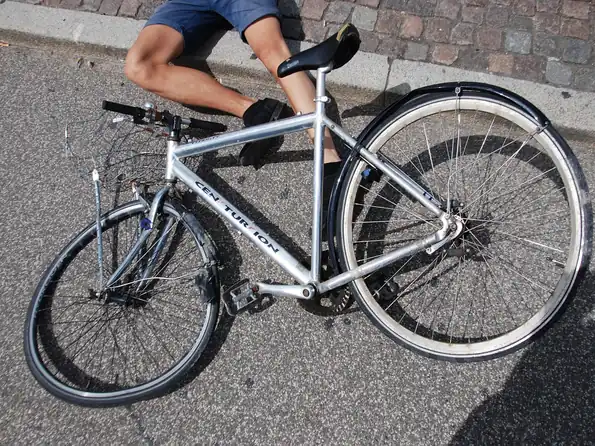
Cyclists injured in California accidents face a legal landscape shaped by a persistent and demonstrably false assumption — that the cyclist was at fault. Insurance adjusters deploy this bias systematically, using every gap in the evidence record to shift responsibility onto the rider regardless of what the objective evidence shows. A California bicycle accident lawyer who understands how this bias operates, and who builds a claim that neutralizes it with preserved scene evidence, traffic engineering data, and witness testimony, produces outcomes that reactive, unprepared claims never reach.
California has the largest cycling population of any state and generates more serious cyclist injury claims than any other. The Central Valley’s flat terrain, agricultural road networks, and urban growth corridors create a distinct collision pattern that differs from coastal cycling environments — wider roads with higher speed limits, less developed bike lane infrastructure in rural areas, and agricultural vehicle traffic that creates specific hazard profiles for cyclists. Understanding the evidence requirements, the liability framework, and the insurance defense tactics specific to California bicycle accident cases is the foundation of recovering full value for a cyclist injury claim.
- California Bicycle Law — Rights and Duties Every Cyclist Claim Turns On
- Common Causes of California Bicycle Accidents
- Evidence That Must Be Preserved Immediately After a California Bicycle Accident
- Injuries in California Bicycle Accident Cases
- The Helmet Defense — How Carriers Use It and How to Counter It
- Road Defect Claims — Public Entity Liability in Bicycle Cases
- Compensation Available in California Bicycle Accident Cases
- Why California Bicycle Accident Victims Choose Dhanjan Injury Lawyer
- California Bicycle Accident Frequently Asked Questions
Your Attorney — Sarwinder Dhanjan
Sarwinder Dhanjan is the founding attorney of Dhanjan Injury Lawyer. He handles every case personally — you work directly with him from the first call through final resolution. Attorney Dhanjan is admitted to the State Bar of California and is active in Fresno County Superior Court.
Trusted Representation
Boutique Representation - Powerful Outcomes
California Bicycle Law — Rights and Duties Every Cyclist Claim Turns On
California law grants cyclists the same rights and imposes the same duties as motor vehicle operators on public roads under California Vehicle Code section 21200. This means drivers owe cyclists the same duty of care they owe other vehicle operators — and that cyclists’ comparative fault is evaluated under the same standards applied to drivers, not a heightened standard that presumes cyclist error.
Safe passing distance is mandatory. Under California Vehicle Code section 21760, drivers must maintain a minimum three-foot clearance when passing a cyclist and must slow to a safe speed before passing. Failure to maintain three-foot clearance is a statutory violation that establishes negligence per se — meaning the driver’s breach of duty is established by the violation itself without requiring additional proof of unreasonable conduct.
Bike lane rules protect cyclists. Under California Vehicle Code section 21209, motor vehicles are prohibited from driving in a designated bicycle lane except to turn, park where permitted, or enter or exit the roadway. A driver who enters a bike lane and strikes a cyclist has violated a statute specifically designed to protect cyclists — a strong basis for negligence per se liability.
Dooring is a statutory violation. Under California Vehicle Code section 22517, no person shall open a vehicle door on the traffic side unless it can be done safely and without interfering with the movement of traffic. A driver or passenger who opens a door into a cyclist’s path without checking for approaching cyclists has violated this statute and is liable for the resulting injuries.
California follows pure comparative fault under Civil Code section 1714. Even a cyclist found partially at fault — for riding outside a bike lane, failing to signal, or traveling at excessive speed — recovers proportionally reduced damages rather than nothing. Carriers exploit comparative fault aggressively in bicycle cases, and objective evidence is the primary defense against unfair fault allocation.
Common Causes of California Bicycle Accidents
- Dooring — a driver or passenger opens a vehicle door into the cyclist’s path without checking for approaching riders. Dooring is one of the most common urban cyclist injury mechanisms and produces severe injuries because the cyclist has no ability to anticipate or avoid the collision.
- Unsafe overtaking — a driver passes a cyclist without maintaining the mandatory three-foot clearance, clipping the cyclist or forcing them off the road. High-speed rural roads and narrow urban lanes are the most common locations for unsafe passing collisions.
- Right hook collisions — a driver turns right across a cyclist’s path at an intersection, either failing to see the cyclist in the bike lane or misjudging the cyclist’s speed. Right hook collisions are among the most dangerous intersection mechanisms for cyclists.
- Left cross collisions — an oncoming driver turns left across the cyclist’s path, typically because the driver misjudges the cyclist’s speed or fails to see the rider approaching the intersection.
- Rear-end collisions — a driver strikes a cyclist from behind, particularly on rural roads without bike lane infrastructure where cyclists and motor vehicles share the travel lane. Distracted driving and inadequate following distance are the primary causes.
- Bike lane intrusion — a driver enters a designated bike lane and strikes a cyclist traveling within the protected lane. Bike lane intrusion violates Vehicle Code section 21209 and establishes negligence per se.
- Road defects — potholes, cracked pavement, debris, unmarked surface transitions, and defective drainage grates cause cyclists to lose control and fall. These cases involve public entity liability for road maintenance failures alongside or instead of driver negligence.
- Agricultural vehicle conflicts — in the Central Valley, slow-moving farm equipment, wide agricultural loads, and unpaved road transitions create specific hazard conditions for cyclists not present in urban cycling environments.
Evidence That Must Be Preserved Immediately After a California Bicycle Accident
Bicycle accident evidence closes faster than almost any other vehicle collision type because cyclists typically lack dashcam footage and the crash scenes are smaller and less marked by physical evidence than motor vehicle collisions. Immediate action on evidence preservation is critical.
- Scene photographs — all vehicle and bicycle positions before they are moved, road conditions, bike lane markings, tire marks, debris field, the door position in dooring cases, and any visible injuries documented at the scene
- Bicycle damage documentation — the bicycle itself is physical evidence. Photograph all damage before the bicycle is repaired or moved, and preserve the bicycle in its post-collision condition until the case is resolved
- Witness contact information — names and phone numbers of everyone who witnessed the collision or the events immediately preceding it, obtained before witnesses leave the scene
- Driver information — license plate, driver’s license, insurance information, and a photograph of the driver if possible
- Traffic camera and business surveillance footage — intersections, parking structures, and adjacent businesses frequently have cameras covering the scene. This footage overwrites on 24-to-72-hour cycles and requires immediate preservation demands
- Road defect documentation — if the crash involved a pothole, defective surface, or infrastructure failure, photograph the defect in detail and note the exact location before it is repaired by the public agency responsible for the road
- Medical records from the same day — emergency department records and imaging studies from the date of the collision establish the causal chain between the crash and the injuries and prevent carriers from arguing delayed onset means the injury was not caused by the accident
Injuries in California Bicycle Accident Cases
Cyclists absorb the full impact of vehicle collisions with no structural protection. The injury profile in bicycle accident cases is consistently more severe than in comparable vehicle-to-vehicle collisions, and the damages analysis must reflect both the immediate injury costs and the long-term consequences of injuries that frequently involve orthopedic, neurological, and psychological components.
Traumatic brain injury is among the most serious and most common severe injuries in bicycle accidents, occurring when the head contacts the vehicle, the road surface, or both. Helmet use reduces TBI severity but does not eliminate it — helmeted cyclists sustain TBI in high-force collisions, and helmet use does not affect the driver’s liability for the collision. TBI cases require neurological evaluation, neuropsychological testing, and in serious cases life care planning for long-term cognitive and functional consequences. Road rash and soft tissue injuries from pavement contact are the most frequently occurring bicycle accident injuries. Severe road rash involving deep tissue damage, infection risk, and scarring produces both significant medical costs and substantial non-economic damages. Fractures of the clavicle, wrist, elbow, shoulder, and lower extremity are common from impact and fall mechanisms in bicycle accidents and frequently require surgical intervention and extended rehabilitation. Spinal injuries from high-force impacts with vehicles produce cervical and lumbar damage that can result in permanent neurological impairment. For catastrophic spinal cord injury cases see our Spinal Cord Injury Lawyer page. Psychological injuries including post-traumatic stress disorder, cycling phobia, and generalized anxiety following serious bicycle accidents are compensable non-economic damages that require psychological evaluation and treatment documentation.
The Helmet Defense — How Carriers Use It and How to Counter It
California does not require adult cyclists to wear helmets. Carriers routinely argue that an unhelmeted adult cyclist assumed the risk of head injury or was comparatively at fault for not wearing a helmet. This argument is legally weak in California for several reasons. First, assumption of risk in this context requires that the cyclist voluntarily assumed the specific risk of being struck by a negligent driver — which no reasonable person does. Second, comparative fault for helmet non-use requires the carrier to establish that the helmet would have prevented the specific injuries sustained, which is a factual showing that requires expert testimony the carrier rarely presents convincingly. Third, California courts have been skeptical of comparative fault arguments based on safety equipment non-use when the underlying activity is lawful.
Carriers raise the helmet defense because it works on unrepresented claimants who assume the argument has merit. An attorney who understands the legal standard can neutralize this defense before it affects the damages calculation.
What We Bring to Your Case
Disciplined preparation. Direct access. No fee unless we win.
Road Defect Claims — Public Entity Liability in Bicycle Cases
When a bicycle accident is caused by a pothole, cracked pavement, defective drainage grate, debris on a bike lane, or other road infrastructure failure, the public entity responsible for maintaining that road — a city, county, or state agency — may be liable under California Government Code section 835. Public entity liability for road defects requires establishing that the defect existed, that it created a reasonably foreseeable risk of injury to cyclists, that the public entity had actual or constructive notice of the defect, and that the defect caused the injury.
Road defect claims against public entities require a formal government tort claim filed within six months of the accident date — the same deadline that applies to bus accident government entity claims. Missing this deadline permanently bars the lawsuit against the public entity regardless of how clear the defect and the causation are. If your bicycle accident involved a road condition that contributed to the crash, contact a California bicycle accident lawyer immediately to protect this deadline.
Compensation Available in California Bicycle Accident Cases
- Past medical expenses — all treatment costs from the date of the collision through settlement or trial, including emergency care, surgery, hospitalization, and rehabilitation
- Future medical expenses — projected costs of ongoing treatment, additional surgeries, physical therapy, and long-term care required because of the collision injuries
- Bicycle repair or replacement — the full cost to repair or replace the bicycle and any damaged equipment at current market value
- Lost wages — income lost during recovery, documented by employment records and earnings history
- Diminished future earning capacity — when injuries are permanent or career-limiting, the present value of lost future income requires forensic economic expert testimony
- Physical pain and suffering — compensation for the physical pain experienced during the injury and recovery period
- Emotional distress — documented psychological consequences including PTSD, cycling phobia, and anxiety
- Loss of enjoyment of life — permanent impairment of cycling and other activities the victim previously enjoyed
- Punitive damages — available in cases involving DUI drivers, extreme recklessness, or intentional conduct under California Civil Code section 3294
Why California Bicycle Accident Victims Choose Dhanjan Injury Lawyer
We know how carrier bias against cyclists operates. The assumption-of-fault narrative that adjusters deploy in bicycle cases is a tactic, not a legal standard. We build claims that neutralize it with objective evidence before it affects the negotiation.
Trial-ready preparation from day one. Every bicycle accident case is built as if it will go before a jury. That standard produces real leverage at the negotiating table before trial ever becomes necessary.
Evidence preservation from the first call. Scene evidence, traffic camera footage, and road defect documentation close fast in bicycle cases. We move immediately on preservation demands before the window closes.
Direct attorney access throughout your case. You work directly with your California bicycle accident lawyer from the first consultation through final resolution — not a case manager for substantive communications about your claim.
No fee unless we recover for you. We handle bicycle accident cases on a contingency fee basis. No upfront costs, no attorney fees unless we win.
Speak with an Attorney and understand your next steps
Need a California Bicycle Accident Lawyer?
California Bicycle Accident Frequently Asked Questions
Do drivers have to give cyclists three feet of space in California?
Yes. California Vehicle Code section 21760 requires drivers to maintain a minimum three-foot clearance when passing a cyclist and to slow to a safe speed before passing. Failure to maintain three-foot clearance is a statutory violation that establishes negligence per se — meaning the breach of duty is established by the violation itself without requiring additional proof of unreasonable conduct. Evidence of the passing distance is typically established through scene measurements, witness testimony, and in some cases accident reconstruction analysis.
What if the driver claims I was riding in traffic illegally?
Under California Vehicle Code section 21200, cyclists have the same rights and duties as motor vehicle operators on public roads. Cyclists are not required to ride in a bike lane at all times — they may use the travel lane when the bike lane is unsafe, when preparing to turn, or when the bike lane is blocked. A driver’s claim that a cyclist was riding illegally requires specific legal analysis of the circumstances, not a general assumption that cyclists belong only in designated lanes. These arguments are frequently asserted by carriers without legal support and are contestable with proper statutory analysis.
Can I recover if I was not wearing a helmet?
Yes. California does not require adult cyclists to wear helmets. Carriers routinely argue that helmet non-use constitutes comparative fault, but this argument requires the carrier to establish that a helmet would have prevented the specific injuries sustained — a factual showing that requires convincing expert testimony the carrier rarely presents successfully. California courts have been skeptical of comparative fault arguments based on safety equipment non-use when the underlying activity is lawful. An attorney who understands this legal standard can neutralize the helmet defense before it affects your recovery.
What if I was doored — hit by an opening car door?
Dooring is a statutory violation under California Vehicle Code section 22517, which prohibits opening a vehicle door on the traffic side unless it can be done safely and without interfering with traffic movement. A driver or passenger who opens a door into a cyclist’s path without checking for approaching riders has violated this statute and is liable for the resulting injuries. The liability analysis is typically straightforward — the key evidence is the door position at impact, witness testimony, and the cyclist’s injuries, which in dooring cases are frequently severe because the cyclist cannot anticipate or avoid the collision.
What if my bicycle accident was caused by a pothole or road defect?
When a road defect causes a bicycle accident, the public entity responsible for maintaining the road may be liable under Government Code section 835. However, claims against public entities require a formal government tort claim filed within six months of the accident date. Missing this deadline permanently bars the lawsuit against the public entity. If your bicycle accident involved a road condition that contributed to the crash, contact an attorney immediately — do not wait until your medical treatment is complete to evaluate whether a government entity claim is required.
How long do I have to file a bicycle accident claim in California?
Most California bicycle accident personal injury claims must be filed within two years of the date of the collision under Code of Civil Procedure section 335.1. If a government entity was involved — a dangerous road condition maintained by a city or county, or a government vehicle — a formal government claim must be filed within six months under Government Code section 835. If your accident involved any road infrastructure failure or a public vehicle, contact an attorney immediately to confirm which deadline applies.
What damages can I recover after a bicycle accident in California?
Recoverable damages include all past and future medical expenses causally connected to the collision, bicycle repair or replacement costs, lost wages during recovery, diminished future earning capacity when injuries are permanent, physical pain and suffering, emotional distress including PTSD and cycling phobia, and loss of enjoyment of life. In cases involving DUI drivers or extreme recklessness, punitive damages may also be available. Future medical and economic damages in serious injury cases require expert testimony to establish with the specificity required for trial or mediation.
What should I do immediately after a bicycle accident in California?
Call 911 and request law enforcement and medical response. Do not move the bicycle or any other evidence before photographs are taken. Document the scene thoroughly — vehicle positions, road conditions, bike lane markings, door position in dooring cases, and all visible injuries. Obtain the driver’s license plate, license, and insurance information. Get witness names and contact information before they leave. Seek medical evaluation the same day even if symptoms seem minor. Do not give a recorded statement to any insurance carrier before consulting an attorney. Contact a California bicycle accident lawyer immediately so evidence preservation demands can be served before camera footage overwrites.