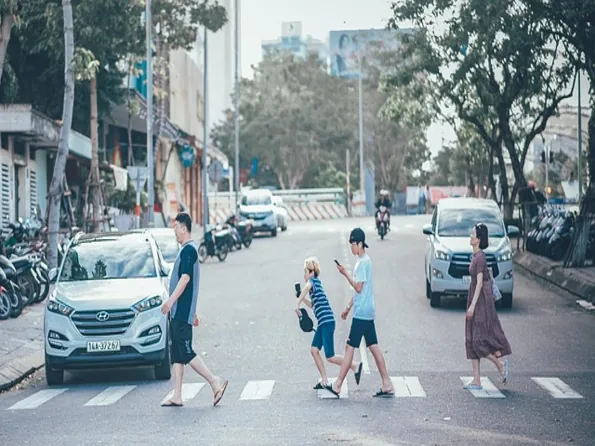
Pedestrians struck by motor vehicles absorb the full force of the collision with no structural protection — no crumple zone, no airbag, no seatbelt — and the injury profile reflects it. California generates more pedestrian fatalities and serious pedestrian injuries than any other state, and the legal claims that follow these collisions require a specific understanding of right-of-way law, crosswalk liability, turning movement analysis, and the signal timing data that frequently determines who was legally in the right when accounts conflict. A California pedestrian accident lawyer who builds these cases with preserved intersection data, engineering analysis, and objective liability documentation recovers outcomes that reactive claims do not reach.
The Central Valley’s pedestrian collision pattern reflects its built environment — wide arterial roads designed for vehicle throughput rather than pedestrian safety, uncontrolled mid-block crossings on high-speed corridors, agricultural worker exposures on rural roads without sidewalk infrastructure, and urban commercial strips where turning vehicle conflicts at signalized intersections produce a consistent pattern of serious pedestrian injuries. Understanding the specific legal framework that governs these collisions is the foundation of recovering full value for a pedestrian injury claim in California.
California Pedestrian Right-of-Way Law — What the Statutes Actually Say
California grants pedestrians significant right-of-way protections, but those protections are more nuanced than the common assumption that pedestrians always have the right of way. Understanding the specific statutes that apply to each collision scenario is essential to building a liability case that survives carrier challenges and comparative fault arguments.
Crosswalk right-of-way. Under California Vehicle Code section 21950, drivers must yield the right-of-way to a pedestrian crossing in a crosswalk when the pedestrian is in the driver’s half of the roadway or is approaching so closely as to be in danger. This right-of-way applies to both marked and unmarked crosswalks — an unmarked crosswalk exists at every intersection where sidewalks meet, whether or not painted lines are present. A driver who strikes a pedestrian in a marked or unmarked crosswalk has violated this statute and is liable for negligence per se.
Turning vehicle obligations. Under California Vehicle Code section 21951, a driver approaching a crosswalk where another vehicle has stopped to yield to a pedestrian must also stop — drivers may not pass the stopped vehicle and proceed through the crosswalk. Right-turning and left-turning vehicles at signalized intersections owe the same duty of care to pedestrians in crosswalks as vehicles proceeding straight. Turning vehicle strikes are the most common mechanism for serious pedestrian injuries at signalized intersections because drivers focus on oncoming traffic during the turn and fail to check for pedestrians already in the crosswalk.
Pedestrian signal compliance. Under California Vehicle Code section 21456, a pedestrian facing a steady “Don’t Walk” signal shall not enter the roadway. A pedestrian who enters against a “Don’t Walk” signal may face comparative fault, but this does not eliminate the driver’s independent duty to yield to a pedestrian already in the crosswalk — a driver who proceeds through a crosswalk where a pedestrian is present, even one who entered against the signal, remains liable for failing to yield.
Pedestrian duties outside crosswalks. Under California Vehicle Code section 21954, a pedestrian crossing outside a crosswalk must yield the right-of-way to vehicles. However, this does not eliminate driver liability — drivers retain the duty to exercise due care to avoid striking pedestrians regardless of where in the roadway the pedestrian is located. Mid-block crossing cases require careful fault allocation analysis rather than the automatic comparative fault assignment carriers routinely attempt.
Common Causes of California Pedestrian Accidents
- Turning vehicle strikes at signalized intersections — right-turning and left-turning vehicles striking pedestrians in crosswalks who have the walk signal is the most common serious pedestrian injury mechanism in California’s urban environments. Drivers focused on gap acceptance in oncoming traffic fail to check the crosswalk before or during the turn.
- Mid-block crossings on high-speed arterials — pedestrians crossing high-speed arterial roads outside marked crosswalks on Central Valley commercial corridors face high-force collision exposure. These cases require careful comparative fault analysis — the driver’s duty to exercise due care persists regardless of the pedestrian’s crossing location.
- Backing vehicle strikes — vehicles backing out of driveways, parking spaces, and loading zones without adequate rearward lookout strike pedestrians who are in the driver’s blind zone. Backing strikes frequently involve serious injuries because the pedestrian has no warning and no ability to avoid the collision.
- Hit-and-run collisions — California has one of the highest hit-and-run rates in the country. When the at-fault driver flees the scene, recovery depends on identifying the vehicle through surveillance footage, witness testimony, and law enforcement investigation, or on accessing the injured pedestrian’s own uninsured motorist coverage.
- Distracted driver strikes — cell phone use, in-vehicle display interaction, and other distracted driving behaviors reduce driver awareness of pedestrians at intersections and in crosswalks. Distracted driving evidence — cell phone records, forward-facing camera footage, and the absence of pre-impact braking — is critical to establishing liability and supporting punitive damages in egregious cases.
- DUI driver collisions — impaired drivers disproportionately fail to perceive pedestrians and react inadequately when pedestrians are detected. DUI pedestrian strikes support punitive damages claims under California Civil Code section 3294 and produce some of the most serious pedestrian injury and fatality cases.
- School zone and crosswalk guard failures — pedestrian collisions near schools involving inadequate traffic control, signal timing failures, or missing crosswalk infrastructure may implicate public entity liability for the agency responsible for road and signal maintenance alongside driver negligence.
- Agricultural worker road crossings — in the Central Valley, agricultural workers crossing rural roads without sidewalks or marked crosswalks face specific exposure on high-speed corridors with limited lighting and no pedestrian infrastructure. These cases involve road design liability alongside driver negligence in appropriate circumstances.
Signal Timing and Intersection Data — The Evidence That Resolves Disputed Liability
In pedestrian accident cases where the driver claims the pedestrian crossed against the signal or was not in a crosswalk, signal timing data and intersection engineering records are the most powerful objective evidence available. This data exists and must be obtained through formal requests before it is purged from agency systems.
Signal phase and timing records maintained by the city or county transportation agency document the exact signal state — walk, don’t walk, flashing don’t walk, vehicle green — at the time of the collision. In many intersections this data is stored in the traffic management system and is available for the specific time of the crash. A pedestrian hit by a turning vehicle who claims to have had the walk signal can frequently establish this with the signal phase records — eliminating the driver’s “pedestrian crossed against the signal” defense entirely.
Traffic camera footage from intersection surveillance systems, adjacent businesses, and CaltransDynamic Message Sign cameras covers many Central Valley intersections. This footage overwrites on rolling cycles and must be preserved through immediate legal hold demands served on the city, county, and any private entities whose cameras cover the scene.
Crosswalk geometry and visibility analysis by a traffic engineering expert establishes whether the crosswalk design, signal timing, lighting conditions, and surrounding infrastructure met the standards required by the Federal Highway Administration’s Manual on Uniform Traffic Control Devices and California’s own traffic engineering standards. Infrastructure deficiencies that contributed to the collision create public entity liability alongside driver negligence.
Hit-and-Run Pedestrian Accidents — Recovery Options
When the at-fault driver flees the scene, the injured pedestrian’s primary recovery path depends on whether the vehicle is identified. Law enforcement investigation, witness statements, nearby surveillance footage, and license plate recognition cameras on adjacent roadways are the most common identification sources. An attorney who can quickly coordinate evidence requests across law enforcement, city traffic systems, and private surveillance networks significantly improves the odds of vehicle identification before footage is lost.
When the at-fault vehicle cannot be identified, recovery falls to the injured pedestrian’s own uninsured motorist coverage. California insurance policies that include UM coverage cover pedestrian strikes by uninsured and unidentified drivers — the pedestrian does not need to be in a vehicle at the time of the collision to access their own UM coverage. UM claims are made against the pedestrian’s own insurer and require the same liability and damages documentation as third-party claims. California law requires physical contact between the at-fault vehicle and the pedestrian for most UM claims involving unidentified vehicles — a pedestrian who was forced to jump out of the way without contact may face additional hurdles in accessing UM coverage for that specific scenario.
When the at-fault driver is identified but carries no insurance or insufficient insurance, the pedestrian’s own uninsured and underinsured motorist coverage is again the primary supplemental recovery source. The California Department of Insurance requires insurers to offer UM/UIM coverage to all California policyholders — reviewing your own policy for the available limits is an essential early step in any pedestrian accident case.
Injuries in California Pedestrian Accident Cases
The injury profile in pedestrian accident cases is among the most severe of any vehicle collision type. A pedestrian struck by a vehicle at 30 mph has a significant probability of fatal or permanently disabling injury. At 40 mph or above, survival without catastrophic injury is statistically rare. The damages analysis in serious pedestrian cases must reflect both the immediate injury costs and the full long-term consequences.
Traumatic brain injury is the most common cause of death and long-term disability in pedestrian accident cases. The pedestrian’s head frequently contacts the vehicle hood, windshield, or road surface in rapid succession, producing coup-contrecoup brain injuries that may not be immediately apparent on initial imaging. TBI evaluation requires neurological specialist assessment, neuropsychological testing, and in serious cases life care planning for permanent cognitive and functional consequences. Spinal cord injury producing partial or complete paralysis occurs in high-force pedestrian impacts and requires the full catastrophic injury claims framework — see our Spinal Cord Injury Lawyer page. Lower extremity fractures of the femur, tibia, fibula, and pelvis are among the most common orthopedic injuries in pedestrian collisions, frequently requiring surgical fixation and extended rehabilitation with significant permanent consequences. Internal organ injuries from bumper and hood contact require immediate surgical evaluation. Soft tissue injuries from road surface contact produce road rash, scarring, and nerve damage that require aggressive early treatment and plastic surgery evaluation. Fatal pedestrian collisions are handled under California’s wrongful death framework — see our Wrongful Death Lawyer page.
What We Bring to Your Case
Disciplined preparation. Direct access. No fee unless we win.
Public Entity Liability in California Pedestrian Accident Cases
When a pedestrian accident is caused or contributed to by a road design defect, inadequate crosswalk infrastructure, signal timing failure, or missing pedestrian safety features, the public entity responsible for that infrastructure may share liability alongside the negligent driver. California Government Code section 835 imposes liability on public entities for dangerous conditions of public property that create a reasonably foreseeable risk of injury.
Public entity pedestrian liability claims arise most commonly from missing or inadequate crosswalk markings at high-pedestrian-traffic locations, signal timing that gives pedestrians insufficient crossing time for the roadway width, inadequate lighting at crosswalks and intersections, and road design that forces pedestrians to cross high-speed traffic without adequate protection. These claims require a formal government tort claim filed within six months of the accident date under Government Code section 835 — the same six-month deadline that applies to bus accident government entity claims. Missing this deadline permanently bars the lawsuit against the public entity regardless of how clear the infrastructure deficiency is.
Compensation Available in California Pedestrian Accident Cases
- Past medical expenses — all treatment costs from the date of the collision through settlement or trial, including emergency care, surgery, hospitalization, and rehabilitation
- Future medical expenses — projected costs of ongoing treatment, additional surgeries, physical therapy, and long-term care required because of the collision injuries
- Lost wages — income lost during recovery, documented by employment records and earnings history
- Diminished future earning capacity — when injuries are permanent or career-limiting, the present value of lost future income requires forensic economic expert testimony
- Physical pain and suffering — compensation for the physical pain experienced during the injury and recovery period
- Emotional distress — documented psychological consequences including PTSD, agoraphobia, and anxiety following a serious pedestrian collision
- Loss of enjoyment of life — permanent impairment of walking, outdoor activities, and other aspects of daily life the victim previously enjoyed
- Punitive damages — available in DUI cases, distracted driving cases involving willful phone use, and other extreme recklessness under California Civil Code section 3294
Why California Pedestrian Accident Victims Choose Dhanjan Injury Lawyers
We move immediately on signal timing data and intersection records. This evidence resolves disputed liability in the majority of contested pedestrian cases — but only if it is requested before the transportation agency’s retention schedule purges it. We serve preservation demands on city and county traffic agencies within the first 24 to 48 hours of case intake.
We identify public entity liability alongside driver negligence. Many pedestrian accidents involve infrastructure failures that city and county agencies are responsible for. Identifying and preserving government entity claims from the outset — within the six-month deadline — is a standard part of our pedestrian case intake, not an afterthought.
Trial-ready preparation from day one. Every pedestrian accident case is built as if it will go before a jury. That standard produces real leverage at the negotiating table before trial is ever necessary.
Direct attorney access throughout your case. You work directly with your California pedestrian accident lawyer from the first consultation through final resolution — not a case manager for substantive communications about your claim.
No fee unless we recover for you. We handle pedestrian accident cases on a contingency fee basis. No upfront costs, no attorney fees unless we win.
Speak with an Attorney and understand your next steps
Need a California Pedestrian Accident Lawyer?
California Pedestrian Accident Frequently Asked Questions
Do pedestrians always have the right of way in California?
Not always, but California law provides pedestrians strong right-of-way protections in most common situations. Under Vehicle Code section 21950, drivers must yield to pedestrians in crosswalks — both marked and unmarked. Unmarked crosswalks exist at every intersection where sidewalks meet, whether or not painted lines are present. Outside crosswalks, pedestrians must yield to vehicles under Vehicle Code section 21954, but drivers retain the duty to exercise due care to avoid striking pedestrians regardless of location. A pedestrian crossing outside a crosswalk may face comparative fault, but does not lose the right to recover entirely.
What if I was hit by a car while crossing outside a crosswalk?
You can still recover. California’s pure comparative fault system allows recovery even when the pedestrian bears partial responsibility for the collision. Crossing outside a crosswalk may result in a comparative fault allocation to the pedestrian, reducing the recovery proportionally — but it does not eliminate the driver’s independent duty to exercise due care and avoid striking pedestrians. Carriers routinely inflate pedestrian fault percentages in mid-block crossing cases. Objective evidence — signal timing data, witness statements, and the driver’s pre-impact speed and braking record — is the primary tool for contesting unfair fault allocations.
What if the driver who hit me ran away from the scene?
If the driver is identified through law enforcement investigation, surveillance footage, or witness testimony, the claim proceeds against that driver and their insurer in the standard way. If the driver cannot be identified, recovery falls to your own uninsured motorist coverage — California UM coverage covers pedestrian strikes by unidentified drivers even when you were not in a vehicle. Contact an attorney immediately so evidence requests can be served on law enforcement and surveillance systems before footage is lost and the vehicle identification window closes.
How long do I have to file a pedestrian accident claim in California?
Most California pedestrian accident claims must be filed within two years of the date of the collision under Code of Civil Procedure section 335.1. If a government entity was involved — a road defect, signal timing failure, or public vehicle — a formal government tort claim must be filed within six months under Government Code section 835. If the collision occurred near a school or on a public road with infrastructure issues, the government entity claim deadline may apply. Contact an attorney immediately to confirm which deadlines apply to your specific situation.
Can I recover if I was jaywalking when I was hit?
Yes, though jaywalking may result in a comparative fault allocation that reduces your recovery proportionally. The driver’s duty to exercise due care persists regardless of where in the roadway a pedestrian is located — a driver who strikes a jaywalking pedestrian they could have seen and avoided with reasonable attention is not absolved of liability simply because the pedestrian was not in a crosswalk. The comparative fault allocation depends on the specific facts — the pedestrian’s visibility, the driver’s speed and attention, and the available reaction time. These are factual questions, not automatic determinations.
What if I was hit by a turning vehicle that had a green light?
A green light for a turning vehicle does not override the driver’s duty to yield to pedestrians in the crosswalk. Vehicle Code section 21951 requires drivers approaching a crosswalk where a vehicle has stopped for a pedestrian to also stop. Turning vehicles at signalized intersections owe the same duty of care to pedestrians in crosswalks regardless of the signal phase for the vehicle’s movement. The most common cause of serious pedestrian injuries at signalized intersections is a turning driver who focused on gap acceptance in oncoming traffic and failed to check for pedestrians already crossing with the walk signal.
What damages can I recover after a pedestrian accident in California?
Recoverable damages include all past and future medical expenses causally connected to the collision, lost wages during recovery, diminished future earning capacity when injuries are permanent, physical pain and suffering, emotional distress including PTSD and anxiety, and loss of enjoyment of life. In DUI cases and cases involving willful distracted driving, punitive damages may be available under Civil Code section 3294. Future medical and economic damages in serious injury cases require expert testimony to establish with the specificity required for trial or mediation.
What should I do immediately after being hit by a car as a pedestrian?
Call 911 and request law enforcement and medical response. Do not move unless you must to avoid further injury. If physically able, note the vehicle’s license plate, color, make, and model before it leaves the scene. Identify witnesses and obtain their contact information before they disperse. Seek emergency medical evaluation the same day even if injuries seem minor — TBI and internal injuries are frequently not immediately symptomatic. Do not give a recorded statement to any insurance carrier before consulting an attorney. Contact a California pedestrian accident lawyer immediately so signal timing data, traffic camera footage, and intersection records can be preserved before retention schedules purge them.