
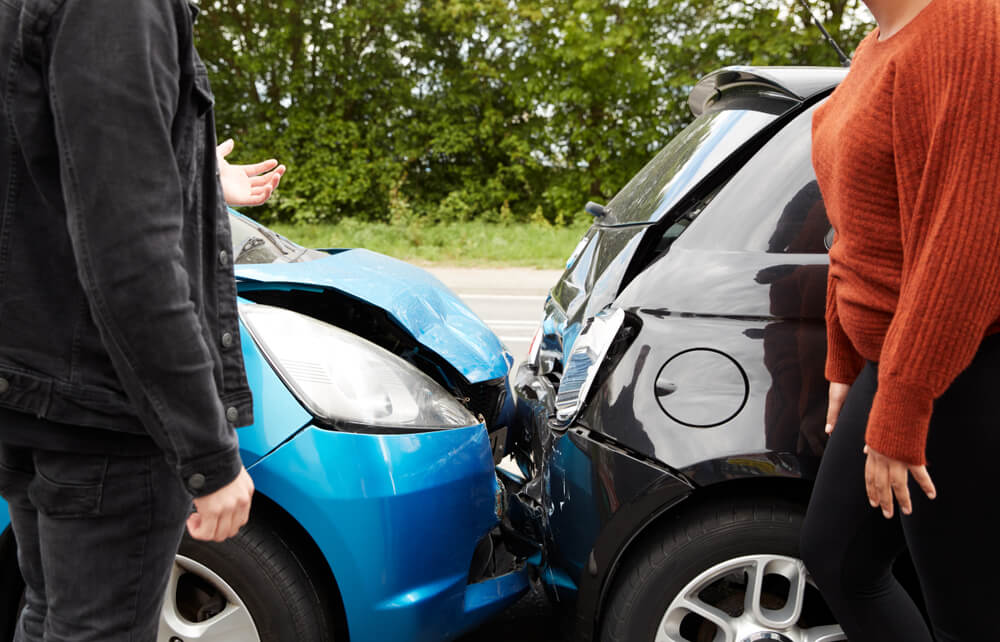
A common question we hear from drivers is, Is California a no-fault state? When it comes to car accidents, the answer is no. California does not follow a no-fault system. Instead, California follows an “at-fault,” sometimes called a “tort,” system, meaning the driver determined to have caused the crash is legally responsible for covering the resulting losses. In no-fault states, each driver’s insurance covers costs, regardless of who caused the accident.
Knowing this difference can be critical for Fresno drivers when protecting their rights and financial security after a crash. At Dhanjan Car Accident and Injury Lawyers of Fresno, we help drivers navigate these rules and pursue fair compensation.
REQUEST A FREE CONSULTATION TODAY
Is California a No-Fault State or an At-Fault State?
California operates under an at-fault system, meaning the person legally responsible for causing the accident must pay for the resulting damages. If the policy is insufficient, this can be done through their insurance coverage or personal funds.
In an at-fault state like California, the driver who is found responsible for the accident is liable for the damages. This means they or their insurer must cover medical bills, lost wages, and other related expenses of the parties involved. Victims may file a claim with the at-fault driver’s insurer or pursue legal action. This system emphasizes determining liability before payment, sometimes resulting in disputes or extended claims processes.
In a no-fault state, each driver’s insurance pays for their damages, regardless of fault. This typically covers medical expenses and lost income but often excludes pain and suffering unless specific thresholds are met. The difference between these systems significantly affects how victims pursue compensation and how quickly claims are resolved.
California Financial Responsibility Laws
California law requires drivers to demonstrate financial responsibility to operate a vehicle legally. This can be done by maintaining a motor vehicle liability insurance policy, depositing $75,000 in cash with the DMV, holding a DMV-issued self-insurance certificate, or securing a $75,000 surety bond from a licensed California company.
Failure to comply can lead to fines, license suspension, and vehicle impoundment. Having the proper coverage not only ensures legal compliance but also protects drivers from overwhelming financial liability after an accident.
How Is Fault Determined After a Car Accident in California?
Fault is established through an investigation that may involve reviewing official accident reports, collecting witness accounts, analyzing photos or videos from the scene, and conducting vehicle damage assessments or reconstructions.
California also follows the principle of pure comparative negligence, meaning that even if you are partially at fault for an accident, you can still recover damages. Still, your percentage of fault will reduce your compensation. For example, if you are 20% responsible, you can still recover 80% of your total losses. This is outlined in California Civil Code Section 1714 and plays a significant role in multi-vehicle crashes or shared-fault situations.
What Happens If the At-Fault Driver Doesn’t Have Insurance?
Driving without insurance is unlawful in California, but it still occurs. If the at-fault driver is uninsured, recovery options include using your uninsured/underinsured motorist (UM/UIM) coverage or filing a lawsuit against the responsible driver. In these situations, the claim process can become more complex, making it even more critical to understand your policy and rights.
Can I File an Insurance Claim Without a Car Accident Lawyer?
While it is possible to file a claim without legal help, it often disadvantages you; insurers may undervalue your claim, delay proceedings, or dispute fault. An attorney can protect you from low settlement offers, accurately calculate all damages, and guide you through legal and insurance complexities. An advocate can also help ensure that deadlines are met and evidence is preserved.
What Types of Compensation Are Available After a Crash in California?
Compensation may include medical expenses, lost income, reduced earning capacity, vehicle repairs or replacement, pain and suffering, and emotional distress. In severe cases, damages for long-term care or permanent disability may also be sought. The specifics depend on the evidence, the extent of the harm caused, and the strength of the documentation supporting your claim.
Get Legal Guidance After a Fresno Car Accident
Knowing whether California is a no-fault state is just one step toward protecting your rights. After a crash, you deserve committed legal support. At Dhanjan Car Accident and Injury Lawyers of Fresno, we work to secure the compensation you need.
Call a Fresno car accident lawyer at (559) 342-2000 for dedicated legal guidance. Schedule a free consultation.
Sarwinder Dhanjan
Sarwinder Dhanjan is our founding attorney who founded Dhanjan Car Accident and Injury Lawyers of Fresno in 2016. After attending Fresno City College and then UC Santa Cruz for his Legal Studies and Psychology Degrees, Sarwinder joined San Joaquin College of Law. Once that was complete, he quickly passed the California State Bar and opened up his law firm; he never looked back. Sarwinder continues to help his clients personally today.