Being involved in a car accident is stressful under any circumstances. When you believe you may have caused it, the stress compounds immediately — will your insurance cover it, can the other driver sue you, will you lose your license, and do you have any rights at all?
- California Is an At-Fault State — What That Means
- Pure Comparative Negligence — You May Still Have a Claim
- How Fault Is Determined in California
- What Happens to Your Insurance
- Can You Be Sued Personally After an At-Fault Accident?
- What Not to Do After an At-Fault Accident
- Your Rights as a Partially At-Fault Driver
- Special Situations — When At-Fault Liability Is More Complex
- When You Need an Attorney After an At-Fault Accident
- Frequently Asked Questions — At-Fault Car Accidents in California
The answers to all of these questions depend on California’s specific legal framework — which is more nuanced, and in some ways more protective of at-fault drivers, than most people realize. Understanding what actually happens when you are at fault in a California car accident helps you respond correctly, protect your interests, and avoid the mistakes that make the situation worse.
California Is an At-Fault State — What That Means
California operates under an at-fault insurance system, governed by California Vehicle Code Section 17150 and California Civil Code Section 1714. Unlike no-fault states — where each driver’s own insurance covers their own injuries regardless of who caused the crash — California requires the driver responsible for the accident to bear financial responsibility for the other party’s losses.
In practical terms this means the at-fault driver’s liability insurance pays for the other party’s property damage, medical expenses, lost wages, and pain and suffering up to the policy limits. If damages exceed those limits, the at-fault driver may be personally liable for the remainder. The at-fault driver’s insurance premiums will increase, and the accident will appear on their DMV driving record.
What California’s at-fault system does not mean is that fault is always clear-cut, that the other driver’s version of events is automatically accepted, or that you have no rights as the party accused of causing the accident.
Pure Comparative Negligence — You May Still Have a Claim
One of the most important and least understood aspects of California car accident law is that being at fault does not necessarily eliminate your own right to recover compensation. California follows a pure comparative negligence system under Civil Code Section 1714, which means fault is assigned by percentage across all parties — and each driver’s recovery is reduced by their own share.
Even if you are 80% at fault for an accident, you can still recover 20% of your damages from the other driver. Even if you are 99% at fault, you can theoretically recover 1%. There is no fault threshold that completely bars recovery in California.
Here is how this plays out in a real scenario. You run a yellow light and collide with a driver who was speeding. The investigation assigns you 70% fault and the other driver 30% fault. Your total damages — vehicle repair, medical treatment, lost wages — total $50,000. Under California’s pure comparative negligence rules, you can recover $15,000 (30% of $50,000) from the other driver’s insurer, even though you were predominantly at fault.
This principle works in the same direction for the other party’s claim against you. If they are assigned any percentage of fault — for speeding, an unsafe lane position, or distracted driving — their recovery from your insurer is reduced proportionally. As our post on California’s comparative negligence law explains in detail, fault percentages are not simply accepted from the police report. They are argued, challenged, and negotiated — and the outcome directly affects every dollar flowing in both directions.
How Fault Is Determined in California
Fault is not finally determined at the accident scene. The responding officer may form an initial assessment and note any citations issued, but the legal and insurance determination of fault happens afterward through an investigation that considers:
The police report. The officer’s account, citations issued, and their assessment of the collision sequence carry significant weight — but are not conclusive. Their conclusions can be challenged with additional evidence.
Physical evidence. Skid marks, final vehicle resting positions, airbag deployment, crush patterns, and damage locations help accident reconstruction experts and adjusters determine speed, direction, and the sequence of events.
Photographs and video. Dashcam footage, traffic cameras, business security cameras, and photographs taken at the scene by drivers or witnesses are increasingly decisive in fault determinations. This is one reason why photographing the scene immediately after any accident is essential regardless of your initial belief about fault.
Witness statements. Independent third-party witnesses with no relationship to either driver are among the most credible sources of evidence. Their accounts can corroborate or contradict either driver’s version of events.
Traffic violations. A citation for running a red light, speeding, failure to yield, or any other violation strongly supports a finding of fault against the cited driver — though it does not automatically establish full fault in a comparative negligence analysis. Our post on reckless driving in California covers the elevated consequences when the at-fault driver’s conduct rises above ordinary negligence.
Insurance adjuster investigations. Each insurer conducts its own investigation. Their fault determination governs what their insured’s policy will pay — subject to challenge through negotiation, arbitration, or litigation.
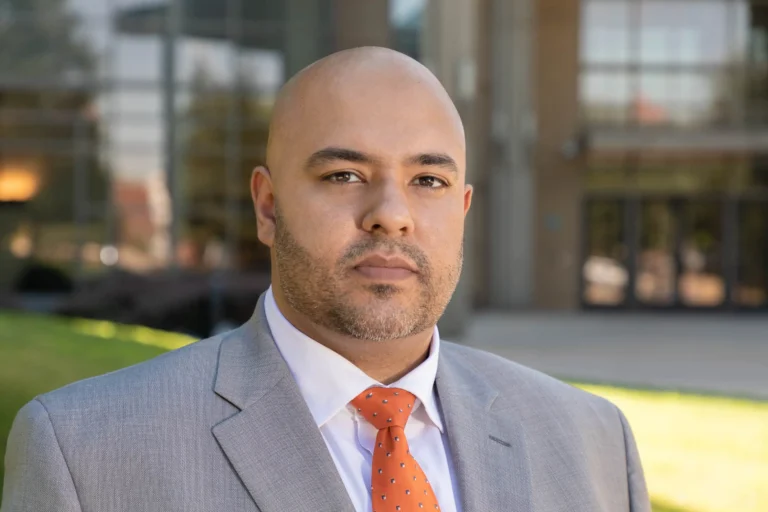
Your Attorney — Sarwinder Dhanjan
Sarwinder Dhanjan is the founding attorney of Dhanjan Injury Lawyer. He handles every case personally — you work directly with him from the first call through final resolution. Attorney Dhanjan is admitted to the State Bar of California and is active in Fresno County Superior Court.
What Happens to Your Insurance
If you are at fault in a California car accident, your liability insurance is the primary financial instrument that responds to the other party’s claim. Your insurer will assign a claims adjuster to investigate, communicate with the other driver and their insurer, negotiate and pay claims up to your policy limits, and — critically — provide you with a legal defense if the other driver files a lawsuit against you.
Policy limits matter enormously. As of January 1, 2025, California’s minimum liability coverage under Senate Bill 1107 is $30,000 per person and $60,000 per accident for bodily injury, plus $15,000 for property damage. If the other party’s damages exceed your policy limits, your insurer pays the limit — and you are personally responsible for the remainder. In serious injury cases involving spinal injuries, traumatic brain injuries, or other catastrophic harm, this personal exposure can be substantial. Our post on how much someone can sue for a car accident in California explains what damages are recoverable and in what ranges.
Your premiums will increase. An at-fault accident typically results in a premium increase that persists for three to five years. The severity of the accident and the dollar amount of claims paid affect the size of the increase. Our post on how long an accident stays on your record in California covers the complete DMV and insurance timeline.
Your own vehicle damage. Liability insurance covers the other party’s property — not yours. If you want your own vehicle repaired after an at-fault accident, you need collision coverage on your own policy. Without it, your vehicle repair is an out-of-pocket expense.
Can You Be Sued Personally After an At-Fault Accident?
Yes. If the other driver’s damages exceed your policy limits — or if your insurer disputes coverage — the other party can file a personal injury lawsuit against you directly. Your liability insurer provides your legal defense up to your policy limits. If a judgment is entered against you that exceeds your coverage, you are personally responsible for the excess.
This is the scenario where personal assets — savings, property, future wages — become exposed. Carrying adequate liability coverage substantially above the state minimums is the most effective protection against this exposure.
If the at-fault accident involved particularly egregious conduct — such as driving under the influence — the other party may seek punitive damages on top of compensatory damages. Punitive damages are generally not covered by standard liability insurance policies, creating additional personal financial exposure.
At-fault accidents involving commercial vehicles carry their own additional complexity. Truck accidents may involve multiple liable parties — the driver, the trucking company, a maintenance contractor — and commercial carriers typically have substantially higher policy limits, which means larger potential claims against the at-fault party.
Request a Free Consultation Today
Speak with an Attorney and understand your next steps
What Not to Do After an At-Fault Accident
The actions taken — and avoided — in the hours and days after an at-fault accident significantly affect the legal and financial outcome.
Do not admit fault at the scene. What you say at the scene can be used against you. Fault is determined through a full investigation, not through statements made under stress. Expressing concern for the other party is appropriate. Making formal admissions of fault is not. Let the evidence speak.
Do not give a recorded statement to the other driver’s insurer without guidance. The opposing insurer is not your ally. Their adjuster is gathering information to support the other driver’s claim. You are not obligated to give a recorded statement to the opposing insurer without first consulting an attorney or your own insurer. As our post on why insurance companies deny claims explains, insurers use recorded statements strategically to minimize what they pay — and the same tactic applies to building a claim against you.
Do not ignore communications from your own insurer. Your liability policy requires you to cooperate with your insurer’s investigation. Failing to respond to your insurer’s requests can jeopardize your coverage.
Do not accept a fault determination you believe is wrong. Insurance company fault findings are not legal judgments. They can be disputed — through your insurer’s internal process, through negotiation between insurers, or through litigation. If you believe the other driver shares fault, that argument has real financial value and should be pursued.
Your Rights as a Partially At-Fault Driver
Even when you bear responsibility for causing an accident, California law protects several important interests.
Your insurer must defend you. Your liability policy includes a duty to defend — meaning your insurer must provide legal representation if the other party sues you, even if the lawsuit is questionable or the claimed damages are inflated.
You can challenge inflated damage claims. The other party’s claimed damages must be legitimate and supported by evidence. Inflated medical billing, treatment unrelated to the accident, and exaggerated pain and suffering claims can all be challenged. Our posts on pain and suffering damages in California and emotional distress damages in California explain how these non-economic claims are valued — which helps you understand what is and is not reasonable when evaluating claims against you.
You can contest your fault percentage. A finding that you were 100% at fault when the evidence supports shared fault costs you money in both directions. Disputing an unfair fault assignment is both your right and your financial interest.
You may still have a claim for your own injuries. If you were injured and the other driver bears any percentage of fault — however small — you can file a claim for your injuries reduced by your fault percentage. California’s pure comparative negligence system ensures you are not without recourse simply because you were primarily responsible. If the accident was on a poorly maintained road, involved a defective vehicle component, or resulted from another party’s negligence beyond the other driver, additional liable parties may exist. Motorcycle accidents, pedestrian accidents, and bicycle accidents often involve complex multi-party fault questions where initial blame assignments are oversimplified.
Special Situations — When At-Fault Liability Is More Complex
Certain accident types create additional layers of liability analysis beyond the standard two-driver scenario.
Multi-vehicle accidents. When three or more vehicles are involved, fault is apportioned across all parties. A driver who is partially at fault for initiating a chain-reaction crash may bear significantly less than 100% of the total liability — and identifying every at-fault party is essential to keeping any individual driver’s exposure proportionate.
Accidents involving wrongful death. When an at-fault accident results in a fatality, the financial exposure escalates dramatically. Surviving family members can pursue a wrongful death claim that encompasses funeral expenses, loss of financial support, and loss of companionship — amounts that regularly exceed standard liability policy limits.
Accidents on dangerous roads. If road design defects, missing signage, or poor maintenance contributed to the accident, a government entity may share fault — which can reduce the at-fault driver’s proportionate liability. Our post on dangerous intersections in Fresno illustrates how road design and maintenance contribute to accidents that are routinely attributed entirely to one driver.
Accidents involving road rage. If your at-fault accident involved aggressive driving behavior, you may face exposure to punitive damages on top of compensatory claims. Our post on road rage laws in California covers the criminal and civil consequences of road rage incidents.
When You Need an Attorney After an At-Fault Accident
Not every at-fault accident requires immediate legal representation. A minor fender-bender with no injuries, clear fault, and damages well within your policy limits can often be resolved through the standard insurance process.
But you should consult with a California car accident attorney if the other party suffered serious injuries that may exceed your policy limits, you believe fault is being assessed unfairly, you were also injured and want to pursue a claim for your own damages, you have been served with a lawsuit, the accident involved a commercial vehicle or multiple parties, or there is any question about whether your insurer will provide full coverage.
For Fresno residents, our Fresno car accident lawyers advise both injury victims and parties navigating at-fault accidents — because the legal issues overlap significantly and the right guidance matters on both sides. Read our post on whether to get a lawyer for a minor car accident for guidance on when legal representation adds meaningful value.
Frequently Asked Questions — At-Fault Car Accidents in California
Do I have to report an at-fault accident to my insurance company in California?
Yes. Your insurance policy requires you to promptly report any accident regardless of fault. Failing to report can jeopardize your coverage. File an SR-1 with the DMV within 10 days if the accident resulted in injuries or property damage over $1,000. Read our post on what to do after a car accident for the complete post-accident checklist.
What if the other driver’s damages exceed my insurance policy limits?
Your insurer pays up to your policy limits. The remainder is your personal financial responsibility. The other party can sue you for the excess and, if successful, seek to collect from your personal assets or future wages. Carrying liability coverage well above the state minimums is the most effective protection. Consider an umbrella policy for additional coverage on top of your auto liability limits.
Can the other driver still recover damages if they were also partially at fault?
Yes — and so can you. California’s pure comparative negligence system allows all parties to recover damages reduced by their own fault percentage. Neither party is completely barred from recovery by partial fault. The allocation of fault percentages between all parties determines how much each recovers from the other.
Will my license be suspended if I am at fault in a car accident?
An at-fault accident alone does not automatically suspend your license. License suspension follows from point accumulation under the DMV’s Negligent Operator Treatment System, failure to carry insurance, or specific serious violations like DUI or hit-and-run. Read our post on how long an accident stays on your record in California for the complete point system breakdown.
What is the statute of limitations for the other driver to sue me after an at-fault accident?
The other driver has two years from the date of the accident to file a personal injury lawsuit against you in California. For property damage claims they have three years. Read the full breakdown in our post on the personal injury statute of limitations in California.