
The honest answer to how much a lawyer takes from a settlement in California is: it depends on the fee agreement, the stage at which the case resolves, and the complexity of the work required to build the claim properly. There is no single statewide percentage — contingency fees are set by contract between the attorney and client, governed by disclosure requirements under California law, and vary based on what the case actually requires.
- What Is a Contingency Fee?
- What Percentage Do California Personal Injury Lawyers Charge?
- How Costs Are Handled — The Critical Calculation
- What Do Attorney Fees Actually Cover?
- Are There Caps on Contingency Fees in California?
- What Else Comes Out of a Settlement Before the Client Receives Payment?
- Fresno Personal Injury Cases — What to Expect
- California Personal Injury Attorney Fees — Frequently Asked Questions
What is consistent across California personal injury cases is the structure: contingency fee representation, meaning no upfront attorney fees, with the lawyer paid a percentage of what is recovered. If there is no recovery, there is no attorney fee. That structure aligns the attorney’s incentive with the client’s outcome — and it means that the percentage charged reflects the attorney’s assessment of the work, risk, and resources the case will require.
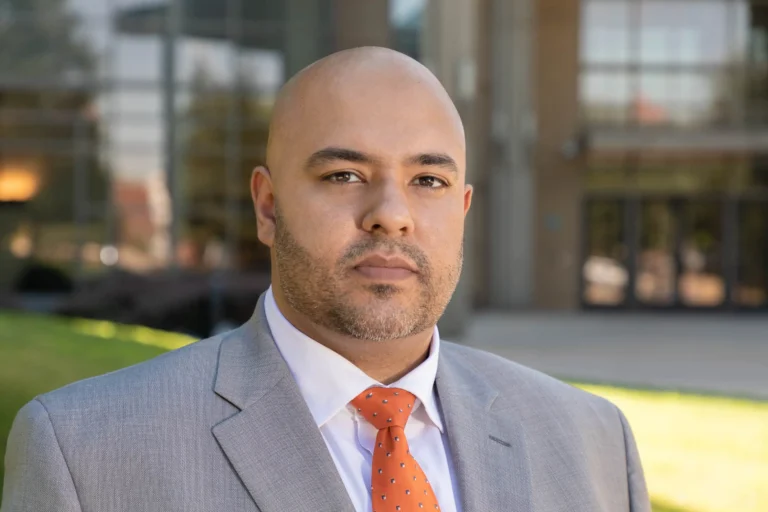
Your Attorney — Sarwinder Dhanjan
Sarwinder Dhanjan is the founding attorney of Dhanjan Injury Lawyer. He handles every case personally — you work directly with him from the first call through final resolution. Attorney Dhanjan is admitted to the State Bar of California and is active in Fresno County Superior Court.
Questions About Attorney Fees?
We explain our fee structure clearly in the first consultation. No upfront costs, no fee unless we win.
What Is a Contingency Fee?
A contingency fee is an attorney fee that is paid only if the case results in a recovery — through settlement or verdict. The fee is calculated as a percentage of the total recovery. If the case does not result in compensation, the client owes no attorney fee.
Under California Business and Professions Code section 6147, contingency fee agreements in personal injury cases must be in writing and must disclose the fee percentage, how costs will be handled, what happens if the client discharges the attorney, and the basis for the fee calculation. A client who is not provided a written fee agreement has the right to void the contract. Always receive and review a written agreement before signing.
The contingency structure is standard across California personal injury case types — car accidents, truck collisions, motorcycle crashes, pedestrian and bicycle injuries, dog bites, wrongful death, and catastrophic injury claims. It exists because it removes the financial barrier to representation for injured people who cannot afford hourly legal fees while recovering from serious injuries.
What Percentage Do California Personal Injury Lawyers Charge?
California personal injury contingency fees most commonly fall in the range of 33% to 40% of the total recovery, with the specific percentage depending primarily on the stage of the case at resolution:
- Pre-litigation settlement (before a lawsuit is filed) — fees in the range of 33% to 35% are common for cases that resolve through negotiation without formal litigation. Pre-litigation cases require investigation, medical documentation, and negotiation but generally do not require the expert witnesses, depositions, and court filings that litigation demands.
- Post-filing litigation — when a lawsuit is filed, fees typically increase to 38% to 40% or higher, reflecting the substantially greater time, cost, and risk that litigation requires. Cases involving depositions, expert witnesses, accident reconstruction, life care planning, and trial preparation justify higher percentages because of the resources invested and the risk assumed by the attorney.
These are not fixed statewide rules — they are common market ranges. Your specific fee is governed entirely by the written agreement you sign. Before signing, confirm two critical points: what percentage applies at each stage, and whether the percentage is calculated from the gross settlement or from the net amount after costs are reimbursed. The difference can be substantial in high-cost cases.
How Costs Are Handled — The Critical Calculation
Attorney fees and case costs are separate. Most personal injury firms advance case costs — filing fees, expert witness fees, medical record retrieval costs, deposition and transcript expenses, accident reconstruction fees, and investigation costs — and seek reimbursement from the settlement at the end of the case. Understanding how costs interact with the fee calculation determines your actual net recovery.
There are two methods, and the difference matters significantly in expensive cases:
Fee calculated from gross, then costs deducted: The attorney’s percentage is applied to the full settlement amount before any costs are subtracted. On a $500,000 settlement with a 33% fee and $50,000 in costs, the attorney fee is $165,000 (33% of $500,000), then costs of $50,000 are deducted, leaving the client $285,000.
Costs deducted first, then fee calculated from remainder: Case costs are reimbursed first, then the attorney’s percentage applies to what remains. On the same example, costs of $50,000 are deducted first leaving $450,000, and the attorney fee is $148,500 (33% of $450,000), leaving the client $301,500 — $16,500 more than the first method.
California Business and Professions Code section 6147 requires the fee agreement to specify which method applies. Ask directly before signing if the agreement is not explicit on this point.
What Do Attorney Fees Actually Cover?
Contingency fees reflect the legal work required to build and prosecute a personal injury claim to its full value — not just the act of communicating with an adjuster. In a properly developed serious injury case, that work includes:
- Evidence preservation and investigation — immediate action on surveillance footage, event data recorder data, scene photographs, and witness identification before evidence closes
- Medical documentation — obtaining complete medical records, diagnostic imaging reports, surgical records, and treatment timelines that establish the injury, its causation, and its consequences
- Damages development — documenting wage loss, future medical expenses, diminished earning capacity, and non-economic harm in a form that withstands carrier challenge
- Expert witnesses — in serious injury cases, accident reconstructionists, medical specialists, life care planners, and forensic economists build the damages case that carriers must actually engage with rather than minimize
- Negotiation and demand package — a structured demand that anticipates every defense argument and forces a carrier to explain why they are paying less than the documented claim value
- Litigation — when settlement is not forthcoming at fair value, pleadings, discovery, depositions, motions, and trial preparation produce the litigation risk that moves carrier settlement numbers
The question is not whether the percentage is low — it is whether the firm will invest the resources required to build a claim that recovers full value. A reduced fee that leads to inadequate case preparation consistently produces lower net recoveries than a standard fee with complete case development.
Are There Caps on Contingency Fees in California?
For standard personal injury cases — car accidents, truck collisions, premises liability, dog bites, and most other negligence claims — California does not impose a statewide cap on contingency fees. The fee is governed by the written agreement and the disclosure requirements of Business and Professions Code section 6147.
Medical malpractice cases are treated differently. California’s MICRA framework and subsequent legislative modifications impose a tiered contingency fee structure that limits what attorneys can charge as a percentage of the recovery in medical malpractice claims. If your injury involves potential medical malpractice, the fee structure applicable to your case differs from standard personal injury representation and should be discussed specifically with counsel.
What Else Comes Out of a Settlement Before the Client Receives Payment?
Beyond the attorney fee and case costs, settlements in serious injury cases are frequently subject to liens and reimbursement obligations that reduce the client’s net recovery:
- Health insurance subrogation — health insurers who paid for injury-related treatment typically have a right to reimbursement from the settlement under their plan terms and applicable federal law
- Medicare and Medi-Cal liens — federal and state government health programs have statutory lien rights that must be resolved before settlement funds can be distributed
- Medical provider liens — treating providers who provided care on a lien basis — agreeing to defer payment until the case resolved — must be paid from the settlement proceeds
- Workers’ compensation liens — in workplace injury cases, the workers’ compensation carrier has a right to reimbursement from a third-party personal injury recovery
Lien negotiation — reducing lien amounts below their face value — is a significant component of the attorney’s work in cases with substantial medical treatment. An attorney who secures significant lien reductions can improve the client’s net recovery even in cases where the gross settlement number appears fixed.
Fresno Personal Injury Cases — What to Expect
For Fresno and Central Valley injury cases, the contingency fee framework operates the same as statewide — written agreement, percentage of recovery, costs advanced and reimbursed at resolution. The specific case development work required depends on the injury type and liability circumstances. For the specific liability and damages frameworks that apply to your case type:
- Fresno Personal Injury Lawyer — the full California personal injury framework as applied to Fresno County cases
- Fresno Car Accident Lawyer — vehicle collision liability and damages documentation on Central Valley roads
- Fresno Truck Accident Lawyer — commercial carrier liability, FMCSA regulations, and multi-defendant recovery in truck collision cases
- Fresno Wrongful Death Lawyer — wrongful death and survival action claims and how fees interact with multi-claimant distributions
- Fresno Spinal Cord Injury Lawyer — catastrophic injury cases where life care planning, expert witnesses, and long-term damages modeling affect both the fee and the recovery
Free Consultation — We Explain Fees Clearly
We explain our fee structure, how costs work, and what you can expect at every stage before you sign anything. No upfront costs, no fee unless we win.
California Personal Injury Attorney Fees — Frequently Asked Questions
Does the contingency percentage change if the case goes to trial?
Yes — most contingency fee agreements in California include stepped percentages that increase as the case advances through litigation stages. A common structure is 33% if the case settles before a lawsuit is filed, 38% to 40% once a lawsuit is filed, and in some agreements a higher percentage if the case proceeds to trial or appeal. The rationale is straightforward: trial preparation requires substantially more attorney time, expert witness coordination, and resource investment than pre-litigation negotiation. The written fee agreement must disclose the percentage at each stage — confirm this before signing.
What happens to the attorney fee if we lose the case?
On a contingency fee arrangement, if there is no recovery there is no attorney fee. The client owes no fee percentage. However, case costs — filing fees, expert witness fees, medical record costs, deposition expenses — may be handled differently depending on the agreement. Some agreements provide that costs are also waived if the case is unsuccessful. Others require cost reimbursement regardless of outcome. This distinction must be clearly stated in the written fee agreement under California Business and Professions Code section 6147. Confirm the cost obligation in a loss scenario explicitly before signing.
Can I negotiate the contingency fee percentage with my attorney?
Contingency fees are negotiable in California — there is no rule preventing the parties from agreeing to a percentage different from the attorney’s standard rate. However, the more relevant consideration is whether the firm will commit the resources required to build a complete case at whatever percentage is agreed. A reduced fee with inadequate case preparation consistently produces lower net recoveries than a standard fee with full case development. The percentage is one variable — the quality and completeness of the case-building work is a larger driver of the final number on your check.
How does a medical lien affect my settlement proceeds?
A medical lien is a claim against your settlement proceeds by a provider who treated you on the agreement that they would be paid when the case resolved. Liens must be paid from settlement proceeds before the client receives the net recovery. In serious injury cases, medical lien amounts can be substantial. Lien negotiation — securing reductions from providers and insurers below their stated lien amounts — is a significant component of the attorney’s work and directly affects your net recovery. An experienced personal injury attorney negotiates liens as a standard part of case resolution, and meaningful lien reductions can substantially improve what you actually receive.
Is the contingency fee calculated before or after medical liens are paid?
This depends entirely on the written fee agreement — which is exactly why reading it carefully before signing matters. Most California personal injury agreements calculate the attorney fee from the gross settlement amount before liens and costs are deducted. Some agreements calculate from the net amount after costs are deducted. A minority calculate from the net after both costs and liens. The difference between these methods can be tens of thousands of dollars in serious injury cases with significant treatment costs and lien exposure. If the agreement is not explicit on this point, ask before signing.