Fresno’s road network is built around wide, high-speed arterials that carry enormous daily traffic volume. The combination of multi-lane crossings, commercial corridor density, agricultural freight traffic on major highways, and a historically underfunded pedestrian infrastructure creates collision conditions that are measurably more dangerous than the California average. UC Berkeley’s Transportation Injury Mapping System (TIMS), which processes data from the California Highway Patrol’s Statewide Integrated Traffic Records System (SWITRS), documents Fresno’s intersection crash rate at approximately 38% — about 2.5% higher than the cross-city California average. More concerning is Fresno’s fatal injury rate at intersections, which exceeds the statewide average by over 70%.
In 2024, Fresno recorded at least 49 traffic deaths — ranking the city third in California for traffic fatalities, behind only Los Angeles and one other major city. Highway 99 alone saw 270 serious injury collisions through Fresno County in 2024. Understanding which specific locations generate the highest collision frequency and why helps drivers make informed decisions — and helps injury victims understand that the intersection where their crash occurred may have a documented safety history that is directly relevant to liability.
Injured at a Fresno Intersection?
We review liability, evidence, and next steps at no cost. No fee unless we win. Call (559) 342-2000.
The 10 Most Dangerous Intersections in Fresno
The following intersections are identified based on crash frequency and injury severity data from SWITRS/TIMS covering 2020 through 2024. Crash counts reflect documented collisions involving reported or suspected injuries — minor incidents without documented injuries are not included in the underlying dataset.
1. Friant Road and Shepherd Avenue — 21 Crashes (2020–2024)
Friant Road and Shepherd Avenue is the most dangerous intersection in Fresno by documented crash frequency and composite danger score. The intersection has recorded 21 injury crashes between 2020 and 2024 according to SWITRS/TIMS data analyzed by Jacoby and Meyers Injury Lawyers, and the Fresno Bee’s 2024 reader poll ranked it among the top two most dangerous intersections in the region. The intersection is nicknamed “Friant Roulette” — a YouTube channel of the same name, started by a nearby resident who installed surveillance cameras after witnessing repeated crashes, has documented nearly 100 collision videos and now streams 24/7 from the intersection.
The crash pattern here is structural. Shepherd Avenue terminates at Friant Road, requiring all southbound Shepherd traffic to turn. One northbound Friant lane proceeds straight without its own dedicated signal phase — a configuration that creates signal timing confusion and produces repeated T-bone and broadside collisions when drivers misread the light. Heading south on Friant is downhill, increasing approach speeds. In 2024, a young woman was killed when a tow truck driver ran a red light at the intersection and struck her vehicle. Fresno has been under community pressure to redesign the signal timing here, but as of 2025 significant structural changes have not been implemented.
Primary crash type: T-bone and broadside collisions from red light violations
Contributing factors: Signal timing confusion, downhill approach speeds, turning movement conflicts
Legal relevance: Government liability claims for dangerous road design are available under Government Code section 835 when a public road’s design or maintenance creates a dangerous condition. The six-month government claim deadline under the Government Claims Act applies.
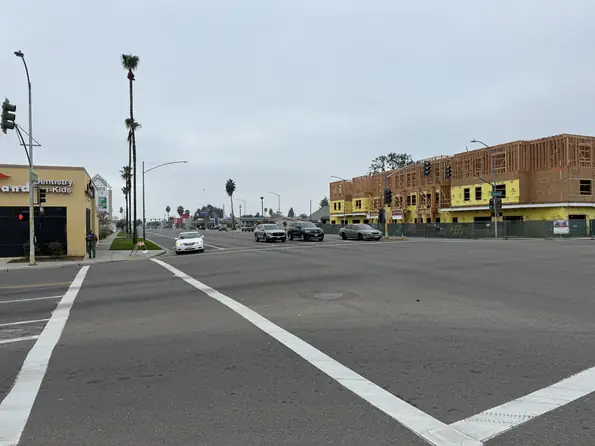
2. Blackstone Avenue and Dakota Avenue — 16–19 Crashes (2020–2024)
Blackstone Avenue and Dakota Avenue is Fresno’s second most dangerous intersection by documented crash data, with 16 to 19 injury crashes recorded between 2020 and 2024 depending on the study period. The intersection sits along Blackstone Avenue, Fresno’s primary north-south commercial corridor, where retail strip development generates continuous driveway conflicts, high pedestrian crossing volume, and lane-change collisions from vehicles entering and exiting parking lots on both sides of the road. The SWITRS data shows at least 27 people injured in crashes at this intersection over a three-year period.
Primary crash types: Lane change and merge collisions, pedestrian strikes, rear-end collisions from commercial driveway conflicts
Contributing factors: High commercial density, multiple access points, pedestrian crossing volume across wide multi-lane road
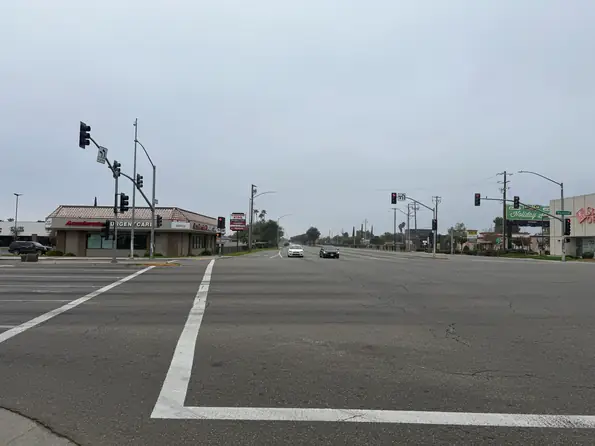
3. Blackstone Avenue and Herndon Avenue — 19 Crashes (2022–2024)
Blackstone and Herndon recorded 19 injury crashes in the three-year period from 2022 to 2024, producing 30 injured victims — the highest injury-per-crash ratio of any intersection in the Maison Law 2025 Fresno intersection study. The intersection sits at the junction of two major commercial corridors in north Fresno, where heavy retail traffic from surrounding shopping centers generates high turning movement conflict. Two pedestrians and two cyclists were among the injury victims in the study period. The intersection’s large physical footprint — requiring pedestrians to cross multiple lanes in each direction — contributes to the pedestrian exposure risk.
Primary crash types: Turning movement conflicts, pedestrian strikes, angle collisions
Contributing factors: Multi-lane crossing distances, heavy retail-generated turning traffic, pedestrian and cyclist exposure
4. Blackstone Avenue and Ashlan Avenue — 13 Crashes (2020–2024)
Blackstone and Ashlan has recorded 13 injury crashes over the study period with a danger score that places it in the top four Fresno intersections. The intersection combines the commercial corridor dynamics of Blackstone Avenue with significant pedestrian exposure — SWITRS data documents at least seven pedestrian victims and one cycling victim in the three-year period, and one pedestrian fatality. Pedestrians at this intersection must cross eight lanes of traffic, a crossing distance that dramatically increases exposure time and collision risk.
Primary crash types: Pedestrian strikes, angle collisions, rear-end collisions
Contributing factors: Eight-lane crossing requirement for pedestrians, high commercial traffic, pedestrian signal timing inadequacy
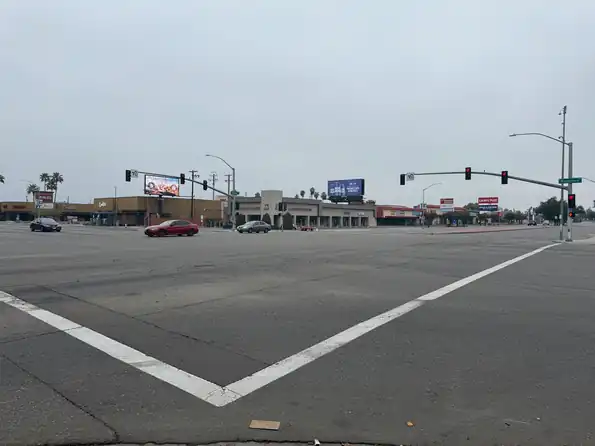
5. Blackstone Avenue and Shaw Avenue
Shaw Avenue and Blackstone Avenue is one of Fresno’s most heavily trafficked intersections, sitting at the crossing of the city’s two primary commercial arterials. It appears consistently across Fresno intersection safety analyses and in the Fresno Bee’s reader polling on dangerous intersections. The intersection generates high volumes of left-turn conflicts from multiple lanes in each direction, and the surrounding retail density produces continuous pedestrian crossing activity. Historical data covering 2008 to 2022 documents approximately 22 pedestrian fatalities along the Shaw Avenue corridor and approximately 20 along the Blackstone Avenue corridor.
Primary crash types: Left-turn conflicts, pedestrian strikes, lane change collisions
Contributing factors: Extreme traffic volume, multi-directional turning conflicts, commercial pedestrian activity
6. Cedar Avenue and McKinley Avenue
Cedar and McKinley appears in multiple Fresno intersection safety analyses as a high-risk crossing in central Fresno. The intersection combines residential neighborhood traffic with commercial activity and produces a crash pattern involving angle collisions, pedestrian strikes, and turning movement conflicts. The central Fresno location generates both commuter pass-through traffic and local commercial destination traffic that creates high-conflict turning movement volumes.
Primary crash types: Angle collisions, turning movement conflicts, pedestrian strikes
Contributing factors: Mixed residential and commercial traffic, central location commuter volume
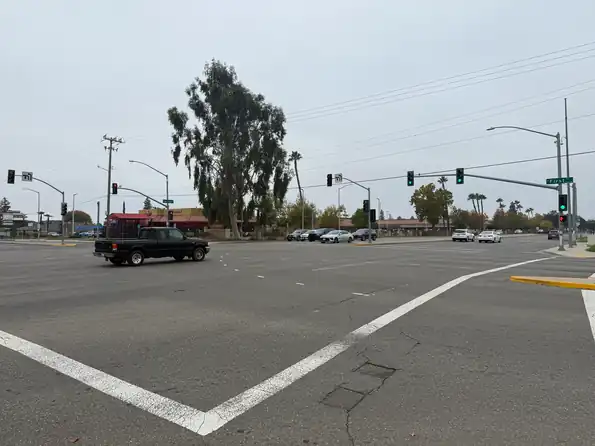
7. Herndon Avenue and First Street
Herndon Avenue and First Street in northeast Fresno appears consistently in Fresno dangerous intersection analyses. Herndon Avenue is a primary east-west arterial in north Fresno carrying high commuter and commercial volumes, and the First Street crossing produces turning movement conflicts in an area of significant retail development. The intersection’s northeast Fresno location places it in a higher-income commercial zone where vehicle speeds and traffic volumes are both elevated.
Primary crash types: Turning movement conflicts, rear-end collisions, lane change collisions
Contributing factors: High arterial speeds, commercial traffic density, turning volume conflicts
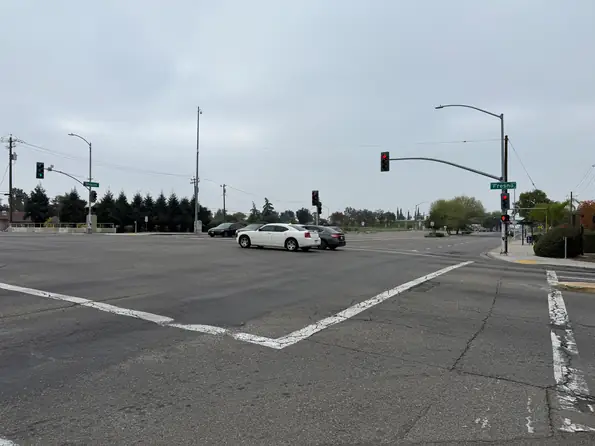
8. Shields Avenue and Fresno Street — 13 Crashes (2022–2024)
Shields Avenue and Fresno Street recorded 13 injury crashes in the three-year period from 2022 to 2024, producing 14 injured victims including one fatality, one pedestrian victim, and one cyclist. The intersection sits near Highway 41 in an area where neighborhood residential traffic mixes with higher-speed arterial through-traffic. The proximity to the highway produces speed differential collisions as drivers transition between highway and surface street speeds.
Primary crash types: Speed differential collisions, angle collisions, pedestrian and cyclist strikes
Contributing factors: Highway proximity speed differentials, mixed residential and through-traffic volumes
9. Central Avenue and Chestnut Avenue
The intersection of Central Avenue and Chestnut Avenue in the Malaga area of Fresno County received the most votes in the Fresno Bee’s 2024 reader poll on dangerous intersections and has recorded 83 crashes since 2019 — the highest raw crash count of any location discussed in Fresno intersection safety data. The intersection serves an area where rural county roads meet higher-speed arterial traffic in an unincorporated community, creating approach speed and visibility conditions that differ from urban intersections.
Primary crash types: Angle collisions, speed differential collisions
Contributing factors: Rural-to-urban transition approach speeds, visibility limitations, high crash frequency history
10. Mono Street and G Street — Downtown Fresno
Mono Street and G Street in downtown Fresno near Chinatown is a two-way stop-sign intersection with no crosswalks that recorded 12 injury crashes in the SWITRS/TIMS study period. Downtown Fresno’s mix of commercial activity, foot traffic, delivery vehicles, and ongoing light-rail construction creates collision conditions in a dense urban environment where vehicle and pedestrian conflicts are frequent. The absence of crosswalks at this specific intersection creates uncontrolled pedestrian exposure.
Primary crash types: Vehicle-pedestrian conflicts, angle collisions
Contributing factors: No crosswalks, urban traffic density, construction activity
Highway 99 — Fresno County’s Most Dangerous Road
Beyond intersections, Highway 99 is the single most dangerous road corridor in Fresno County by any measure. In 2024, Highway 99 was the site of 270 serious injury collisions in Fresno County — a figure that reflects the highway’s dual role as the region’s primary commuter spine and one of the highest-volume commercial freight corridors in California. The California Transportation Injury Mapping System identifies Highway 99 as consistently generating more injury crashes than any other road in Fresno County.
Commercial truck traffic on Highway 99 through Fresno is among the densest in the state. Agricultural freight from the Central Valley’s farms and processing facilities, distribution center traffic from the Fresno logistics hub, and through-freight between Los Angeles and the Bay Area combine to produce a sustained heavy vehicle presence on a road where passenger vehicles and commercial trucks share lanes at freeway speeds. When collisions occur between commercial vehicles and passenger cars on Highway 99, the injury outcomes are categorically more severe than standard vehicle collisions.
For the specific liability framework that applies to commercial truck collisions on Highway 99 and the FMCSA regulatory requirements that govern commercial carrier liability, see our Fresno Truck Accident Lawyer page.
Highway 41 — The Yosemite Corridor
Highway 41 connects Fresno to the Sierra Nevada and Yosemite National Park, carrying a mix of commuter traffic, recreational traffic, and commercial vehicles. The highway sees multiple fatal crashes annually within Fresno County, and the interchange area where Highway 41 meets Highway 99 is a consistent collision cluster point. The Shields Avenue and Fresno Street intersection’s elevated crash rate is partly attributable to its proximity to Highway 41 and the speed differential between highway and surface street traffic.
The Pedestrian Safety Crisis on Fresno’s Arterials
Fresno’s Vision Zero Action Plan documents that from 2018 to 2022, 127 pedestrian fatalities occurred in the city — nearly half of all traffic fatalities over that period. The Shaw Avenue and Blackstone Avenue corridors are the two most dangerous for pedestrians by historical fatality count, with approximately 22 and 20 pedestrian deaths respectively recorded from 2008 to 2022 along each corridor.
The structural cause is consistent across Fresno’s dangerous pedestrian corridors: wide multi-lane arterials designed for vehicle throughput that require pedestrians to cross six to eight lanes of traffic moving at 40 to 50 miles per hour. Inadequate crossing signal timing, insufficient refuge islands, and high vehicle speeds at crosswalks combine to create pedestrian crossing conditions that are predictably and repeatedly fatal. For the specific liability framework applicable to pedestrian injury claims see our Fresno Pedestrian Accident Lawyer page.
Government Liability for Dangerous Road Design in Fresno
When a public road’s design, maintenance, or traffic control creates a dangerous condition that causes injury, the government entity responsible for that road bears liability under Government Code section 835. This applies to the City of Fresno for city-maintained streets, Fresno County for county roads, and Caltrans for state highways including Highway 99 and Highway 41.
Several of the intersections on this list — particularly Friant Road and Shepherd Avenue — have documented community complaints about design deficiencies that preceded multiple fatal crashes. A documented history of prior crashes at a specific location is directly relevant to government liability claims because it establishes that the dangerous condition was known or should have been known to the responsible entity before the crash that injured you.
Critical deadline: Claims against government entities require a formal written claim presented within six months of the incident under the Government Claims Act. This deadline applies regardless of whether a private party also bears liability for the crash. Missing it permanently bars the government liability component of the claim. Contact an attorney immediately if a city street, county road, or state highway condition may have contributed to your crash.
What to Do After a Crash at a Dangerous Fresno Intersection
- Call 911 immediately — a police or CHP report establishes the official record of the collision location, contributing factors, and initial observations
- Photograph everything before anything is moved — vehicle positions, road conditions, traffic signals, lane markings, signage, skid marks, and all visible injuries
- Identify witnesses — names and phone numbers of everyone who saw the collision before they leave the scene
- Seek medical evaluation the same day — even if you feel stable, brain injuries and internal injuries frequently present symptoms hours or days after the initial impact
- Do not give a recorded statement to any insurance carrier before speaking with an attorney — recorded statements are structured to establish comparative fault positions before the full extent of injury is known
- Contact an attorney immediately — surveillance footage from nearby businesses overwrites on 24-to-72-hour cycles, and the government claim deadline may be as short as six months
Injured at a Fresno Intersection or on Highway 99?
We review liability, government claim requirements, and evidence preservation at no cost. Evidence closes fast — call us today.
Dangerous Fresno Intersections — Frequently Asked Questions
Can I sue the City of Fresno if a dangerous intersection caused my accident?
Yes — under Government Code section 835, a public entity is liable for injuries caused by a dangerous condition of public property when the entity had actual or constructive notice of the condition. A documented history of prior crashes at a specific intersection is strong evidence of notice. However, claims against the City of Fresno require a formal written government claim presented within six months of the incident under the Government Claims Act (Government Code section 911.2). Missing this deadline permanently bars the government liability claim regardless of how well-documented the intersection’s danger history is. Contact an attorney immediately if the City of Fresno, Fresno County, or Caltrans may share responsibility for your crash.
What makes Friant Road and Shepherd Avenue so dangerous?
The structural problem at Friant and Shepherd is a signal timing design that allows one northbound Friant lane to proceed straight without a dedicated signal phase, creating confusion that leads drivers to run red lights into crossing traffic. A downhill approach on Friant increases vehicle speeds through the intersection. Shepherd Avenue terminates here, concentrating all turning movement conflicts at a single point. The intersection has recorded 21 injury crashes from 2020 to 2024 and is the subject of a 24/7 livestream YouTube channel documenting ongoing crashes. Community pressure for a signal redesign has been ongoing, but the fundamental configuration remains as of 2025.
Is Blackstone Avenue dangerous for pedestrians?
Yes — significantly. The Blackstone Avenue corridor from downtown Fresno through north Fresno is one of the most dangerous pedestrian environments in the city. Historical data documents approximately 20 pedestrian fatalities along the Blackstone corridor from 2008 to 2022. Multiple intersections along Blackstone — including Herndon, Dakota, Ashlan, and Shaw — appear in Fresno’s top ten most dangerous intersection lists with documented pedestrian victims. The corridor’s design — a wide multi-lane arterial with high vehicle speeds and heavy commercial pedestrian generators — creates crossing conditions that are consistently and predictably fatal for pedestrians who are struck.
How does a crash history at a specific intersection affect my injury claim?
A documented crash history at the intersection where you were injured is relevant in two ways. First, it supports government liability claims against the entity responsible for the road by establishing that the dangerous condition was known — the entity cannot claim the hazard was unforeseeable when the same location has produced repeated similar crashes. Second, it can support arguments about the at-fault driver’s comparative fault — a driver who proceeds through a notoriously dangerous intersection at unsafe speed in a high-risk configuration has less excuse for the failure to exercise heightened caution. SWITRS/TIMS crash data for specific intersections is publicly accessible and is routinely used in California personal injury litigation.
What evidence should I try to preserve after a Fresno intersection crash?
Photograph all vehicle positions, road conditions, traffic signal states, lane markings, and signage before anything is moved. Obtain the names and contact information of all witnesses. Request the CHP or Fresno PD report number at the scene. Contact an attorney the same day so preservation demands can go to nearby business surveillance cameras before the 24-to-72-hour overwrite cycle erases the footage. In crashes involving possible government liability for road design, document the signal timing, lane configuration, and any missing or inadequate signage — conditions that may change before litigation begins. The intersection crash history from SWITRS is available through TIMS and should be pulled immediately for any case involving a known dangerous location.