When a vehicle strikes a pedestrian in Fresno, the consequences are often catastrophic. A Fresno pedestrian accident lawyer at Dhanjan Injury Lawyers can help you build the evidence-driven claim your case requires. Unlike car-to-car collisions, there is no structural protection for the person on foot. Even moderate-speed impacts can cause traumatic brain injury, spinal damage, fractures, or permanent disability that requires years of medical care and permanently alters the victim’s capacity to work and live without limitation.
Pedestrian accidents frequently occur along Blackstone Avenue, Shaw Avenue, Herndon Avenue, Cedar Avenue, Clovis Avenue, and in high-density downtown corridors. Intersection timing, right-of-way disputes, driver distraction, and poor visibility conditions are the recurring factors that determine liability — and they must be established quickly before evidence disappears. A Fresno pedestrian accident lawyer can begin preserving that evidence immediately.
Why Pedestrian Accident Cases Require Immediate Action
Insurance companies treat pedestrian claims differently than vehicle-only crashes, and they begin building their defense from the moment they receive notice of the incident. The defenses they deploy follow a predictable pattern: disputes over whether the pedestrian was in a marked crosswalk, signal timing conflicts, comparative fault arguments designed to shift responsibility onto the victim, claims that the pedestrian darted suddenly into traffic, and visibility and lighting arguments that attempt to characterize the collision as unavoidable.
Because pedestrians sustain more severe injuries than vehicle occupants in comparable impact scenarios, the damages at stake are substantial — which is precisely why carriers defend these claims aggressively. Documentation, evidence preservation, and medical timeline discipline from day one determine whether a pedestrian injury claim recovers its full value. For general crash liability standards, see our Car Accident Lawyer overview. For transit-related pedestrian collisions, see our Fresno Bus Accident Lawyer page. For the full Fresno personal injury framework, see our Fresno Personal Injury Lawyer page.
Crosswalk and Right-of-Way Law in California
Under California Vehicle Code section 21950, drivers are required to yield the right of way to pedestrians crossing within any marked crosswalk and within many unmarked crosswalk situations at intersections. California’s pedestrian protection framework is among the strongest in the country — but these cases are intensely fact-specific. Liability in any particular collision depends on the signal phase at the moment of impact, the precise location of the pedestrian relative to marked crosswalk lines, the driver’s speed, whether the driver was distracted, and whether the pedestrian exercised reasonable care under the circumstances.
Official statewide collision data can be reviewed through the California SWITRS crash reporting system maintained by the California Highway Patrol. Statewide statistics provide context, but each case depends entirely on the specific evidence preserved from that individual collision.
Fresno Practice Areas
High-Risk Pedestrian Zones in Fresno
Certain Fresno corridors consistently present elevated pedestrian risk because they combine high vehicle traffic density with significant foot traffic in environments where turning conflicts and driver inattention are recurring problems. Blackstone Avenue’s retail and commercial corridor generates constant turning movements across marked crosswalks. Shaw Avenue’s major intersections combine signal-controlled crossings with high-volume traffic that creates timing conflicts. Downtown Fresno near the Fulton Street corridor and Fresno Area Express transit hubs concentrates pedestrians and vehicles in close proximity throughout the day. The Fresno State University perimeter along Shaw and Cedar generates heavy pedestrian crossings at class-change intervals. School zones and residential arterials throughout Fresno produce child pedestrian exposure during arrival and dismissal periods. Highway interchange pedestrian crossings present high-speed vehicle conflict with foot traffic at transitions between surface streets and freeway approaches.
When a pedestrian crash occurs in any of these zones, the highest-priority evidence sources are traffic signal timing data from the City of Fresno Traffic Engineering Division, nearby business surveillance footage that overwrites on automatic cycles, transit camera recordings when the crash occurred near a FAX stop, witness statements obtained before people disperse, and scene photographs documenting lane markings, crosswalk conditions, and lighting.
Left-Turn and Right-Turn Collisions at Fresno Intersections
A significant share of serious pedestrian accidents occur when drivers turn at intersections without adequately scanning the crosswalk. Left-turn collisions happen when a driver watching for oncoming vehicle traffic fails to check the crosswalk path before completing the turn. Right-turn-on-red collisions occur when a driver rolls forward to check for oncoming traffic and moves through the crosswalk without observing the pedestrian already within it. Both patterns share a common mechanism: the driver’s attention is directed toward vehicle traffic rather than the pedestrian space, and the pedestrian has no ability to anticipate the vehicle’s movement.
The critical evidence in these cases is signal phase documentation showing that the pedestrian crossing signal was active at the time of impact, lane configuration and turning radius analysis, impact position relative to crosswalk lines, and any available video capturing the turning movement and the pedestrian’s position at the moment of impact.
School Zone and Child Pedestrian Cases
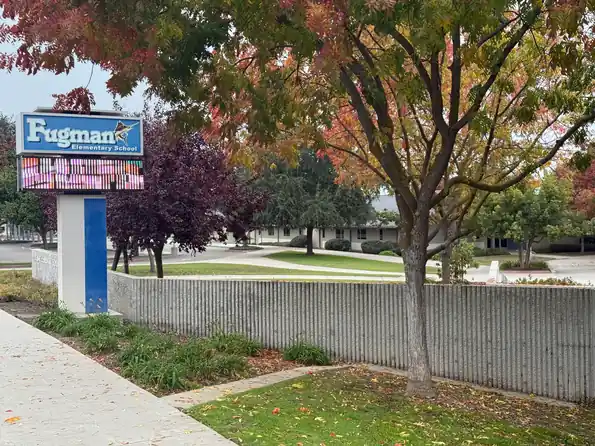
School zone pedestrian accidents impose heightened duty-of-care standards on drivers. California law imposes reduced speed limits in designated school zones, and drivers are expected to exercise substantially increased caution near marked school crossings during arrival and dismissal periods. When a driver strikes a child pedestrian near a school, the foreseeability analysis is particularly strong — the presence of children crossing near schools during school hours is an expected condition that every driver is required to anticipate.
Child pedestrian claims present specific complexities that adult cases do not. Children’s reaction time and traffic judgment are not held to the same standard as adult pedestrians, which directly affects the comparative fault analysis when insurers argue the child entered traffic unexpectedly. Injury severity in child pedestrian cases is often more extreme because of the size differential between a child and the striking vehicle. Claims involving minors require court approval for settlement, with long-term damages including future educational impact, developmental consequences, and lifetime care needs evaluated carefully before any resolution is accepted.
Comparative Fault in Fresno Pedestrian Cases
California applies pure comparative fault principles to pedestrian accident cases. If a pedestrian crossed outside a marked crosswalk, entered traffic when a signal was not in their favor, or otherwise failed to exercise reasonable care, compensation may be reduced proportionally — but it is not eliminated. A pedestrian found 30 percent at fault under California’s system still recovers 70 percent of total proven damages.
Comparative fault disputes in pedestrian cases typically center on signal timing at the precise moment of crossing, visibility conditions and whether the pedestrian was in a location the driver should have seen, whether the driver was distracted or speeding, and the specific geometry of where the pedestrian was relative to crosswalk markings. An insurer’s assertion that the pedestrian darted into traffic is a legal argument, not a fact, until the evidence either supports or refutes it.
Severe and Catastrophic Injuries in Pedestrian Collisions
Pedestrian collisions produce a distinctive and severe injury profile. The pedestrian’s body absorbs the full kinetic energy of the vehicle impact with no protective structure between them. Traumatic brain injuries — ranging from concussion-level symptoms to permanent cognitive impairment — occur when the head contacts the vehicle, the ground, or both in sequence. Spinal cord damage from the initial impact or the secondary fall can produce paralysis or permanent neurological impairment. Pelvic and femur fractures from vehicle bumper contact are among the most common orthopedic injuries in pedestrian cases and frequently require multiple surgeries and extended rehabilitation. Internal bleeding and organ trauma from blunt abdominal force can be life-threatening emergencies not immediately apparent at the scene.
For catastrophic injury valuation and future care planning, see our Spinal Cord Injury Lawyer page. Fatal pedestrian collisions may involve claims through our Fresno Wrongful Death Lawyer page.
Medical Documentation Strategy
Serious pedestrian injuries require consistent and complete medical documentation from the date of the collision through the end of treatment. Insurers deploy a standard set of arguments to discount pedestrian injury claims: delayed symptom onset is used to argue the injury was not caused by the crash; treatment gaps are characterized as evidence the injury was not serious; and pre-existing conditions are invoked to attribute symptoms to history rather than the collision. Countering these arguments requires that medical care begins immediately after the accident, that follow-up is consistent and documented without gaps, that specialist referrals and diagnostic imaging are pursued when warranted, and that treating physicians document functional limitations in terms that translate directly into the damages analysis.
What We Bring to Your Case
Disciplined preparation. Direct access. No fee unless we win.
Insurance Company Defense Tactics in Pedestrian Claims
Pedestrian accident claims are defended with a predictable set of tactics. The “sudden darting” argument — that the pedestrian appeared unexpectedly from behind a parked vehicle or outside the driver’s field of vision — is the most common and is frequently asserted without supporting evidence. Visibility and clothing arguments attempt to shift responsibility onto the pedestrian for being difficult to see, regardless of whether the driver had adequate time and distance to observe and react. Injury minimization focuses on any gap in care, any characterization of the impact as low-speed, or any imaging that does not show acute findings. Early settlement pressure is applied before the full extent of traumatic brain injury, spinal damage, or permanent orthopedic consequences is established. Each of these tactics requires a specific evidentiary response — which is why case construction from day one determines the outcome.
Compensation in Fresno Pedestrian Accident Cases
California law recognizes full economic and non-economic damages in pedestrian accident cases. Economic damages include all past and future medical expenses causally connected to the collision, future rehabilitation and long-term care costs, lost wages during recovery, and diminished future earning capacity when injuries are permanent. Non-economic damages compensate for physical pain and suffering, emotional distress, post-traumatic stress disorder, and permanent impairment to the activities and quality of life the victim previously enjoyed. In severe cases involving spinal cord injury, traumatic brain injury, or permanent disability, future damages require expert testimony from life care planners and forensic economists to establish projected costs with the specificity required for trial or mediation.
Litigation Readiness in Fresno County
When a carrier refuses to pay fair value for a pedestrian injury claim, the case must be prepared for Fresno County Superior Court. When a Fresno pedestrian accident lawyer build a case thoroughly from the outset — with preserved signal timing data, documented scene evidence, complete medical records, and a damages calculation that accounts for both current and future losses — it consistently produces stronger negotiating positions than those assembled under deadline pressure. For commercial collision overlap involving buses or delivery vehicles, see our Fresno Truck Accident Lawyer page.
Why Fresno Pedestrian Accident Victims Choose Dhanjan Injury Lawyers
Trial-ready preparation from day one. Every pedestrian case is built as if it will go before a Fresno County Superior Court jury. That standard produces real leverage when carriers dig in with visibility arguments and comparative fault tactics.
Direct attorney access throughout your case. You work directly with your Fresno pedestrian accident lawyer from the first consultation through final resolution — not a case manager for substantive communications about your claim.
No fee unless we recover for you. We handle pedestrian accident cases on a contingency fee basis. No upfront costs, no attorney fees unless we win.
Central Valley focus. We know Fresno’s intersections, the local courts, and the defense tactics that carriers use specifically against pedestrian injury claims in this region. That familiarity produces more effective case preparation and more credible litigation presence in Fresno County Superior Court.
Need a Fresno Pedestrian Accident Lawyer?
Speak with an Attorney and understand your next steps
Fresno Pedestrian Accident Frequently Asked Questions
Do drivers always have to yield to pedestrians in Fresno?
Under California Vehicle Code section 21950, drivers must yield to pedestrians within marked crosswalks and in many unmarked crosswalk situations at intersections. However, liability in a specific collision depends on the signal phase at the time of impact, the pedestrian’s precise location relative to crosswalk markings, the driver’s speed, and whether the driver was distracted. California’s pedestrian right-of-way law is strong, but each case turns on the specific evidence preserved from that collision.
Can I recover if I was crossing outside a marked crosswalk?
Yes. California’s pure comparative fault system reduces recovery proportionally to your share of fault — it does not eliminate it. A pedestrian found 30 percent at fault for crossing outside a crosswalk still recovers 70 percent of total proven damages. Whether crossing outside a crosswalk constitutes comparative fault, and to what degree, depends on driver speed, visibility, and whether the driver had adequate time and distance to observe and avoid.
What if the driver claims I darted into traffic suddenly?
The sudden darting defense is the most common tactic in pedestrian accident cases. It is a legal argument, not a fact, until the evidence resolves it. Traffic signal timing data, video from nearby business cameras, and witness statements frequently establish that the pedestrian was visible in the crosswalk before the driver entered the intersection — directly contradicting the darting narrative. Signal data and video must be preserved before they overwrite.
What if the driver claims I was not visible or wearing dark clothing?
Visibility arguments are a standard carrier defense tactic. The relevant questions are whether the driver was operating at a speed appropriate for the conditions and whether the driver was paying adequate attention to the roadway. Scene photography, lighting analysis, and witness testimony directly contest these claims. They are frequently asserted without supporting evidence and are contestable when the objective record is properly preserved.
How long do I have to file a pedestrian accident claim in Fresno?
Most personal injury claims in California are subject to a two-year statute of limitations. However, if a government entity was involved — a dangerous crosswalk maintained by the City of Fresno, a malfunctioning signal, or a city or county vehicle — you may have as little as six months to file a formal government claim under California Government Code section 835. Contact a Fresno pedestrian accident lawyer immediately if any public entity may have contributed to the collision.
What if my child was struck by a vehicle near a school in Fresno?
Children are not held to the same traffic judgment standard as adults, which directly affects the comparative fault analysis when insurers claim the child entered traffic unexpectedly. Claims involving minors require a parent or guardian to file, and court approval may be required for settlement. Long-term damages including future educational impact, developmental consequences, and lifetime care needs must be fully evaluated before any settlement is accepted.
What damages can I recover after a pedestrian accident in Fresno?
Recoverable damages include all past and future medical expenses causally connected to the collision, rehabilitation and long-term care costs, lost wages during recovery, diminished future earning capacity when injuries are permanent, physical pain and suffering, emotional distress, and permanent impairment damages. Catastrophic injury cases require expert testimony from life care planners and forensic economists to establish future damages with the specificity required for trial or mediation.
Should I accept the first settlement offer after a pedestrian accident?
Not until your prognosis and future care needs are fully understood. Early settlement offers are structured to close high-value claims before the full extent of traumatic brain injury, spinal damage, and permanent orthopedic consequences is established. Once you sign a release the claim is permanently closed regardless of how your condition develops — this is particularly critical in pedestrian cases where TBI symptoms may evolve significantly in the months following the collision.