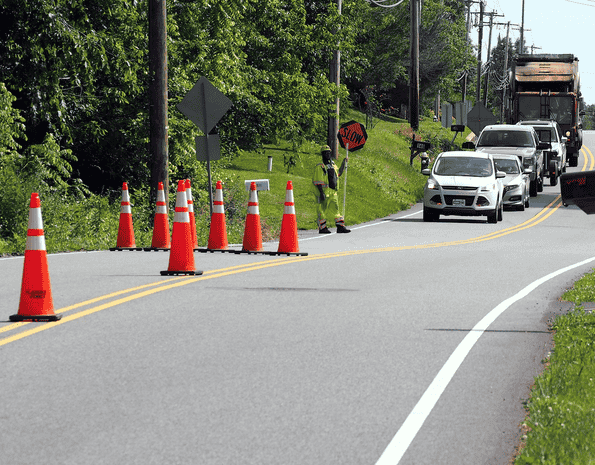
Construction zones on California highways and city streets are among the most dangerous driving environments in the state. Lane shifts, uneven pavement, sudden stops, reduced shoulders, and compressed traffic patterns create conditions that significantly increase collision risk — and the injuries that result from construction zone crashes are frequently severe because vehicles are often traveling in high-speed, low-visibility environments when contact occurs.
Speed is the most commonly disputed issue in construction zone injury claims. Insurance carriers argue that any driver who did not reduce speed below the posted limit failed to exercise reasonable care for conditions. Understanding what California law requires — and how construction zone speed disputes affect liability — is important context for anyone injured in one of these collisions.
Injured in a Construction Zone Collision?
We review liability, evidence, and next steps in a free consultation. No fee unless we win.
What Is the Speed Limit in a California Construction Zone?
California does not impose a single statewide reduced speed limit for all construction zones. Posted temporary signs control the applicable speed limit in each zone, and those limits vary by project, roadway type, and the phase of construction activity. Drivers are legally required to obey the posted construction zone speed limit and — critically — to drive at a speed that is safe for the actual conditions present, which may be slower than the posted limit when lane shifts, reduced visibility, or heavy congestion are present.
Under California Vehicle Code section 22350 — the basic speed law — no person shall drive at a speed greater than is reasonable or prudent having due regard for weather, visibility, traffic, and the surface and width of the highway. This standard applies independently of posted limits. A driver traveling at exactly the posted construction zone speed can still be found negligent under section 22350 if conditions required a slower speed.
The practical consequence in injury claims: posted speed limit compliance is a starting point, not a complete defense. Carriers dispute this point aggressively when it serves their interests — arguing that an injured plaintiff should have slowed further — but the same standard applies to the at-fault driver whose speed caused the collision.
Why Construction Zones Generate Serious Injury Claims
The physical environment of an active construction zone concentrates injury risk in ways that standard roadway conditions do not. Several factors make construction zone collisions disproportionately severe:
- Sudden lane shifts and narrowed travel lanes — drivers encounter unexpected geometry changes that require rapid reaction, particularly at highway speeds where reaction time is compressed
- Reduced or eliminated shoulders — the margin for error in construction zones is dramatically smaller than standard roadways, and secondary collisions after initial contact are common
- Traffic compression and stop-and-go patterns — freeway construction zones create accordion-effect traffic that produces rear-end collisions when following distance is insufficient for actual stopping conditions
- Uneven pavement transitions and debris — surface irregularities can cause loss of vehicle control, particularly for motorcycles and vehicles traveling at highway speed
- Reduced lighting in nighttime work zones — night construction dramatically increases collision risk due to reduced visibility of workers, equipment, and lane markings
- Large construction equipment in the roadway — the presence of trucks, concrete barriers, and heavy equipment adjacent to travel lanes creates catastrophic injury potential when contact occurs
Common Construction Zone Crash Mechanisms
Rear-end collisions are the most frequent construction zone crash type. Traffic compression causes vehicles ahead to slow suddenly. Drivers following at highway-speed following distances — appropriate for open roadway conditions — cannot stop in time for the compressed stopping distances that construction zones create. The liability analysis focuses on whether following distance was reasonable for known construction zone conditions.
Lane change and merge collisions occur when lanes narrow or when construction forces a merge point that compresses multiple lanes into fewer travel lanes. Drivers who misjudge gap spacing or force unsafe merges cause sideswipe and angular collisions that at highway speed produce severe occupant injury.
Loss-of-control crashes result from surface irregularities, abrupt pavement transitions, and debris in travel lanes. These are particularly common for motorcyclists, who have no structural protection when contact with debris or uneven pavement occurs. See our Fresno Motorcycle Accident Lawyer page for the specific liability framework that applies to motorcycle construction zone claims.
Commercial truck collisions in construction zones are especially dangerous because of the mass differential between commercial vehicles and passenger cars, the longer stopping distances required by loaded commercial vehicles, and the difficulty large trucks have navigating narrowed travel lanes. Federal FMCSA regulations impose specific duties on commercial drivers that are frequently violated in construction zone crashes. For the full commercial vehicle liability framework see our Fresno Truck Accident Lawyer page.
Who Can Be Liable for a Construction Zone Collision
Construction zone injury claims frequently involve more defendants than standard vehicle collision cases. The liability analysis must examine every party whose conduct contributed to the conditions that caused the crash:
- At-fault drivers — speeding, distracted driving, following too closely, and unsafe lane changes in construction zones establish standard negligence liability under California Civil Code section 1714
- Commercial carriers and trucking companies — employer liability for driver negligence, FMCSA regulatory violations, and inadequate driver training create claims against the carrier alongside the individual driver
- Construction contractors — inadequate traffic control, improper lane configuration, failure to post required warning signs, and unsafe work zone design create premises liability and negligence claims against the contractor responsible for the zone
- Government entities — when dangerous road conditions, inadequate signage, or traffic control failures on public roads contributed to the collision, government liability claims under Government Code section 835 may apply — with the six-month government claim presentation deadline under the Government Claims Act
- Equipment manufacturers — defective vehicles, tires, or braking systems that contributed to a driver’s inability to stop in time create products liability claims in addition to standard negligence
Identifying all liable parties from the outset of a construction zone case — before defendants have the opportunity to disclaim involvement and before evidence is lost — is one of the most important early steps in the claim process.
Construction Zone Crashes on Fresno’s Major Corridors
Fresno and the Central Valley generate significant construction zone collision caseload from ongoing infrastructure projects along the region’s high-volume freight and commuter corridors. Highway 99 between Fresno and the southern Valley carries some of the highest commercial truck volume in California and is subject to recurring construction phases that create sustained collision risk. Highway 41 connects Fresno to the Sierra Nevada and produces construction zone incidents particularly in segments near the Highway 99 interchange. Shaw Avenue, Blackstone Avenue, and Herndon Avenue generate construction zone collisions within Fresno city limits where surface improvement and utility work regularly narrows travel lanes on high-speed arterials.
Construction projects on public roads in Fresno are subject to city and county oversight, and traffic control plan approvals create a documentation trail that is relevant to contractor and government liability analysis when those plans were inadequate or improperly implemented.
Evidence That Determines Construction Zone Liability
Construction zone conditions change rapidly. The physical evidence that establishes what conditions existed at the time of the collision — lane configuration, posted signage, visibility, surface conditions — must be documented immediately before the zone is reconfigured or the project moves to the next phase.
- Scene photographs and video — all lane markings, temporary signage, cone placement, surface conditions, and lighting at the time of the collision before anything is moved or modified
- Dashcam footage — the claimant’s own dashcam footage and any commercial vehicle dashcam or forward-facing camera footage from vehicles in the vicinity
- Construction project documentation — approved traffic control plans, contractor work orders, and inspection records establish what configuration was required and whether it was properly implemented
- Event data recorder data — pre-impact speed, braking force, and throttle position from the at-fault vehicle establishes the speed at which the collision occurred independently of any driver statement
- CHP and Fresno PD collision reports — the investigating officer’s scene observations, diagram, and contributing factor findings are foundational documents in any construction zone claim
- Witness statements — construction workers, flaggers, and other drivers present in the zone at the time of the collision are often the most credible witnesses to conditions and driver behavior
Civil Liability vs. Traffic Citations in Construction Zone Cases
California imposes enhanced penalties for speeding in active construction zones under certain circumstances, and some districts conduct targeted construction zone enforcement operations. However, the presence or absence of a traffic citation has limited direct effect on civil liability analysis.
A driver who received a speeding citation in a construction zone is not automatically liable for a collision — the citation establishes a speed violation but liability still requires proof that the speed caused the collision and the resulting injuries. Conversely, a driver who was not cited can still be found civilly liable if the evidence establishes that their speed was unreasonable for conditions under CCP section 22350, regardless of whether it exceeded the posted limit.
In practice, citations issued at the scene are useful but not determinative. The event data recorder data, scene photographs, and accident reconstruction analysis are more reliable bases for the speed and causation arguments that determine liability in contested construction zone claims.
Construction Zone Collision in Fresno?
We review liability, evidence preservation, and next steps at no cost. If a contractor, carrier, or government entity contributed to your crash, identifying those defendants early matters.
Construction Zone Speed Limit — Frequently Asked Questions
Is the speed limit always reduced in a California construction zone?
Not automatically. California does not impose a universal reduced speed limit for all construction zones. The speed limit in a specific zone is set by posted temporary signs and varies by project, roadway type, and construction phase. Where no reduced limit is posted, the normal speed limit applies — but the basic speed law under Vehicle Code section 22350 still requires drivers to operate at a speed that is safe for actual conditions, which may be slower than the posted limit when lane shifts, congestion, or reduced visibility are present. Compliance with the posted speed limit is not a complete defense to a negligence claim if conditions required a slower speed.
Can I recover compensation if the construction zone itself was unsafe?
Yes. When a contractor’s inadequate traffic control, improper lane configuration, or failure to post required warning signs contributed to a collision, the contractor bears liability alongside the at-fault driver. When dangerous conditions existed on a public road due to government negligence in approving or overseeing traffic control plans, a government liability claim under Government Code section 835 may apply. Government entity claims require a formal written claim presented within six months of the incident under the Government Claims Act — a shorter deadline than the standard two-year personal injury statute. If any government entity may have contributed to the conditions, contact an attorney immediately.
What if the construction zone signage was inadequate or confusing?
Inadequate or confusing construction zone signage creates potential liability for both the contractor responsible for the traffic control plan and the government entity that approved it. California’s Manual on Uniform Traffic Control Devices establishes the required signage standards for construction zones. Deviations from those standards that contributed to a collision support negligence and premises liability claims against the responsible parties. Documenting the signage conditions at the time of the collision — before the zone is reconfigured — is essential to preserving this evidence.
Does the at-fault driver’s speed citation affect my injury claim?
A citation is useful evidence but not determinative. A speeding citation issued to the at-fault driver establishes a Vehicle Code violation and supports negligence per se arguments, but civil liability also requires proof that the speed caused the collision and the resulting injuries. A driver who was not cited can still be found civilly liable if evidence shows their speed was unreasonable for conditions. In practice, event data recorder pre-impact speed data and accident reconstruction analysis are more reliable and harder to contest than a citation alone. Do not assume the absence of a citation weakens your claim.
How quickly does evidence from a construction zone collision disappear?
Very quickly. Construction zones are by definition active work environments — lane configurations, signage, surface conditions, and equipment placement change as projects progress. The conditions that existed at the time of the collision may be entirely different within days. Surveillance and dashcam footage overwrites on 24-to-72-hour cycles. Event data recorder data can be overwritten when a vehicle is repaired. Witness memories degrade rapidly. Preserving photographs, video, and contractor documentation of the zone configuration at the time of the collision requires immediate action — not action after the medical situation stabilizes.