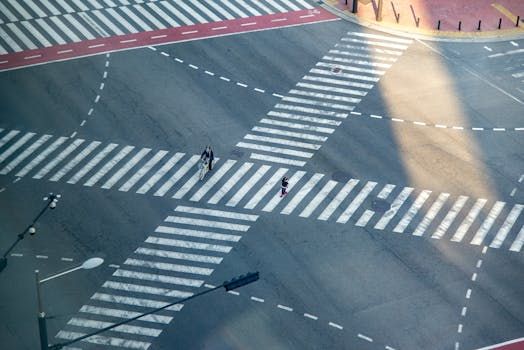
California gives pedestrians and cyclists some of the strongest legal protections of any state. When a driver violates those protections and causes an injury, the injured person has specific legal rights — and specific evidence that disappears within hours. Know both before you need them.
- Pedestrian Rights Under California Law
- Cyclist Rights Under California Law
- The Evidence That Disappears Within 72 Hours
- Common Defenses — And How to Counter Them
- Government Liability for Infrastructure in Pedestrian and Cyclist Cases
- Medical Treatment After Pedestrian and Cyclist Accidents in Fresno
- What Changed for Pedestrians and Cyclists in California in 2026
- Pedestrian and Cyclist Legal Resources in Fresno and the Central Valley
- Pedestrian and Cyclist Accident Rights — Frequently Asked Questions
Pedestrian Rights Under California Law
California Vehicle Code section 21950 is the foundational protection for pedestrians: drivers must yield the right of way to pedestrians in crosswalks, both marked and unmarked. This applies to every intersection in California — not just those with painted crosswalks or pedestrian signals. At any intersection where two roadways meet, an unmarked crosswalk exists as a matter of law, and drivers must yield to pedestrians crossing within it.
The “I didn’t see them” defense — frequently offered by drivers after pedestrian accidents — describes exactly the failure that constitutes negligence. A driver who fails to see a pedestrian that a reasonable driver should have seen has breached their duty of care. The obligation is not passive; it is active. Drivers must look for pedestrians before proceeding through intersections, especially in areas with documented pedestrian activity.
California’s pure comparative fault rule allows pedestrians to recover damages even if they contributed to the accident — but reduces the recovery by the pedestrian’s percentage of fault. Building objective evidence about the sequence of events from the first hours of the case is what prevents carriers from manufacturing unsupported pedestrian fault positions.
Cyclist Rights Under California Law
California Vehicle Code section 21200 gives cyclists the full rights and duties of vehicle operators on all California roads. This is not a limited right or a courtesy — it is a legal right equivalent to that of any driver. Cyclists may occupy the full traffic lane when necessary. They may use any road that is not specifically restricted to motor vehicles. They are entitled to the same protection from other drivers that any other vehicle operator is entitled to.
The Three Feet for Safety Act — California Vehicle Code section 21760 — requires drivers to maintain at least three feet of clearance when passing a cyclist. A violation of this specific statute establishes negligence per se under California law: the driver is legally negligent as a result of the violation, without requiring additional proof of negligence. Documentation of the violation — through camera footage, witness accounts, or accident reconstruction — converts a disputed liability case into a clear-liability case.
The Evidence That Disappears Within 72 Hours
The most valuable evidence in pedestrian and cyclist accident cases is the most perishable. Commercial security cameras mounted on buildings facing the intersection or roadway where the accident occurred typically overwrite their footage on automatic 30 to 72-hour cycles. In Fresno, the density of commercial camera coverage on corridors like Shaw Avenue, Herndon Avenue, and the downtown business district means that footage documenting pedestrian and cyclist accidents is available — but only for the first 24 to 72 hours.
Traffic signal camera footage from the City of Fresno, where it exists, has a separate retention schedule — but also overwrites. Witness contact information from bystanders at the scene becomes harder to obtain with each passing day. The physical evidence at the scene — scuff marks, skid marks, debris patterns — disappears when the area is cleaned or when rain and traffic obscure it.
An attorney who receives a call about a pedestrian or cyclist accident on the day it happened can send preservation demands to commercial businesses with frontage on the accident site, to the City of Fresno for traffic camera footage, and can coordinate immediate scene documentation. An attorney retained two weeks later cannot recover footage that was already overwritten.
Common Defenses — And How to Counter Them
“The pedestrian/cyclist was jaywalking.” Even if a pedestrian was crossing outside a marked crosswalk, California’s comparative fault rule allows recovery — the jaywalk may reduce the recovery by the pedestrian’s percentage of fault, but it does not eliminate the claim. Furthermore, drivers have an independent duty to avoid striking pedestrians even when the pedestrian is not at a designated crossing. Vehicle Code section 21954 specifically addresses this: pedestrians who cross at unmarked locations must yield to oncoming traffic, but drivers must “exercise due care” for their safety regardless.
“The cyclist ran a red light.” A cyclist who violated a traffic control device bears comparative fault for that violation — but the driver who struck the cyclist may also bear fault if they failed to exercise reasonable care. The comparative fault analysis applies to both parties, and the cyclist’s violation does not shield the driver from their own negligence.
“The cyclist wasn’t using the bike lane.” California law does not require cyclists to use bike lanes exclusively. Vehicle Code section 21208 allows cyclists to leave the bike lane under numerous specified circumstances, including when the lane is unsafe, when approaching an intersection, or when avoiding debris. Failure to use a bike lane is not negligence per se.
Government Liability for Infrastructure in Pedestrian and Cyclist Cases
When a defective crosswalk design, malfunctioning pedestrian signal, missing or damaged bike lane infrastructure, or poor road condition contributed to a pedestrian or cyclist accident, government liability under California Government Code section 835 — the Dangerous Condition of Public Property doctrine — may be available against the City of Fresno, the County of Fresno, or Caltrans.
Government claims have a shorter deadline than standard personal injury claims: the Government Claims Act requires a formal written claim within six months of the accident. Missing this deadline permanently bars the government liability claim, even if the standard two-year statute of limitations hasn’t run. Evaluating potential government infrastructure liability on the day of the accident — and filing a protective government claim immediately when infrastructure may have contributed — is one of the most time-sensitive aspects of pedestrian and cyclist representation.
Medical Treatment After Pedestrian and Cyclist Accidents in Fresno
Pedestrian and cyclist accidents produce severe injuries because the person on foot or on a bike has no structural protection. Even moderate-speed vehicle impacts produce orthopedic trauma, traumatic brain injury, and internal injuries at rates far higher than vehicle-to-vehicle collisions at equivalent speeds. Community Regional Medical Center in Fresno — the regional Level I Trauma Center — is the appropriate destination for the most severe pedestrian and cyclist injuries. Clovis Community Medical Center on Herndon Avenue provides acute care for injuries that don’t require Level I trauma management.
Seeking medical evaluation the same day of the accident — even for injuries that seem minor — is critical both for health and for the legal case. The gap between the accident and the first medical evaluation is the primary tool insurance carriers use to argue that injuries weren’t caused by the accident or weren’t serious.
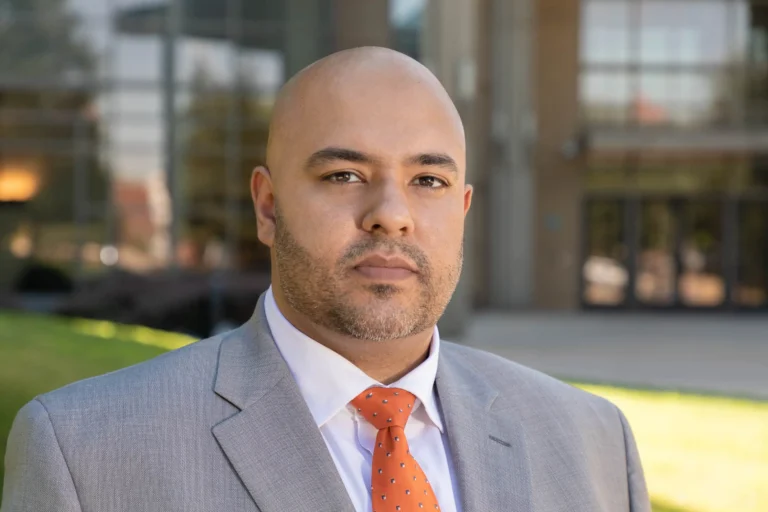
Your Attorney — Sarwinder Dhanjan
Sarwinder Dhanjan is the founding attorney of Dhanjan Injury Lawyer. He handles every case personally — you work directly with him from the first call through final resolution. Attorney Dhanjan is admitted to the State Bar of California and is active in Fresno County Superior Court.
What Changed for Pedestrians and Cyclists in California in 2026
California’s pedestrian and cyclist protection laws were updated in 2026 in ways that directly affect injury claims:
E-bike regulations (AB 390 and related). The classification and operation rules for e-bikes — which are now a primary transportation mode in many Central Valley communities — were clarified in 2026. Class 1, Class 2, and Class 3 e-bikes have different lane access rules. A driver who fails to yield to a legally operating e-bike on a bike path or road shoulder faces the same Three Feet for Safety Act obligations as for conventional bicycles.
Expanded “slow down and move over” obligations. California’s “slow down and move over” law — which previously applied primarily to stopped emergency vehicles — was expanded to apply more broadly to bicyclists and pedestrians alongside roadways. A driver who fails to slow down and move over for a cyclist or pedestrian in a lane adjacent to the traffic lane now faces clearer liability exposure under the updated statutory framework.
These 2026 changes matter for injury claims because they create clearer statutory violation standards that establish negligence per se when drivers fail to comply. No Fresno-local competitor has updated their pedestrian and cyclist rights content for 2026 — this is a freshness advantage that directly supports AI Overview citation eligibility.
Pedestrian and Cyclist Legal Resources in Fresno and the Central Valley
For city-specific pedestrian and cyclist legal resources, see our dedicated pages: Fresno Pedestrian Accident Lawyer, Clovis Pedestrian Accident Lawyer, Fresno Bicycle Accident Lawyer, and Clovis Bicycle Accident Lawyer. For a statewide overview of pedestrian accident law in California, see our California Pedestrian Accident Lawyer page and our California Bicycle Accident Lawyer page. For related reading on what to do after any type of accident in Fresno, see our post on what to do after a car accident in Fresno.
Were You Hit as a Pedestrian or Cyclist? Get a Free Case Evaluation.
Evidence disappears within 72 hours. Call (559) 342-2000 today. No fee unless we win.
Pedestrian and Cyclist Accident Rights — Frequently Asked Questions
Does a driver always have to yield to pedestrians in California?
Yes at crosswalks — both marked and unmarked. California Vehicle Code section 21950 requires drivers to yield the right of way to pedestrians in crosswalks. Unmarked crosswalks exist at every intersection where two roadways meet, as a matter of law.
Can I recover if I was crossing outside a crosswalk?
Yes — California’s comparative fault rule allows recovery even if you were partially at fault. Your recovery is reduced by your percentage of fault. Drivers also have an independent duty to exercise due care for pedestrians regardless of where they are crossing.
What is the Three Feet for Safety Act?
California Vehicle Code section 21760 requires drivers to maintain at least three feet of clearance when passing a cyclist. A violation establishes negligence per se — meaning the driver is legally negligent as a result of the violation itself.
How long do I have to file a claim after a pedestrian or cyclist accident?
Two years from the date of the accident for most claims. Six months if a government entity was involved — city infrastructure, government vehicles, or Caltrans road conditions. The six-month deadline is absolute; missing it permanently bars the government liability claim.
What if the driver’s insurance is insufficient to cover my injuries?
Your own uninsured/underinsured motorist coverage may provide additional recovery. Government liability for infrastructure defects may also be available. Identifying every source of available compensation is one of the first steps in every pedestrian and cyclist case evaluation.