If you were in a serious accident in Fresno or the Central Valley today, the most important evidence in your case is already disappearing. Commercial camera footage overwrites on automatic cycles. Event data recorders in commercial vehicles are overwritten when the truck returns to service. Witnesses who saw the accident will be harder to reach tomorrow than they are right now. The first 72 hours after a serious injury accident are the most evidence-critical period in the entire case — and most people spend them at the hospital, not preserving evidence.
- The Specific Evidence That Disappears — And When
- Why "Evidence Discipline" Is Different From Just "Gathering Evidence"
- What an Attorney Should Do in the First 24 Hours
- What You Can Do Before You Retain an Attorney
- Evidence Discipline at Dhanjan Injury Lawyer
- The Evidence Preservation Protocol We Apply from the First Call
- Common Questions About Evidence in Personal Injury Cases
This is not a reason to leave the hospital. It is a reason to contact an attorney as soon as you are physically able — so someone is preserving evidence while you are receiving care.
The Specific Evidence That Disappears — And When
Commercial camera footage: 30 to 72 hours
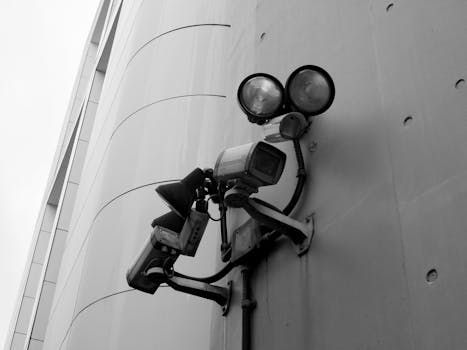
The businesses along Fresno’s accident corridors — Shaw Avenue, Herndon Avenue, Blackstone Avenue, Highway 99 frontage roads — have security cameras that capture the street in front of their properties. These cameras are not maintained as an accident archive. They are security systems that automatically overwrite their oldest footage on a rolling cycle, typically 30 to 72 hours. When that cycle completes, the footage is gone — permanently, irretrievably, and without any obligation on the business owner to preserve it absent a specific legal demand.
Traffic signal cameras at major Fresno intersections are operated by the City of Fresno and are subject to a separate retention schedule, but that schedule is not indefinite. Caltrans maintains monitoring cameras on state highways — but their data is not preserved automatically for private use. Accessing it requires specific preservation demands made before the retention window closes.
An attorney who receives a call about a serious accident on day one sends preservation demand letters to every business with potential footage of the scene, to Caltrans, and to the City of Fresno that same day. An attorney retained two weeks later cannot recover footage that overwrote three days after the accident.
Commercial vehicle electronic data: 24 to 72 hours
Commercial trucks are required to maintain electronic logging devices (ELDs) under FMCSA regulations. These devices record hours of service, vehicle speed, braking events, and other operational data. Event data recorders — essentially the “black boxes” of commercial vehicles — capture pre-crash speed, braking behavior, and other parameters that directly establish what the driver was doing in the seconds before impact.
This data is overwritten when the vehicle returns to service. In a standard commercial trucking operation, a truck involved in a non-catastrophic accident may be cleared and returned to route within 24 to 48 hours. The ELD and event data recorder data from the accident is gone when that truck goes back on the road.
A litigation hold demand served to the trucking company within hours of the accident — demanding preservation of all electronic data and physical evidence from the vehicle — creates a legal obligation to preserve that data. It does not guarantee preservation, but it creates liability for destruction, and in practice it does cause carriers to preserve data they would otherwise overwrite. An attorney who is not retained until weeks after the accident cannot send that demand in time.
Witness accounts: Degrading within days
Human memory is not a recording device. Details that a witness recalls clearly on the day of an accident — the specific color of a traffic signal, the exact position of vehicles before impact, whether a driver was looking at their phone — become less certain within days and weeks as the memory is affected by subsequent information and the natural fading of detail.
Witnesses at major Fresno intersections include people who were simply passing by, people who stopped briefly, and people who work at nearby businesses. The tourists and out-of-area visitors who witnessed accidents on Fresno’s commercial corridors or on Highway 99 may be out of state within days. Their contact information, collected immediately at the scene, becomes the basis for locating them later. Without that information, they may never be found.
Early witness interviews, conducted while the memory is fresh and before the witness has discussed the accident with others or been contacted by the insurance carrier’s investigator, produce the most valuable and reliable testimony. An attorney who sends an investigator to canvass the accident site on day one collects different witness information than one who contacts witnesses three months later.
The physical scene: Changes within hours
Road debris, skid marks, fluid stains, and vehicle resting positions tell a story about the mechanics of the collision that cannot be fully reconstructed from photographs after the scene is cleared. Skid marks fade within days. Debris is collected by road crews. The physical evidence of the collision is available only in a narrow window that may close before the investigation begins.
Scene photography conducted by the injured party immediately after the accident — if they are physically able — or by an investigator dispatched by the attorney on the same day creates a permanent record of physical evidence that cannot be replicated later. Even in cases where the attorney has not yet been retained, documenting the scene as thoroughly as possible on the day of the accident is among the most valuable actions an injury victim can take.
Why “Evidence Discipline” Is Different From Just “Gathering Evidence”
Gathering evidence is a reactive activity — collecting what is available when you get around to it. Evidence discipline is a systematic, proactive approach that treats every piece of potentially relevant evidence as perishable and acts immediately to preserve it.
Evidence discipline means having a protocol that activates from the first call. Not “we will send out an investigator when we have time” — but an immediate, systematic response that identifies every evidence source, assesses the specific retention timeline for each, and deploys preservation demands before those timelines expire.
The practical difference is significant. In a case where camera footage was preserved because preservation demands were sent within 24 hours of the accident, the attorney can show a jury — or an insurance adjuster — the exact moment of impact from an angle that directly establishes fault. In a case where the footage was requested three weeks later and found to have been overwritten, the attorney has nothing but the competing accounts of the driver and the victim.
What an Attorney Should Do in the First 24 Hours
A personal injury attorney who practices with evidence discipline does specific things within the first 24 hours of being retained on a serious injury case:
- Identifies every business within view of the accident site that may have exterior cameras
- Sends written preservation demands to each business, creating a documented obligation to preserve footage
- Identifies the specific government entities responsible for any traffic cameras, monitoring systems, or road maintenance records relevant to the accident location
- Sends litigation hold demands to any commercial vehicle operator involved in the accident
- Dispatches an investigator to the scene if it is within the window where physical evidence may still be present
- Contacts known witnesses before they become difficult to reach
- Identifies any employer vehicle involvement that triggers FMCSA investigation
This is the protocol that makes the difference between a case built on complete evidence and one built on reconstructed accounts.
Your Attorney — Sarwinder Dhanjan
Sarwinder Dhanjan is the founding attorney of Dhanjan Injury Lawyer. He handles every case personally — you work directly with him from the first call through final resolution. Attorney Dhanjan is admitted to the State Bar of California and is active in Fresno County Superior Court.
What You Can Do Before You Retain an Attorney
If you have been injured in an accident and have not yet retained an attorney, these immediate actions preserve evidence while you are arranging representation:
- Photograph everything at the scene — vehicle positions, damage, road conditions, signage, and any visible injuries on your body — before anything is moved or treated
- Collect contact information from every witness — name, phone number, and if possible email address
- Note the exact addresses of businesses facing the accident site — these are the sources of camera footage
- Photograph the vehicle identification information for any commercial vehicle involved — the DOT number on the side of the tractor, the license plate of the trailer, the carrier name and address
- Write down your account of the accident as soon as you are able, with as much detail as possible about the sequence of events
Then contact an attorney the same day you are able to do so.
Evidence Discipline at Dhanjan Injury Lawyer
Every serious personal injury case at Dhanjan Injury Lawyer activates an immediate evidence preservation protocol from the first call. We serve preservation demands the same day we are retained, before the investigation is complete — because the evidence window does not wait for the investigation to finish. For a direct conversation about your specific case, call (559) 342-2000. For more on how we approach case preparation, see our posts on what trial-ready representation means and what to do after a car accident in Fresno.
The Evidence Preservation Protocol We Apply from the First Call
Every serious personal injury case at Dhanjan Injury Lawyer activates an immediate evidence preservation protocol from the first call. We serve preservation demands the same day we are retained — before the investigation is complete — because the evidence window does not wait for the investigation to finish.
For Highway 99 and commercial corridor accidents in Fresno: litigation hold demands to the carrier, trucking company, and any maintenance contractors; preservation demands to Caltrans for traffic monitoring footage; identification of commercial businesses with frontage camera coverage near the accident site. For agricultural equipment accidents: preservation of the equipment itself, requests for any Cal/OSHA incident reports, and identification of employer safety records. For all Fresno cases: medical record preservation demands to Clovis Community Medical Center and Community Regional Medical Center, witness identification and early contact, and vehicle or equipment preservation before repairs.
This protocol runs simultaneously with the initial case evaluation — not sequentially. By the time we have assessed your case, the preservation demands are already out. That is the evidence discipline standard we apply from the first call on every case we handle in Fresno and the Central Valley. To start the process on your specific case, call (559) 342-2000 available 24 hours. For related reading, see our posts on what trial-ready representation means and what to do after a car accident in Fresno.
Talk to Attorney Sarwinder Dhanjan Today
Free case evaluation. No fee unless we win.
Common Questions About Evidence in Personal Injury Cases
What if I did not photograph the accident scene?
The absence of scene photographs does not end a case. Other evidence sources — camera footage, witness accounts, accident reconstruction, and vehicle damage documentation — may independently establish the facts of the collision. Contact an attorney as soon as possible to assess what is still recoverable.
Can I request camera footage myself?
You can ask businesses for footage, but they are not legally required to preserve or provide it to a private individual absent a legal demand. A preservation demand from an attorney creates a different kind of obligation and, more importantly, creates liability for destruction if the footage is overwritten after the demand is received.
What is a litigation hold demand?
A litigation hold demand is a formal written notice sent to a party or potential party in anticipated litigation, requiring them to preserve all relevant evidence. Sending one does not file a lawsuit — it creates an obligation to preserve. Failure to preserve after receiving a litigation hold demand can result in sanctions, adverse inference instructions, or other remedies in litigation.
Does the insurance company preserve evidence?
The other driver’s insurance carrier is investigating your accident from the moment they receive notice of the claim. Their investigators may be at the scene before yours. They are not obligated to share what they find with you, and their investigation is conducted in their interest, not yours. Preservation demands served by your attorney create parallel documentation of the evidence — not reliance on what the opposing carrier’s investigation recovers.