- Why Truck Accident Claims Are Different
- Federal Trucking Regulations and Negligence Per Se
- Common Causes of Fresno Truck Accidents
- High-Risk Fresno Truck Corridors
- Evidence Preservation in Fresno Truck Accident Cases
- Multi-Defendant Liability in Truck Accident Cases
- Catastrophic Injuries in Fresno Truck Accidents
- Insurance Coverage in Commercial Truck Cases
- Why Truck Accident Trial Preparation Begins at the Accident Scene
- Why Fresno Truck Accident Victims Choose Dhanjan Injury Lawyer
- Fresno Truck Accident Frequently Asked Questions
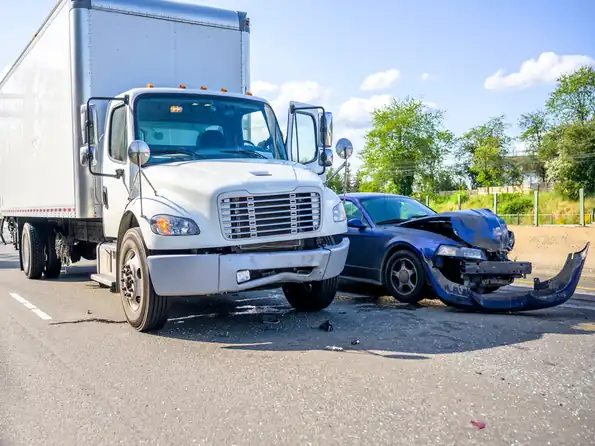
Truck accident cases in Fresno are categorically more complex than standard vehicle collisions. Commercial carriers operate under federal regulations, carry institutional defense resources, and begin their own investigation within hours of a serious crash. A Fresno truck accident lawyer who understands federal trucking law, evidence preservation timelines, and multi-defendant liability structures is the difference between a claim that recovers full value and one that gets dismantled by a carrier’s legal team before it is fully built.
Fresno sits at the intersection of Highway 99, Highway 41, and Interstate 5 — three of the highest-volume commercial freight corridors in California. The Central Valley’s agricultural economy and distribution infrastructure generate heavy commercial vehicle traffic throughout the year, and that volume produces a recurring pattern of serious truck accident cases along these corridors and on the surface streets connecting them.
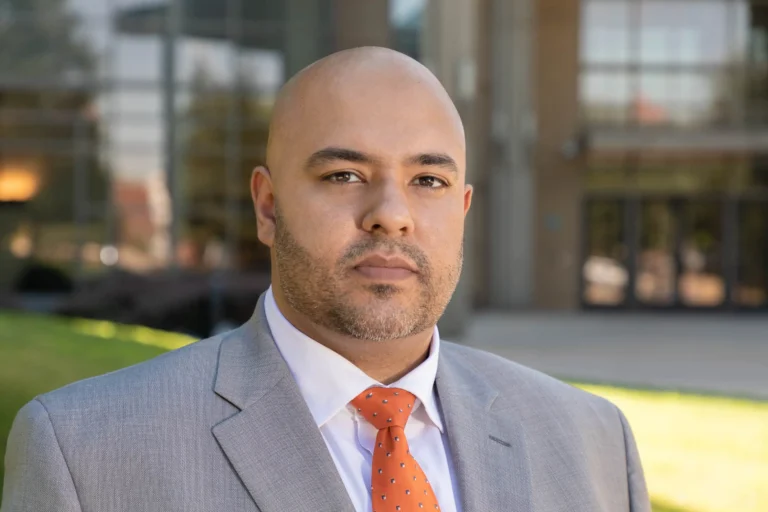
Your Attorney — Sarwinder Dhanjan
Sarwinder Dhanjan is the founding attorney of Dhanjan Injury Lawyer. He handles every case personally — you work directly with him from the first call through final resolution. Attorney Dhanjan is admitted to the State Bar of California and is active in Fresno County Superior Court.
Why Truck Accident Claims Are Different
Commercial vehicle collisions differ from standard car accident cases in ways that affect every aspect of how the claim must be built. The distinctions are not procedural — they are substantive, and they determine whether the full range of liable parties and recoverable damages is captured or missed entirely.
- Federal regulation applies. Commercial carriers operating in interstate commerce are governed by Federal Motor Carrier Safety Administration (FMCSA) regulations covering hours of service, driver qualification, vehicle maintenance, cargo securement, and electronic logging. Violations of these regulations are independent grounds for negligence beyond the collision itself.
- Multiple defendants are common. Liability in a truck accident case can extend beyond the driver to the motor carrier, the vehicle owner if different from the carrier, a shipper who improperly loaded cargo, a maintenance contractor responsible for brake or tire failure, and the truck manufacturer if a component defect contributed to the crash.
- Evidence disappears faster. Commercial carriers are required to retain certain records, but electronic logging device data, onboard camera footage, and driver qualification files can be overwritten or destroyed on short cycles. A legal hold letter must be sent immediately to preserve this evidence before it is gone.
- Defense resources are institutional. Major carriers retain specialized trucking defense firms and deploy investigators to crash scenes within hours. The claimant’s attorney must match that speed and preparation to avoid being outmaneuvered in the critical first days after the collision.
If your crash involved a public transit bus, see our Fresno Bus Accident Lawyer page. For general crash liability context, see our Car Accident Lawyer overview. For catastrophic injury valuation, see our Spinal Cord Injury Lawyer page.
Federal Trucking Regulations and Negligence Per Se
The Federal Motor Carrier Safety Administration enforces regulations that govern every aspect of commercial vehicle operation. When a carrier or driver violates these regulations and that violation contributes to a collision, the violation may constitute negligence per se — meaning negligence is established as a matter of law without requiring additional proof of breach. Key regulatory categories that generate violation-based liability include:
- Hours of service violations — federal regulations limit driving hours and mandate rest periods to prevent fatigue-related crashes. Electronic logging devices (ELDs) record compliance automatically. A driver who exceeded hours of service limits before a collision has violated a federal safety regulation specifically designed to prevent the type of harm that occurred.
- Driver qualification failures — carriers must verify that drivers hold valid commercial driver’s licenses, pass required medical examinations, and have clean safety records. Negligent hiring and retention of unqualified drivers creates independent carrier liability.
- Vehicle maintenance failures — federal regulations require pre-trip inspections and systematic maintenance of brakes, tires, lights, and safety systems. Maintenance records are discoverable and frequently reveal prior knowledge of the defect that caused the crash.
- Cargo securement violations — improperly loaded or unsecured cargo that shifts during transit or falls from a vehicle creates direct FMCSA violation liability for the carrier and potentially the shipper.
- Electronic logging device data — ELD records provide an objective, tamper-resistant record of driving hours, rest periods, and location. This data must be preserved immediately after a crash through a formal litigation hold.
Fresno Practice Areas
Common Causes of Fresno Truck Accidents
Commercial vehicle collisions in Fresno follow identifiable patterns driven by driver fatigue, regulatory violations, and the specific demands of high-volume freight corridors. Understanding the cause mechanism is the foundation of the liability case because each cause requires different evidence and supports different legal theories.
Driver fatigue from hours of service violations is the single most prevalent contributing factor in serious truck accident cases nationally. The National Highway Traffic Safety Administration identifies fatigue as a major factor in large truck crashes. ELD data and driver logs establish compliance or violation objectively. Distracted driving — phone use, dispatch device interaction, and GPS operation — is federally prohibited for commercial drivers under 49 CFR 392.82 but remains a recurring cause of serious collisions. Speeding and aggressive driving on Highway 99 and Highway 41 during time-pressure delivery schedules generate rear-end and lane-change crashes at highway speeds where the force differential between a loaded semi-truck and a passenger vehicle produces catastrophic results. Improper lane changes due to blind spot failures on multi-lane highways are among the most common mechanisms in fatal truck accident cases. Brake failure and tire blowouts from deferred maintenance create loss-of-control events that are traceable through maintenance records to prior carrier knowledge of the defect. Cargo shifts from improper loading cause rollovers and sudden directional changes that the driver cannot correct.
High-Risk Fresno Truck Corridors
Fresno’s position as a Central Valley distribution hub concentrates commercial vehicle traffic on specific corridors where the combination of freight volume, speed, and merging geometry creates recurring serious crash patterns:
- Highway 99 through Fresno carries some of the highest commercial vehicle volumes in California. High-speed lane changes, merge conflicts at interchange ramps, and tule fog between November and March create conditions where loaded truck collisions with passenger vehicles produce catastrophic injury.
- Highway 41 generates speed-change and merge conflicts at the Highway 99 interchange and at surface street connections along the corridor.
- Interstate 5 / Highway 33 connector routes serve agricultural freight moving between the coast and the Central Valley, with heavy agricultural truck traffic concentrated during harvest seasons.
- Blackstone Avenue and Shaw Avenue surface corridors generate commercial vehicle turning conflicts and rear-end impacts in congestion during delivery hours.
- Industrial and warehouse district access roads in southwest Fresno near the BNSF and Union Pacific rail yards produce commercial vehicle-pedestrian and commercial vehicle-cyclist conflicts at shift change times.
Evidence Preservation in Fresno Truck Accident Cases
The evidence preservation window in a truck accident case is measured in hours, not days. A legal hold letter must be sent to the carrier and all potentially liable parties immediately after the crash to prevent the destruction or overwriting of critical evidence. The evidence categories that require immediate preservation include:
- Electronic logging device (ELD) data recording driving hours and rest periods
- Onboard camera footage from forward-facing and cab-facing cameras
- Driver qualification file including CDL, medical certification, and safety record
- Vehicle inspection and maintenance records
- Cargo loading documentation and weight tickets
- Carrier dispatch records and communications
- Black box / event data recorder pre-impact speed and braking data
- Drug and alcohol testing records following the crash
- Prior safety violation and accident history for the carrier and driver
The FMCSA Safety Measurement System maintains public carrier safety data including inspection history, violation records, and crash history for licensed motor carriers. This data is critical for establishing a pattern of prior violations that supports punitive damages claims when carrier conduct is particularly egregious.
Trusted Representation
Boutique Representation - Powerful Outcomes
Trusted Representation
Boutique Representation - Powerful Outcomes
Multi-Defendant Liability in Truck Accident Cases
One of the most important distinctions between truck accident cases and standard vehicle collision claims is the potential for multiple defendants — each with their own insurance coverage and liability exposure. Identifying all potentially liable parties at the outset of the case is essential because different defendants carry different insurance limits, and the combined coverage available often substantially exceeds what any single defendant holds.
The driver is the most obvious defendant but frequently not the most important one financially. The motor carrier who employed or contracted the driver carries the primary commercial liability policy and is directly liable for the driver’s conduct under respondeat superior. The vehicle owner, if different from the carrier, may have independent maintenance obligations. A broker who arranged the load may bear liability under recent FMCSA broker liability developments. A shipper who improperly loaded or secured cargo bears liability for the loading-related cause of the crash. A manufacturer whose defective component — brake system, tire, steering mechanism — contributed to the collision is a products liability defendant. Each of these potential defendants requires investigation, and the legal hold obligation extends to all of them simultaneously from the moment the case begins.
Catastrophic Injuries in Fresno Truck Accidents
The force differential between a loaded commercial truck — which can weigh up to 80,000 pounds — and a passenger vehicle produces injury severity that is categorically different from car-to-car collisions. Serious truck accident injuries commonly include:
- Traumatic brain injuries from direct impact and rotational forces
- Spinal cord injuries producing paralysis or permanent neurological impairment
- Multiple fractures requiring multiple surgeries and extended rehabilitation
- Crush injuries from entrapment requiring amputation
- Internal organ damage from blunt force trauma
- Severe burns from fuel system rupture and fire
- Permanent disfigurement and scarring
For catastrophic injury valuation and future care planning, see our Spinal Cord Injury Lawyer page. In fatal truck accidents, see our Fresno Wrongful Death Lawyer page.
Insurance Coverage in Commercial Truck Cases
Commercial carriers operating in interstate commerce are required under federal law to carry minimum liability insurance of $750,000 for standard freight and $5,000,000 for hazardous materials. Many carriers carry substantially higher limits. In addition to the primary commercial liability policy, separate coverage may exist for the trailer owner, the cargo insurer, and the driver’s personal policy. Identifying and preserving claims against all available coverage sources from the outset is a critical component of case strategy in truck accident cases — and it is one that requires immediate action before carrier investigation teams begin building their own coverage defense positions.
Why Truck Accident Trial Preparation Begins at the Accident Scene
Truck accident cases that proceed to litigation in Fresno County Superior Court involve corporate defendants with experienced defense counsel and institutional resources. Claims built for trial from the outset — with preserved electronic evidence, complete regulatory violation documentation, identified witnesses, and a damages calculation supported by expert testimony — produce substantially stronger positions than those assembled reactively. Carriers and their insurers negotiate based on their assessment of litigation risk. A well-prepared truck accident claim creates genuine litigation risk that moves their number.
For the broader Fresno personal injury framework, see our Fresno Personal Injury Lawyer page. For fatal collision claims, see our Fresno Wrongful Death Lawyer page.
Why Fresno Truck Accident Victims Choose Dhanjan Injury Lawyer
Federal regulatory knowledge. FMCSA violations, ELD data analysis, and carrier safety records are the foundation of serious truck accident cases. We build these cases around the regulatory record, not just the collision facts.
Immediate evidence action. Legal hold letters go out the day we are retained. We move at the same speed as the carrier’s defense team — because if we don’t, the evidence that wins the case is gone.
Direct attorney access throughout your case. You work directly with your Fresno truck accident lawyer from the first consultation through final resolution — not a case manager for substantive communications about your claim.
No fee unless we recover for you. We handle truck accident cases on a contingency fee basis. No upfront costs, no attorney fees unless we win.
Central Valley focus. We know Highway 99, the Fresno County courts, and the defense strategies that commercial carriers use in this region. That familiarity produces more effective preparation and more credible litigation presence in Fresno County Superior Court.
Need a Fresno Truck Accident Lawyer?
Speak with an Attorney and understand your next steps
Fresno Truck Accident Frequently Asked Questions
What makes truck accident cases more complex than car accident cases?
Commercial truck cases involve federal FMCSA regulations, multiple potentially liable defendants, institutional carrier defense resources, and evidence that overwrites within hours of the crash. The driver, the motor carrier, the vehicle owner, the shipper, and component manufacturers may all bear liability. Identifying and preserving claims against all of them simultaneously from the moment the case begins requires immediate legal action that standard car accident cases do not.
What evidence needs to be preserved immediately after a truck accident?
Electronic logging device data, onboard camera footage, driver qualification files, vehicle maintenance records, cargo loading documentation, dispatch records, and the event data recorder’s pre-impact speed and braking data all require immediate legal hold. Most of these records overwrite automatically on short cycles. A legal hold letter must be sent to the carrier and all potentially liable parties within hours of retaining an attorney — not days.
Who can be held liable in a Fresno truck accident?
Potentially liable parties include the truck driver, the motor carrier, the vehicle owner if different from the carrier, a freight broker in certain circumstances, the shipper if cargo was improperly loaded, and a component manufacturer if a defective part contributed to the crash. Each party carries separate insurance coverage. Identifying all liable defendants at the outset substantially increases the available recovery.
What federal regulations apply to commercial truck drivers?
FMCSA regulations govern hours of service, driver qualification and medical certification, pre-trip inspection requirements, vehicle maintenance standards, cargo securement, and electronic logging device compliance. Violations of these regulations can constitute negligence per se — establishing breach of duty as a matter of law. The FMCSA Safety Measurement System database contains public carrier safety records including prior violation and crash history.
How long do I have to file a truck accident claim in Fresno?
Most personal injury claims are subject to a two-year statute of limitations. However, the practical deadline is much shorter — evidence overwrites within hours, and the carrier’s investigation team begins work immediately. If a government entity was involved, a six-month government claim deadline may apply. Contact a Fresno truck accident lawyer immediately after any serious commercial vehicle collision.
How much insurance does a commercial truck carrier have to carry?
Federal law requires minimum commercial liability coverage of $750,000 for standard freight carriers operating in interstate commerce and $5,000,000 for hazardous materials carriers. Many carriers carry substantially higher limits. Separate coverage may exist for the trailer owner, cargo insurer, and driver. Identifying all available coverage sources is a critical early step in any truck accident claim.
Can I recover punitive damages in a truck accident case?
In cases involving egregious carrier conduct — such as knowingly allowing a fatigued driver to operate in violation of hours of service limits, or retaining a driver with a documented history of serious safety violations — punitive damages may be available under California law. The FMCSA Safety Measurement System carrier history and internal carrier communications obtained through discovery are the primary evidence sources for punitive damages claims.
Should I accept the first settlement offer after a truck accident?
No. Early settlement offers in truck accident cases are structured to close high-value claims before the full extent of catastrophic injuries is established and before the full scope of regulatory violations is documented through discovery. Once you sign a release the claim is permanently closed. The carrier’s early offer reflects what they want to pay, not what the claim is worth — and those numbers are rarely close in serious truck accident cases.
How long does a Fresno truck accident case take to resolve?
Cases involving catastrophic injuries, multiple defendants, and federal regulatory violations routinely take 24 to 48 months. Litigation against institutional commercial carriers is substantially more complex than standard personal injury litigation. Settling before the full scope of injuries and liability is established is the most common mistake that permanently reduces recovery in serious truck accident cases.