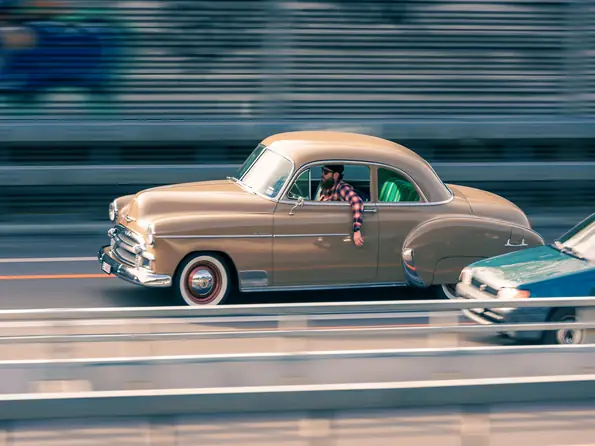
Reckless driving is one of the most misunderstood charges in California traffic law. Many drivers assume it is simply a serious speeding ticket — an infraction that results in a fine. In reality, reckless driving under California Vehicle Code Section 23103 is a criminal misdemeanor that carries jail time, fines, license points, and a permanent criminal record. And when reckless driving causes injury, the consequences escalate further — both criminally and civilly.
- What Is Reckless Driving Under California Law?
- What Behaviors Qualify as Reckless Driving in California?
- Criminal Penalties for Reckless Driving in California — 2026
- DMV Consequences and Insurance Impact
- Reckless Driving and DUI — The "Dry Reckless" Plea
- Civil Liability When Reckless Driving Causes Injury
- What Reckless Driving Victims Can Recover
- How Reckless Driving Affects Your Personal Injury Claim
- Reckless Driving on Fresno Roads
- Frequently Asked Questions — Reckless Driving in California
Whether you have been charged with reckless driving or injured by a reckless driver, understanding what California law says in 2026 protects your rights and your future.
What Is Reckless Driving Under California Law?
California Vehicle Code Section 23103 defines reckless driving as operating a motor vehicle on a highway or in an off-street parking facility “in willful or wanton disregard for the safety of persons or property.”
Two elements must be present for a reckless driving charge to hold:
- The defendant was driving a vehicle on a public highway or in a public parking facility
- The defendant drove with willful or wanton disregard for the safety of persons or property
The critical phrase is willful or wanton disregard. This is a higher standard than simple negligence. It requires that the driver was aware their conduct created a substantial and unjustifiable risk of harm — and intentionally ignored that risk. The driver does not need to have intended to cause harm. They only need to have consciously disregarded a known danger.
This distinction matters. A driver who accidentally drifts out of their lane may be negligent. A driver who aggressively weaves through freeway traffic at high speed during rush hour, fully aware of the risk they are creating and choosing to continue, is reckless.
What Behaviors Qualify as Reckless Driving in California?
California courts and prosecutors have applied reckless driving charges to a wide range of conduct. Common examples include:
- Excessive speeding in heavy traffic — weaving between cars at speeds substantially above the flow of traffic
- Running red lights or stop signs at speed in areas with pedestrian activity
- Street racing on public roads
- Aggressive tailgating combined with dangerous lane changes
- Driving on a sidewalk or through a pedestrian area
- Doing donuts or burnouts in a public parking lot
- Driving at extreme speed in a school zone or residential neighborhood
- Brake-checking another vehicle at highway speed
- Using a vehicle to intimidate or threaten another driver — conduct that also overlaps with road rage charges
What does not automatically qualify as reckless driving is speeding alone on a clear, open freeway with no other traffic. The risk element must be present — someone’s safety must actually be threatened. Our post on road rage laws in California covers the overlap between reckless driving and road rage charges in detail.
Note that the statute applies to public highways and public parking facilities. It does not apply to purely private roads or employee parking lots not open to the public.
Criminal Penalties for Reckless Driving in California — 2026
Reckless driving under Vehicle Code 23103 is a misdemeanor. It is not an infraction. A conviction goes on your criminal record — not just your driving record — and the consequences are substantially more serious than a traffic ticket.
Standard Reckless Driving — VC 23103
- 5 to 90 days in county jail
- Fine of $145 to $1,000
- Both jail and fine may be imposed
- 2 points added to your DMV driving record
- Probation of 1 to 5 years, often imposed in lieu of or alongside jail time for first offenses
- Potential license suspension of up to 30 days for a first offense
Reckless Driving Causing Minor Bodily Injury — VC 23104
When reckless driving causes a minor physical injury to a person other than the driver, it remains a misdemeanor but penalties increase:
- 30 days to 6 months in county jail
- Fine of $220 to $1,000
Reckless Driving Causing Serious Bodily Injury — VC 23105
When reckless driving causes serious bodily injury — defined as a significant or substantial physical injury — the offense becomes a wobbler. A wobbler can be charged as either a misdemeanor or a felony at the prosecutor’s discretion, based on the circumstances and the defendant’s prior record.
As a misdemeanor: up to one year in county jail.
As a felony: 16 months, 2 years, or 3 years in state prison, and fines up to $10,000.
A felony reckless driving conviction also triggers California’s Three Strikes Law if it involves great bodily injury, and can result in a strike on the defendant’s record — dramatically affecting any future criminal exposure.
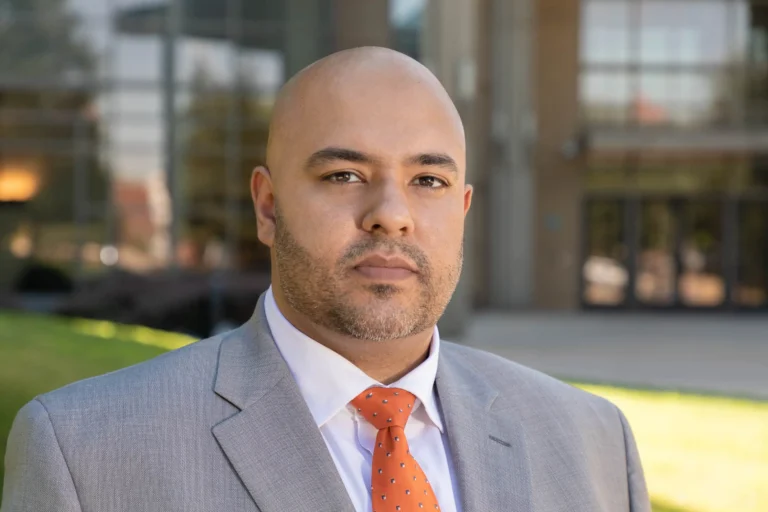
Your Attorney — Sarwinder Dhanjan
Sarwinder Dhanjan is the founding attorney of Dhanjan Injury Lawyer. He handles every case personally — you work directly with him from the first call through final resolution. Attorney Dhanjan is admitted to the State Bar of California and is active in Fresno County Superior Court.
DMV Consequences and Insurance Impact
Beyond the criminal penalties, a reckless driving conviction carries administrative consequences through the California DMV.
Two points are added to your driving record. Under California Vehicle Code Section 12810.5, accumulating too many points in a given period can result in the DMV classifying you as a negligent operator — which triggers a license suspension or revocation independent of any court order.
The point thresholds for negligent operator status are 4 points in 12 months, 6 points in 24 months, or 8 points in 36 months. A driver with a prior speeding ticket who then picks up a reckless driving conviction may be perilously close to these thresholds.
Insurance consequences are immediate and substantial. A reckless driving conviction on your record will cause your insurance premiums to increase significantly — in many cases, insurers treat it similarly to a DUI. Some standard carriers may decline to renew your policy entirely, forcing you into the non-standard market at substantially higher rates.
Reckless Driving and DUI — The “Dry Reckless” Plea
One of the most common contexts in which reckless driving charges arise in California is as a plea bargain in DUI cases. A “dry reckless” is a plea to Vehicle Code 23103 without any notation of alcohol involvement. A “wet reckless” under Vehicle Code 23103.5 includes a notation that alcohol was involved and carries additional consequences.
Defense attorneys frequently negotiate dry reckless pleas for DUI defendants because the consequences are substantially less severe — no mandatory sentencing enhancements for a subsequent DUI, shorter probation periods, and no mandatory license suspension that attaches to a DUI conviction. However, a wet reckless conviction does count as a prior DUI for purposes of enhancement if the defendant is convicted of DUI again within 10 years.
If you are facing a DUI charge and your attorney is discussing a reckless driving plea, understanding the long-term consequences of both options — including the insurance and record implications — is essential.
Request a Free Consultation Today
Speak with an Attorney and understand your next steps
Civil Liability When Reckless Driving Causes Injury
The criminal consequences of reckless driving are separate from — and run parallel to — the civil liability that arises when reckless driving injures another person. If you were injured by a reckless driver in California, you have the right to pursue a personal injury claim for full compensation.
Reckless driving cases are among the strongest civil claims in California personal injury law for two reasons.
Liability is clear. A driver who was convicted of reckless driving, or whose conduct clearly meets the standard of willful and wanton disregard, has already been found to have acted in a manner that goes beyond ordinary negligence. That elevated standard of conduct makes the liability argument more compelling to juries and more difficult for insurance companies to dispute.
Punitive damages may be available. California law allows punitive damages when a defendant acted with malice, oppression, or fraud — or with conscious disregard for the rights and safety of others. Reckless driving, particularly at extreme speeds or in the context of road rage, frequently meets this standard. Punitive damages are awarded on top of compensatory damages and are designed to punish the defendant — which can substantially increase the total recovery for an injured victim.
What Reckless Driving Victims Can Recover
If a reckless driver caused your injuries in California, your personal injury claim can recover the full scope of your losses:
Medical expenses. Emergency treatment, surgery, hospitalization, physical therapy, and all future care reasonably necessitated by the injuries. Car accident claims involving reckless driving often produce serious injuries requiring extensive treatment.
Lost wages and earning capacity. Income lost during recovery and any reduction in future earning capacity caused by permanent injuries.
Pain and suffering. Physical pain, emotional distress, PTSD, anxiety, and loss of enjoyment of life. Our post on pain and suffering damages in California explains how these non-economic damages are calculated and what drives their value — and reckless driving cases often justify the highest multipliers because of the egregious nature of the defendant’s conduct.
Punitive damages. In cases where the defendant’s conduct rises to the level of conscious disregard for safety — drag racing, extreme speed in a school zone, road rage — punitive damages may be awarded on top of compensatory recovery.
Wrongful death damages. When reckless driving causes a fatality, surviving family members can pursue a wrongful death claim for funeral expenses, loss of financial support, and loss of companionship.
How Reckless Driving Affects Your Personal Injury Claim
When a reckless driver injures you, California’s pure comparative negligence law still technically applies — meaning the defense can attempt to argue you share some fault. However, the elevated nature of reckless driving conduct works strongly in your favor. When the defendant was driving with willful and wanton disregard for safety, the arguments available to minimize their fault are substantially weaker than in an ordinary negligence case.
A criminal conviction for reckless driving arising from the same incident is powerful evidence in your civil claim — it establishes the defendant’s conduct and prevents them from relitigating the question of whether their driving was dangerous. Read our full explanation of how fault is divided in California in our post on California’s comparative negligence law.
Reckless Driving on Fresno Roads
Fresno’s road network — Highway 99, Highway 41, Blackstone Avenue, and the city’s major arterials — sees its share of reckless driving incidents. High-speed corridors invite the kind of aggressive, dangerous behavior that meets the willful and wanton disregard standard. Many of these incidents occur at or near Fresno’s most dangerous intersections, documented in our post on dangerous intersections in Fresno.
If you were injured by a reckless driver in Fresno or anywhere in the Central Valley, our Fresno injury lawyers at Dhanjan Injury Lawyers handle these cases with the evidence discipline and trial preparation that reckless driving victims deserve. Contact us for a free consultation — there is no fee unless we recover compensation for you.
Frequently Asked Questions — Reckless Driving in California
Is reckless driving a felony in California?
Standard reckless driving under Vehicle Code 23103 is a misdemeanor. However, reckless driving that causes serious bodily injury under Vehicle Code 23105 is a wobbler — it can be charged as either a misdemeanor or a felony at the prosecutor’s discretion. A felony conviction carries state prison time and can count as a strike under California’s Three Strikes Law.
How long does reckless driving stay on your record in California?
A reckless driving conviction stays on your criminal record permanently unless you successfully petition for expungement. DMV points from a reckless driving conviction remain on your driving record for 7 years. After completing probation, you may be eligible to petition for expungement of the criminal conviction under California Penal Code 1203.4.
Can I sue someone who was driving recklessly and injured me?
Yes. If a reckless driver caused your injuries, you can file a personal injury lawsuit and pursue compensation for medical expenses, lost wages, pain and suffering, and potentially punitive damages. A criminal conviction for reckless driving in the same incident significantly strengthens your civil claim. Read our post on the personal injury claim settlement process in California for a full walkthrough.
What is the difference between reckless driving and negligent driving in California?
Negligent driving involves failing to exercise reasonable care — it is the standard for most car accident civil liability. Reckless driving requires a higher standard: willful or wanton disregard — meaning the driver was aware of the danger their conduct created and deliberately ignored it. Reckless driving is a criminal offense. Negligent driving is typically not criminal but gives rise to civil liability.
How long do I have to file a personal injury claim after being injured by a reckless driver?
California’s statute of limitations for personal injury claims is two years from the date of the accident. If a government entity is involved the deadline is six months. Read the full breakdown in our post on the personal injury statute of limitations in California.