- TBI Classification and Why It Matters
- Why TBI Cases Are Aggressively Contested
- Medical Treatment for TBI in Clovis
- Compensation Available in Clovis TBI Claims
- What To Do After a Traumatic Brain Injury in Clovis
- TBI Filing Deadlines and the Discovery Rule — When the Clock Actually Starts
- Neuropsychological Evidence in Clovis TBI Cases
- Cognitive Deficits, Earning Capacity Loss, and the Full Economic Picture in TBI Cases
- Neuropsychological Evidence, DTI Imaging, and How TBI Cases Reach Full-Value Settlement
- PTSD and Psychological Sequelae of TBI in Clovis Cases
- Why Clovis TBI Victims Choose Dhanjan Injury Lawyer
- How Clovis TBI Claims Resolve
- Clovis Traumatic Brain Injury Lawyer — Frequently Asked Questions
Traumatic brain injury is the most complex, most frequently undervalued, and most aggressively contested category of personal injury claim in California — because TBI can be permanent, invisible on standard imaging, and misunderstood by insurance adjusters who treat it like a soft tissue claim. If you or a family member suffered a traumatic brain injury in a Clovis accident, Dhanjan Injury Lawyer has the experience to build the medical and legal record that accurately reflects the full severity. No fees unless we win.
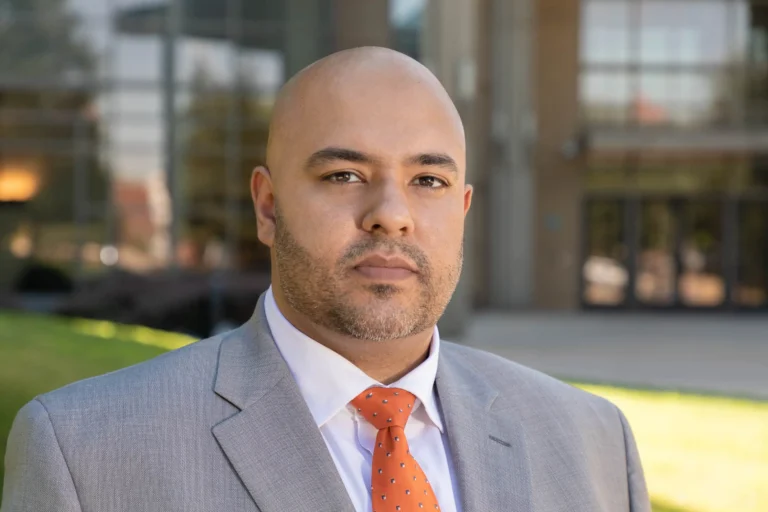
Your Attorney — Sarwinder Dhanjan
Sarwinder Dhanjan is the founding attorney of Dhanjan Injury Lawyer. He handles every case personally — you work directly with him from the first call through final resolution. Attorney Dhanjan is admitted to the State Bar of California and is active in Fresno County Superior Court.
TBI Classification and Why It Matters
Traumatic brain injuries are classified from mild (concussion) to severe based on loss of consciousness duration, post-traumatic amnesia, and Glasgow Coma Scale score. Carriers systematically undervalue concussion claims by treating mild TBI as a short-term condition that resolves — when in fact a significant percentage of concussion patients develop persistent post-concussion syndrome lasting months or years. Moderate TBI produces measurable cognitive deficits requiring neuropsychological testing to document. Severe TBI frequently results in permanent changes requiring lifetime support and generates the largest damages valuations in personal injury law.
Why TBI Cases Are Aggressively Contested
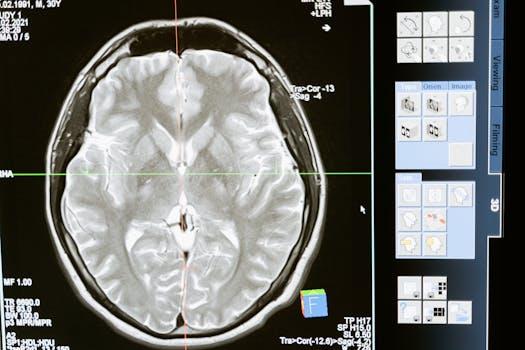
TBI claims are contested more aggressively than almost any other injury category because mild TBI frequently shows no abnormality on standard imaging, symptoms are largely self-reported, and the damages in moderate-to-severe TBI cases are so large that carriers deploy significant resources to minimize them. Standard CT and MRI do not always detect diffuse axonal injury. We work with neurologists and radiologists who specialize in TBI imaging — including advanced modalities like diffusion tensor imaging — to ensure the full picture of what the injury did to the brain is documented. According to the CDC’s TBI data, motor vehicle collisions are a leading cause of traumatic brain injury in the United States, producing a range of outcomes from mild concussion to permanent severe disability.
Medical Treatment for TBI in Clovis
Acute TBI in Clovis is managed initially at Clovis Community Medical Center. Moderate-to-severe TBI typically requires transfer to Community Regional Medical Center in Fresno — the region’s Level I trauma center with neurosurgical capability. For ongoing TBI care, neurology and neuropsychology specialists are available through UCSF Fresno and affiliated providers. The continuity of neurological care — from emergency evaluation through ongoing neuropsychological monitoring — is both a treatment imperative and a documentation imperative for the damages case. Gaps in TBI follow-up care are aggressively exploited by carriers to argue symptom resolution.
Other Clovis Practice Areas
Compensation Available in Clovis TBI Claims
Traumatic brain injury compensation in Clovis operates on a spectrum determined primarily by the permanence and severity of cognitive deficits, not by the initial injury classification. A “mild” TBI — concussion — that produces persistent post-concussion syndrome with documented cognitive impairment on neuropsychological testing, disruption of employment, inability to manage daily activities, and permanent personality and behavioral changes produces a far larger recovery than a moderate TBI that resolves completely within six months. The medical classification matters less than the documented functional impact on the specific victim’s life.
The economic damages in TBI cases are particularly difficult to establish because cognitive deficits often produce functional limitations that are hard to quantify without expert vocational testimony. A professional whose TBI produces processing speed reduction and executive function deficits may remain employed but in a reduced capacity — the vocational expert documents the earnings differential between what the victim would have earned in their pre-injury trajectory and what they can now earn given their documented cognitive profile. For younger TBI victims, this lost earning capacity projected over decades of working life can be the dominant economic damages component. We retain neuropsychologists, life care planners, and forensic economists from the outset of every serious Clovis TBI case to ensure these damages are fully developed before any demand is made.
What To Do After a Traumatic Brain Injury in Clovis
- Accept emergency evaluation and do not minimize symptoms. TBI symptoms at the accident scene — confusion, disorientation, inability to remember the collision, nausea, vision changes — are frequently minimized by victims who are focused on the immediate situation and feel embarrassed to report cognitive symptoms. These symptoms are clinical evidence of TBI. Report all of them to EMS and emergency medical providers, no matter how minor they seem.
- Seek neurological follow-up within days, not weeks. Emergency department CT scans evaluate for acute bleeding — they do not rule out TBI. If you experienced any period of confusion, disorientation, or post-traumatic amnesia, follow up with a neurologist within the first week. The neurologist’s initial evaluation establishes the baseline neurological picture against which all subsequent improvement or deterioration is measured.
- Document cognitive symptoms daily from the date of the accident. Headaches, difficulty concentrating, memory problems, sleep disruption, irritability, and sensitivity to light and sound should all be recorded in a daily symptom log from the day of the accident. This contemporaneous record is far more persuasive than retrospective descriptions months later and specifically addresses the carrier’s standard argument that symptoms were not reported or not consistent.
- Do not return to demanding cognitive work until cleared by a neurologist. Returning to cognitively demanding work before a TBI has stabilized can worsen outcomes and produces a medical record that carriers use to argue the injury was minor. Get neurological clearance before returning to demanding cognitive work, and document the return-to-work progression through your treating physician’s records.
- Call Dhanjan Injury Lawyer before the accident scene evidence disappears. TBI from a vehicle accident requires the same early evidence preservation as any serious vehicle accident claim — camera footage, vehicle electronic data, witness accounts. The neurological injury does not change the evidence window. We preserve the accident evidence while you focus on medical recovery.
Trusted Representation
Boutique Representation - Powerful Outcomes
TBI Filing Deadlines and the Discovery Rule — When the Clock Actually Starts
Two years from the date of injury under California Code of Civil Procedure section 335.1. Government entity claims require six months under the Government Claims Act. For the statewide framework, see our California Traumatic Brain Injury Lawyer page. For the Clovis personal injury overview, see our Clovis Personal Injury Lawyer hub. For Fresno, see our Fresno Personal Injury Lawyer hub. Contact us for a free consultation with Attorney Sarwinder Dhanjan. See our case results for examples of what we recover.
Neuropsychological Evidence in Clovis TBI Cases
Neuropsychological testing administered by a qualified neuropsychologist produces the most persuasive evidence in a TBI claim because it is objective — it measures cognitive performance directly rather than relying on self-reported symptoms. The test battery typically includes measures of memory encoding and retrieval, processing speed, executive function, attention and concentration, language function, and visuospatial processing. The neuropsychologist compares the TBI victim’s performance to age-matched, education-matched normative data to establish whether deficits are statistically significant.
Carriers respond to neuropsychological test results by arguing symptom validity — that the test-taker was malingering or exaggerating deficits to support a legal claim. Modern neuropsychological test batteries include embedded validity indicators that detect effort-based performance inconsistencies. A qualified neuropsychologist who includes these validity measures and documents that the test results reflect genuine effort provides evidence that withstands carrier challenges. The neuropsychologist’s opinion on the causal relationship between the accident mechanism and the documented cognitive deficits — framed within the standard of reasonable neuropsychological certainty — is what connects the test data to the legal theory.
Advanced neuroimaging — particularly diffusion tensor imaging (DTI) and functional MRI — has become increasingly important in moderate TBI cases where standard CT and MRI show no abnormality. DTI measures the microstructural integrity of white matter tracts in the brain, detecting diffuse axonal injury that standard MRI cannot visualize. When DTI findings are correlated with neuropsychological test results and the mechanism of the accident, the combination produces a compelling scientific basis for the TBI claim that is significantly harder for carrier experts to dismiss than neuropsychological testing alone. We work with neuroradiologists and neuropsychologists who regularly appear as expert witnesses in TBI litigation and whose methodology withstands cross-examination in Fresno County Superior Court.
Cognitive Deficits, Earning Capacity Loss, and the Full Economic Picture in TBI Cases
Every serious personal injury claim in Clovis involves two categories of damages that must be fully documented before any settlement is negotiated. Settling before this documentation is complete is the most common reason seriously injured people underrecover — once a release is signed, the claim is permanently closed regardless of how conditions develop.
Economic damages are the measurable financial losses the accident produced. Medical expenses from the date of the accident through the end of treatment are documented through medical billing records. Future medical expenses — for injuries that require ongoing care, additional surgeries, or lifetime management — must be projected by a treating physician and, in serious cases, by a certified life care planner whose projections are based on the specific treatment plan and the current market rates for those services in the Fresno area. Lost wages are documented through employer records and tax returns. Lost future earning capacity — when injuries permanently reduce the ability to work — requires vocational rehabilitation expert testimony on the specific functional limitations and their impact on the specific type of work the victim performed before the accident.
Non-economic damages are the human cost of the injury — the harm that does not appear on a medical bill. Physical pain and suffering, emotional distress, post-traumatic stress disorder, permanent disfigurement or scarring, loss of enjoyment of activities and relationships that the injury has disrupted, and loss of consortium where a spouse’s relationship has been affected. These damages are not speculative — they are real, recognized compensable harms under California law. Presenting them persuasively requires detailed testimony about the specific impact of this injury on this person’s specific life — not generic descriptions. We develop this testimony through client interviews and, where appropriate, through testimony from treating mental health providers and family members who can corroborate the daily impact.
Neuropsychological Evidence, DTI Imaging, and How TBI Cases Reach Full-Value Settlement
Understanding how claims move from incident to resolution helps Clovis injury victims set realistic expectations and make informed decisions at each stage. The vast majority of claims settle before trial — but the settlement value is determined by the quality of the preparation that precedes it.
From the first call, we begin evidence preservation — litigation hold demands, scene documentation, witness identification. We then guide clients through the medical care process, ensuring consistent treatment and complete documentation. Once treatment is complete and the treating physician has established the long-term prognosis, we prepare a comprehensive demand package — the medical record, economic damages analysis, and non-economic damages narrative — and present it to the carrier. Most serious cases involve multiple rounds of negotiation. When carriers refuse to pay fair value, we file in Fresno County Superior Court at 1100 Van Ness Ave, Fresno, CA 93724 and pursue the case through trial. Our trial-ready preparation standard is what produces full settlement value before trial — and it is what produces full verdict value when trial is necessary.
PTSD and Psychological Sequelae of TBI in Clovis Cases
Traumatic brain injury and post-traumatic stress disorder frequently coexist in motor vehicle accident survivors. The same high-energy accident mechanism that produces TBI — sudden deceleration, vehicle impact, loss of control — is also a traumatic event that can produce PTSD characterized by intrusive memories, avoidance of accident-related stimuli, hypervigilance, and negative alterations in cognition and mood. The coexistence of TBI and PTSD is not coincidental — research consistently shows that the neurological effects of TBI can increase vulnerability to PTSD, and the psychological symptoms of PTSD can worsen the cognitive symptoms of TBI, creating a compounding effect on daily functioning.
Documenting the PTSD component of a TBI claim requires mental health treatment records from a licensed therapist or psychiatrist, a formal PTSD diagnosis using DSM-5 criteria, and documentation of the functional impact of PTSD symptoms on work capacity, relationships, and daily activities. The treating mental health provider’s opinion on the causal connection between the accident and the PTSD diagnosis is the evidentiary foundation. We help TBI clients connect with appropriate mental health treatment from the early stages of their case — both for the client’s own recovery and for the integrity of the psychological damages evidence that supports the claim.
Why Clovis TBI Victims Choose Dhanjan Injury Lawyer
TBI claims in Clovis are contested more aggressively than almost any other injury category because the damages are large, the injury is invisible on standard imaging, and the symptoms are self-reported — all of which carriers treat as opportunities to minimize. Effective TBI representation requires specific knowledge of neurological evidence frameworks, neuropsychological testing methodology, advanced imaging capabilities, and the carrier strategies that are deployed specifically against TBI claims. General practice firms that occasionally handle TBI cases lack this specific knowledge and consistently achieve lower recoveries than specialists in catastrophic injury representation.
We work with neuropsychologists who specifically include symptom validity measures in their testing batteries — addressing the carrier’s standard malingering argument before it is made. We work with neuroradiologists experienced in DTI and functional MRI — providing objective imaging evidence for injuries that standard CT cannot detect. And we build the vocational and economic damages analysis for TBI cases from the specific cognitive profile documented by the neuropsychologist, not from generic TBI disability tables. This case-specific approach is what produces full-value TBI recoveries in Fresno County.
How Clovis TBI Claims Resolve
TBI cases in Clovis require patience that carriers rely on injured victims not having. The medical timeline for TBI — particularly moderate TBI with persistent cognitive deficits — extends 12 to 24 months before maximum medical improvement is established and the treating neurologist can opine on the permanence of the deficits. Settling before this timeline is complete means accepting a recovery based on incomplete medical evidence — which is exactly what early settlement offers are designed to produce.
Once maximum medical improvement is established, we present a demand package that includes the complete neurological record, neuropsychological test results with the treating neuropsychologist’s opinion on causation and prognosis, advanced imaging findings, the vocational expert’s analysis of cognitive-functional limitations in the context of the victim’s specific occupation, and the forensic economist’s present-value calculation of lost earning capacity. Most serious Clovis TBI cases that are prepared to this standard resolve through mediation or demand negotiation. When carriers refuse to accept the documented damages at their face value — particularly the neuropsychological and vocational evidence — we file in Fresno County Superior Court. Fresno County juries have demonstrated willingness to return full verdicts in TBI cases where the cognitive and functional evidence is clearly established.
TBI After a Clovis Accident? Call Us Today.
Speak directly with Attorney Sarwinder Dhanjan. No fee unless we win. Available 24/7.
Clovis Traumatic Brain Injury Lawyer — Frequently Asked Questions
How much is a traumatic brain injury case worth in Clovis?
TBI case value depends on injury severity, permanence of cognitive and functional deficits, future medical care costs, and earning capacity impact. Mild TBI with persistent post-concussion syndrome may settle in the low-to-mid six figures. Moderate TBI cases often reach seven figures. Severe TBI cases involving lifetime care needs can produce multi-million dollar recoveries.
My CT scan was normal. Can I still have a TBI claim?
Yes. Standard CT detects acute bleeding but not diffuse axonal injury or microstructural damage. Advanced imaging — diffusion tensor imaging (DTI), functional MRI — can detect brain injury standard CT misses. Neuropsychological testing provides objective cognitive data. A normal CT is not a defense against a well-documented TBI claim.
How long do I have to file a TBI claim in California?
Two years from the date of injury under California Code of Civil Procedure section 335.1. In cases where the injury was not immediately apparent, the discovery rule may extend the period. Do not wait — early evidence preservation and medical documentation are critical.
What is post-concussion syndrome and how does it affect my claim?
Post-concussion syndrome (PCS) refers to persistent symptoms following a concussion lasting beyond three months — chronic headaches, cognitive impairment, memory problems, fatigue, sleep disruption. PCS significantly strengthens a TBI claim by demonstrating the injury did not resolve as carriers argue.
Can I file a TBI claim if the accident was partly my fault?
Yes. California’s pure comparative fault rule reduces recovery proportionally to your fault share but does not eliminate it. Even if you were 20% at fault, you recover 80% of total proven damages.
What neurological tests are most important in a TBI case?
Neuropsychological testing by a qualified neuropsychologist produces objective cognitive performance data. Advanced imaging including DTI and functional MRI can detect structural brain damage not visible on standard MRI. Both are frequently necessary to fully document moderate TBI claims.
How do insurance carriers contest TBI claims?
Carriers argue: the CT was normal; symptoms are subjective; a pre-existing condition explains symptoms; gaps in treatment indicate the injury resolved. Each requires a specific evidentiary response built from the medical record, neuropsychological testing, and expert testimony.
Do I need a lawyer for a TBI claim in Clovis?
Yes. TBI claims require specific knowledge of neurological evidence, life care planning, neuropsychological testing methodology, and carrier strategies. Contingency fee representation means no financial barrier to experienced counsel.