
- The Insurance Bias Problem in Clovis Motorcycle Claims
- Common Causes of Motorcycle Accidents in Clovis
- Motorcycle Accident Injuries in Clovis
- Compensation Available in Clovis Motorcycle Accident Claims
- What To Do After a Motorcycle Accident in Clovis
- Two Years — But the Evidence Window for Clovis Motorcycle Cases Is 72 Hours
- Lane Splitting and Comparative Fault in Clovis
- How Motorcycle Injuries Produce Higher Non-Economic Damages Than Car Accidents
- Defeating Carrier Bias Through Evidence — How Clovis Motorcycle Cases Actually Resolve
- Tule Fog Motorcycle Accidents in Clovis
- Building the Anti-Bias Evidence Record — What We Do From the First Call
- Why Clovis Motorcycle Accident Victims Choose Dhanjan Injury Lawyer
- How Clovis Motorcycle Accident Claims Resolve
- Clovis Motorcycle Accident Lawyer — Frequently Asked Questions
Motorcycle accident claims in Clovis face a challenge that no other injury category does — systematic insurer bias against riders that begins before the adjuster has seen a single piece of evidence. The assumption that the motorcycle was at fault is built into how carriers approach these claims. Dismantling it requires objective evidence assembled before it disappears. Dhanjan Injury Lawyer represents Clovis motorcycle accident victims with trial-ready preparation from the first call. No fees unless we win.
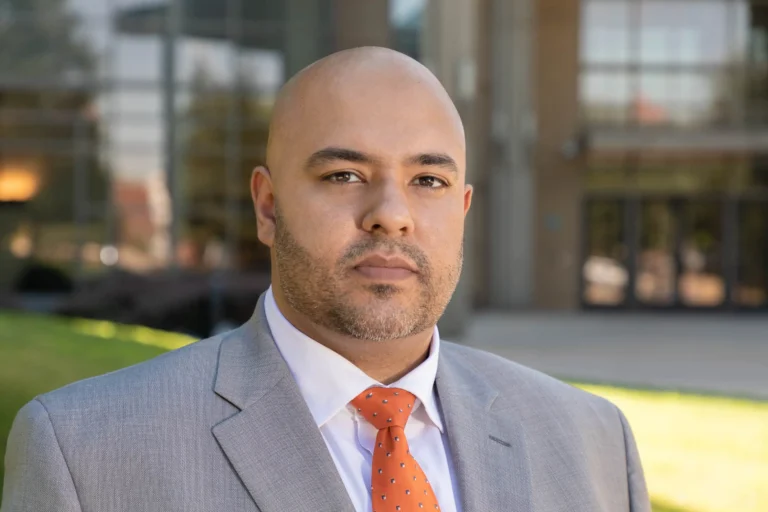
Your Attorney — Sarwinder Dhanjan
Sarwinder Dhanjan is the founding attorney of Dhanjan Injury Lawyer. He handles every case personally — you work directly with him from the first call through final resolution. Attorney Dhanjan is admitted to the State Bar of California and is active in Fresno County Superior Court.
The Insurance Bias Problem in Clovis Motorcycle Claims
Insurance carriers routinely open comparative fault positions against motorcyclists without objective support — before any evidence has been reviewed. Allegations of speeding, unsafe lane changes, or reckless riding are made specifically because they are difficult to rebut without thorough early investigation. Commercial camera footage on Shaw Avenue and Herndon Avenue, witness accounts, accident reconstruction analysis, and physical evidence from the road surface all establish what actually occurred before the carrier’s narrative has time to harden. We preserve this evidence from the first call.
California law protects motorcycle riders the same as any other vehicle operator. Under Civil Code section 1714, the duty of care applies equally regardless of vehicle type. Carrier bias is a tactic — not a legal reality. Evidence defeats it.
Common Causes of Motorcycle Accidents in Clovis
Left-turn collisions are the most common mechanism — a driver turning left at Shaw Avenue or Herndon Avenue fails to yield to an oncoming rider, frequently claiming they “didn’t see” the motorcycle. Lane change collisions occur when drivers move into a motorcycle’s lane without checking mirrors on multi-lane arterials. Rear-end collisions in left-turn queues at signalized intersections produce severe injuries because riders have no rear structural protection. Seasonal tule fog on the Clovis-Fresno corridor creates reduced visibility conditions that carriers exploit to argue fault was shared. Road hazards — potholes, gravel, inadequate markings — affect motorcycles disproportionately compared to passenger vehicles and may create government liability.
Motorcycle Accident Injuries in Clovis
Motorcycle accident injuries are severe because the rider has no structural protection. Common serious injuries include traumatic brain injury (even with helmet use, rotational forces can cause TBI without direct skull impact), spinal cord injury from fall impact, road rash with deep tissue involvement requiring skin grafting, orthopedic fractures of the extremities and pelvis, and internal organ injuries. The severity of these injuries drives the damages analysis — and the medical record built in the first days after the accident is the foundation. According to NHTSA motorcycle safety data, motorcycle riders are significantly more likely to suffer fatal and serious injuries per mile traveled than passenger vehicle occupants.
Other Clovis Practice Areas
Compensation Available in Clovis Motorcycle Accident Claims
Motorcycle accident compensation in Clovis must account for the specific injury profile that motorcycle accidents produce — which differs significantly from car accident injuries and directly affects the damages calculation. Riders have no crumple zone, no airbags, and no structural enclosure. The injuries that result from even moderate-speed motorcycle collisions frequently involve complex orthopedic fractures, road rash requiring skin grafting, spinal involvement, and TBI from rotational forces that a helmet may not prevent. These injury patterns produce longer treatment timelines, more surgical interventions, and higher lifetime medical costs than equivalent-speed car accident injuries.
The non-economic damages in serious motorcycle accident cases also reflect the specific losses that motorcycle riders suffer. When a rider can no longer ride because of permanent injuries — and motorcycling was central to their identity, their community, and their daily life — that specific loss is a recognized and compensable harm under California law. We develop this testimony through detailed client interviews that document how the injury has specifically altered this person’s life, not through generic descriptions. California does not cap non-economic damages in personal injury cases, and Fresno County juries — many of whom are familiar with Central Valley motorcycle culture — respond to specific, authentic testimony about what a rider lost.
What To Do After a Motorcycle Accident in Clovis
- Stay with the motorcycle if you are physically able. Do not allow the bike to be moved before it is photographed. The motorcycle’s damage pattern — tire contact marks, impact deformation, handlebar displacement — is physical evidence of what occurred that cannot be reconstructed after the bike is moved or repaired.
- Get medical evaluation the same day, even if you feel okay. Adrenaline after a motorcycle accident masks pain from rib fractures, spinal involvement, and TBI with remarkable effectiveness. Same-day evaluation at Clovis Community Medical Center on Herndon Avenue captures the injury at its earliest documented point and closes the gap carriers exploit when treatment is delayed.
- Document the road conditions specifically. If a road hazard contributed — gravel patches, potholes, pavement transitions, missing lane markings — photograph and measure the specific defect before it is repaired. Government liability claims against the City of Clovis for road hazards have a six-month notice deadline that begins running immediately.
- Collect camera footage before it overwrites. Commercial cameras on Shaw Avenue and Herndon Avenue, traffic monitoring cameras at signalized intersections, and dashcam footage from nearby vehicles all potentially captured the collision. This footage is gone within 30-72 hours unless preserved by demand.
- Do not discuss fault with anyone at the scene except police. Any statement a motorcycle rider makes at the scene — “I didn’t see them turning,” “maybe I was going a little fast” — will be used to build the carrier’s comparative fault position against you. Provide factual information to police and decline to discuss fault attribution with anyone else.
Trusted Representation
Boutique Representation - Powerful Outcomes
Two Years — But the Evidence Window for Clovis Motorcycle Cases Is 72 Hours
Two years from the date of injury under California Code of Civil Procedure section 335.1. If a road defect caused the accident, the Government Claims Act requires a formal written claim within six months. For statewide context, see our California Motorcycle Accident Lawyer page. For the Clovis overview, see our Clovis Personal Injury Lawyer hub. For our Fresno practice, see our Fresno Personal Injury Lawyer hub. Contact us for a free consultation.
Lane Splitting and Comparative Fault in Clovis
California Vehicle Code section 21658.1 legalized lane splitting — operating a motorcycle between lanes of stopped or slow-moving traffic — making California one of a small number of states where this practice is lawful. The statute requires that lane splitting be done safely and prudently, and authorizes the California Highway Patrol to develop guidelines for safe lane splitting conduct.
Carriers routinely attempt to use any lane split as a comparative fault argument, arguing the rider assumed the risk of being struck by an inattentive driver. This argument fails when the lane split was legal, the speeds were reasonable, and the driver who caused the collision was not exercising proper lookout. Countering it requires evidence of the specific traffic conditions, the speed differential between the motorcycle and surrounding vehicles, and the lane split geometry at the moment of the collision. We preserve this evidence — commercial camera footage from Herndon Avenue and Shaw Avenue, witness accounts, and accident reconstruction — from the first call.
Tule fog creates a specific liability environment for Clovis motorcycle accident cases during October through February. Reduced visibility accidents on the Clovis-Fresno corridor require CalTrans weather records, prior incident history at the same location, and carrier expert challenges to the motorcycle’s speed and lane position at the time of impact. We have experience handling tule fog accident claims in Fresno County and understand how to counter the weather-based fault arguments that carriers use in these cases.
How Motorcycle Injuries Produce Higher Non-Economic Damages Than Car Accidents
Motorcycle accident compensation in Clovis reflects the severity of injuries that riders sustain when a vehicle fails to yield on Herndon Avenue or runs a light on Clovis Avenue — the two corridors that produce the highest motorcycle casualty rates in the city. Economic damages include all medical expenses through maximum medical improvement, full lost wage documentation covering the rider’s actual employment — often physically demanding work that a serious orthopedic injury permanently disrupts — and future medical cost projections for any permanent injury. Non-economic damages in Clovis motorcycle cases frequently represent the larger portion of total recovery because the physical pain and permanent functional loss from road rash, fractures, and traumatic brain injury sustained without vehicle protection are severe. California does not cap these damages, and Fresno County juries understand the conditions that produce serious motorcycle injuries on Clovis roads.
Economic damages are the measurable financial losses the accident produced. Medical expenses from the date of the accident through the end of treatment are documented through medical billing records. Future medical expenses — for injuries that require ongoing care, additional surgeries, or lifetime management — must be projected by a treating physician and, in serious cases, by a certified life care planner whose projections are based on the specific treatment plan and the current market rates for those services in the Fresno area. Lost wages are documented through employer records and tax returns. Lost future earning capacity — when injuries permanently reduce the ability to work — requires vocational rehabilitation expert testimony on the specific functional limitations and their impact on the specific type of work the victim performed before the accident.
Non-economic damages are the human cost of the injury — the harm that does not appear on a medical bill. Physical pain and suffering, emotional distress, post-traumatic stress disorder, permanent disfigurement or scarring, loss of enjoyment of activities and relationships that the injury has disrupted, and loss of consortium where a spouse’s relationship has been affected. These damages are not speculative — they are real, recognized compensable harms under California law. Presenting them persuasively requires detailed testimony about the specific impact of this injury on this person’s specific life — not generic descriptions. We develop this testimony through client interviews and, where appropriate, through testimony from treating mental health providers and family members who can corroborate the daily impact.
Defeating Carrier Bias Through Evidence — How Clovis Motorcycle Cases Actually Resolve
Clovis motorcycle cases face a specific complication that standard car accident cases do not: the carrier opens a comparative fault position against the rider within days of the accident, before investigation is complete. We counter that position with the same objective evidence the carrier cannot deny — camera footage from Herndon Avenue and Clovis Avenue businesses, CHP collision report analysis, and reconstruction expert testimony if the facts support it. The demand letter in a Clovis motorcycle case is built to defeat the comparative fault argument before it reaches negotiation. Cases where carriers maintain unsupported fault positions proceed to mediation in Fresno County Superior Court. Mediators who practice in this market understand the carrier bias against motorcycle riders and respond to objective evidence that counters it. Cases that do not resolve at mediation proceed to trial.
From the first call, we begin evidence preservation — litigation hold demands, scene documentation, witness identification. We then guide clients through the medical care process, ensuring consistent treatment and complete documentation. Once treatment is complete and the treating physician has established the long-term prognosis, we prepare a comprehensive demand package — the medical record, economic damages analysis, and non-economic damages narrative — and present it to the carrier. Most serious cases involve multiple rounds of negotiation. When carriers refuse to pay fair value, we file in Fresno County Superior Court at 1100 Van Ness Ave, Fresno, CA 93724 and pursue the case through trial. Our trial-ready preparation standard is what produces full settlement value before trial — and it is what produces full verdict value when trial is necessary.
Tule Fog Motorcycle Accidents in Clovis
Tule fog — the dense ground fog that forms in California’s Central Valley from October through February — creates specific liability challenges in Clovis motorcycle accident cases. Reduced visibility conditions on the Clovis-Fresno corridor raise questions about the motorcycle’s speed, lane position, and whether the rider should have anticipated impaired visibility. Carriers routinely use tule fog as a comparative fault argument against motorcycle riders, arguing the rider assumed the risk of riding in dangerous conditions. Countering this requires CalTrans weather station records documenting the specific visibility at the time of the accident, prior incident data at the same location during fog events, and the at-fault driver’s own duty to reduce speed and increase following distance in reduced visibility conditions under California Vehicle Code section 22350.
Building the Anti-Bias Evidence Record — What We Do From the First Call
Every serious injury claim in Clovis begins the same way: a conversation with Attorney Sarwinder Dhanjan about what happened, what injuries resulted, and what the realistic path to recovery looks like. That conversation is free, confidential, and available in English, Spanish, Punjabi, and Hindi. There are no upfront costs, no commitment required, and no obligation to retain us after the consultation.
What we do in the first consultation: review the specific facts of the accident, identify every potentially liable party, assess the full insurance stack available for recovery, evaluate the strength of the evidence that currently exists and the evidence that needs to be preserved immediately, and give you an honest assessment of the realistic range of what a well-prepared claim may recover. We do not give optimistic numbers to encourage you to sign a fee agreement — we give honest assessments that allow you to make an informed decision about your case.
If you retain us, we begin work immediately. Litigation hold demands go out the same day. Evidence preservation begins before the automatic overwrite cycles that govern commercial cameras, vehicle data recorders, and electronic logging devices eliminate what currently exists. The window for that evidence is measured in hours — not days. For all Clovis injury matters, contact us at (559) 342-2000, available 24/7, or through the contact form at our contact page. Our office at 2170 N. Winery Ave, Fresno, CA 93703 is 6 miles and 15 minutes from Clovis — the same court, the same county, and the same commitment to full-value recovery that we bring to every Fresno case.
Why Clovis Motorcycle Accident Victims Choose Dhanjan Injury Lawyer
Motorcycle accident claims in Clovis require an attorney who understands the systematic nature of carrier bias against riders and knows how to counter it with evidence rather than argument. The bias manifests in the first adjuster contact — comparative fault positions are opened against riders immediately, without evidence review, because carriers know that unsupported bias is effective against unrepresented claimants who accept the framing. We challenge these positions from the first communication with documented evidence of what the objective record shows, which is different from what the carrier’s initial position claims.
Attorney Dhanjan is familiar with the intersection-specific collision data for Clovis’s Shaw Avenue and Herndon Avenue corridors, the seasonal tule fog conditions that carriers use to manufacture weather-based fault arguments, and the lane-splitting legal framework that carriers misrepresent to inflate rider fault percentages. This local knowledge — combined with trial-ready preparation in Fresno County Superior Court — produces a level of leverage that carriers respect and respond to with full-value settlement offers.
How Clovis Motorcycle Accident Claims Resolve
Motorcycle accident claims in Clovis take longer to resolve than comparable car accident claims because the liability disputes are more intense and the injury severity is frequently higher. The comparative fault arguments that carriers make against riders require evidence-based responses that take time to develop — accident reconstruction, commercial camera footage preservation and analysis, witness accounts, and road condition documentation. Rushing to settlement before this evidence is assembled produces the outcome carriers are working toward: a compromised liability position that reduces the total recovery.
Most serious Clovis motorcycle accident claims settle after the demand package is presented with the full liability evidence — comparative fault responses included — and the complete damages case assembled. When carriers refuse to abandon unsupported fault positions even after the evidence has been presented, we file in Fresno County Superior Court. Fresno County juries have returned full verdicts in motorcycle cases where the evidence clearly established driver negligence. Carriers operating in this market know this, which is why well-prepared motorcycle cases consistently settle for more than those where the plaintiff’s attorney has not built the complete evidence record.
Injured in a Clovis Motorcycle Accident? Call Us Today.
Speak directly with Attorney Sarwinder Dhanjan. No fee unless we win. Available 24/7.
Clovis Motorcycle Accident Lawyer — Frequently Asked Questions
What are my rights as a motorcycle accident victim in California?
Motorcycle riders have the same rights as any vehicle operator under California Vehicle Code section 21200. Drivers owe riders the same duty of care as any other road user. A driver who fails to yield, makes an unsafe lane change, or opens a door into a rider’s path is liable for resulting injuries.
Does California’s lane splitting law affect my accident claim?
Lane splitting is legal in California under Vehicle Code section 21658.1 when done safely. A legal lane split is not evidence of fault. Carriers routinely use lane splitting as a fault argument regardless of legality — countering it requires evidence of specific traffic conditions and speed differential at the time.
What if I wasn’t wearing a helmet during my motorcycle accident?
California requires motorcycle helmets under Vehicle Code section 27803. Failure to wear a helmet does not eliminate your claim but may affect comparative fault analysis for head injuries. You can still recover full compensation for all non-head injuries regardless of helmet use.
How much is a motorcycle accident settlement in California?
Motorcycle accident cases frequently produce significant non-economic damages because injuries are severe and permanent. Serious permanent injury cases with clear liability regularly produce six-figure to seven-figure recoveries.
How long does it take to settle a motorcycle accident claim?
Clear liability cases with resolved injuries can settle in 6-12 months. Disputed liability cases — which are common in motorcycle accidents due to carrier bias — typically take 12-24 months.
What damages can I recover after a motorcycle accident in Fresno?
All past and future medical expenses, lost wages, lost earning capacity for permanent injuries, physical pain and suffering, emotional distress, and permanent disfigurement. California does not cap non-economic damages.
Who is responsible if road conditions caused my motorcycle accident?
The City of Clovis or Caltrans may be liable if a road hazard caused the accident and they knew or should have known about it. Government claims require written notice within six months under the Government Claims Act.
How do I prove fault in a motorcycle accident in California?
Evidence establishes fault — commercial camera footage on Shaw and Herndon Avenues, witness accounts, accident reconstruction, vehicle damage patterns. We preserve this evidence from the first call before automatic overwrite cycles eliminate it.